Personnel Issues Varying by Appointing Authority at the Time of Supreme Court Justice Replacement
Next President Faces Difficulty Exercising Chief Justice Appointment Authority if Kim Myeong-su Resigns
[Asia Economy Reporter Naju-seok] 'Notorious RBG.' This is the nickname of Ruth Bader Ginsburg, a U.S. female Supreme Court Justice who was likened to the Black rapper Notorious B.I.G and gained notoriety. Because she opposed discrimination, represented minorities, and made numerous rulings that changed history, she enjoyed 'popularity' similar to that of a famous rapper. In particular, the progressive camp in the U.S. regarded her as a hero, respected, and loved her. When Justice Ginsburg passed away last year, the respect shown by American society left a deep impression worldwide.
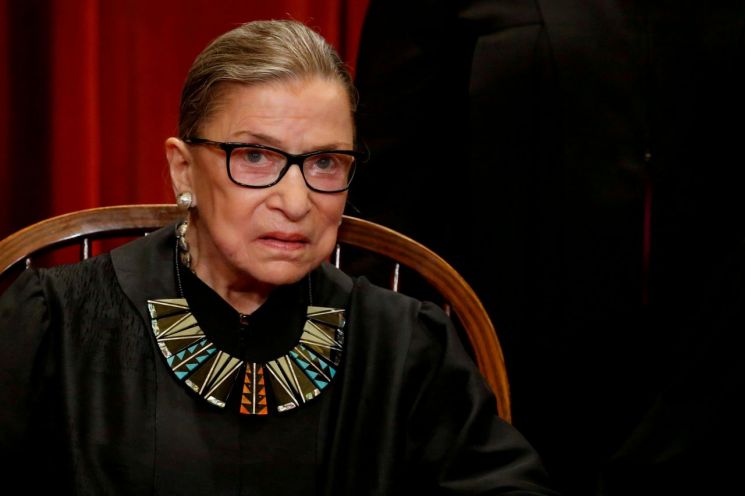
Although Justice Ginsburg was beloved by the progressive camp, there was a flaw. The Democratic Party and other progressives expressed concerns about her successor even during her lifetime. Since U.S. Supreme Court Justices serve lifetime appointments, the president can exercise the appointment power only when a justice dies or resigns mid-term. During former President Barack Obama's administration, there were voices demanding Justice Ginsburg's resignation. This was due to concerns that if Justice Ginsburg, who was in her 80s and had pancreatic cancer, passed away under a Republican government, the U.S. Supreme Court could become more conservative.
However, Justice Ginsburg did not step down. It is known that she resisted retirement pressure because she feared that former President Obama would nominate a less progressive person than herself for Senate confirmation. She intended to continue living while waiting for a Democratic government to return, but ultimately, Justice Ginsburg passed away during the term of former President Donald Trump, a Republican.
As a result, her successor was Amy Coney Barrett, who is also a woman but politically conservative, the exact opposite of Ginsburg. With Barrett's appointment, the U.S. Supreme Court was reorganized into six conservatives versus three progressives. Although President Joe Biden was elected and both the Senate and House of Representatives became Democratic majorities, the judiciary remained a conservative stronghold.
Within the principle of separation of powers in democracy, the judiciary remains an independent domain, but the appointment of the Chief Justice and other justices has been a political decision. This issue has always been important, but we have avoided political controversy thanks to Article 105 of the Constitution, which guarantees a six-year term for the Chief Justice. However, the possibility of this issue resurfacing has increased.
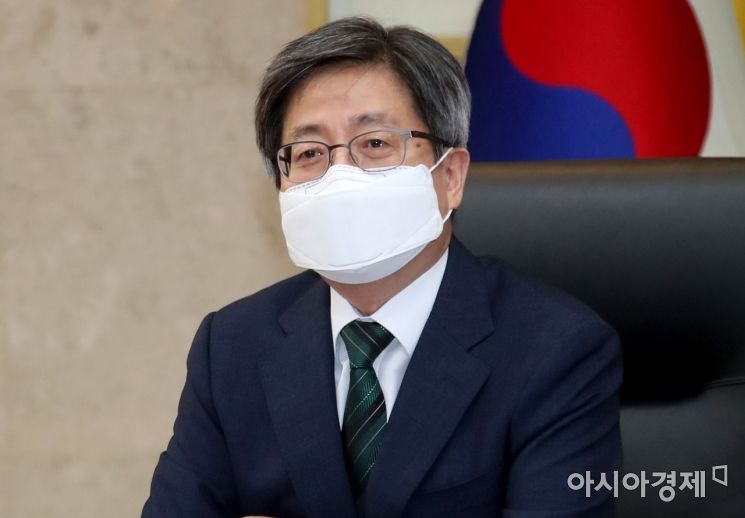
Recently, as demands for Chief Justice Kim Myung-soo's resignation have grown, mainly from opposition parties, the issue of the Chief Justice's resignation has become a topic. Depending on Chief Justice Kim's decision, the next government's right to appoint the Chief Justice could be affected. The opposition demands Kim's resignation, but if this situation materializes, the Chief Justice appointed by the current government could lead the judiciary throughout the next government's term.
The issue began when the Democratic Party, Justice Party, and Open Democratic Party pushed for the impeachment of Im Seong-geun, Chief Judge of the Busan High Court, who was criticized for interfering in trials and violating the Constitution. However, the situation changed as a dispute arose over whether Chief Justice Kim said he could not accept Im's resignation due to impeachment. Im released recordings, and Chief Justice Kim was embroiled in a controversy over false explanations. As a result, the first-ever judicial impeachment shifted from Im's constitutional violations to the unrelated issue of Chief Justice Kim's falsehood controversy.
On the 5th, Kim Jong-in, Emergency Committee Chairman of the People Power Party, held an emergency press conference, stating, "The lying Chief Justice has completely lost authority and qualifications as the head of the judiciary," and emphasized, "Only stepping down voluntarily is the minimum duty to atone to the wounded people." The 'Impeachment Deal Truth Investigation Team,' led by People Power Party lawmaker Kim Ki-hyun, also visited the Supreme Court in protest and began a one-person demonstration that day.
Separately from Im's impeachment issue, the People Power Party has raised problems with Chief Justice Kim. Joo Ho-young, floor leader of the People Power Party, who has mentioned the need to impeach Chief Justice Kim, raised issues about personnel matters involving a chief judge of the Seoul Central District Court and the sluggish progress of trials related to the recent general election. On the 5th, Joo appeared on MBC Radio's 'Kim Jong-bae's Focus' and claimed, "While holding most of the government's important cases, Chief Judge Kim has delayed trials or issued favorable rulings. For three years, the Seoul Central District Court has kept him in charge of those trials, while disbanding all trial teams that issued unfavorable rulings."
He continued, "On April 15 last year, we had our National Assembly general election, and there are about 130 election invalidation trials filed. The law requires a conclusion within six months, and in the past, when it was faster, recounts were done by June 8 after the April 15 election. This time, even after more than six months, there is no guarantee when the trials will end, and the trials are not being properly conducted." For Floor Leader Joo, this is a golden opportunity to reduce the ruling party's seats if by-elections proceed amid President Moon's declining approval ratings and growing public demand for judgment, but he is dissatisfied that election-related trials are not progressing.
But would Chief Justice Kim's resignation, as demanded by the opposition, really be beneficial to them?
If Chief Justice Kim, who has two years left in his term, resigns mid-term as the People Power Party claims, the person who can nominate his successor is President Moon Jae-in. If Kim's resignation, Moon's nomination, and parliamentary approval are completed, the new Chief Justice's term will last until 2027. Considering the next president's term ends in May 2027, the Chief Justice will be decided by the current government throughout the next administration's term.
Of course, if Chief Justice Kim refuses to resign, there may be no new appointment. But if he decides to resign, President Moon will have the authority to nominate a second Chief Justice during his term.
© The Asia Business Daily(www.asiae.co.kr). All rights reserved.
![Clutching a Stolen Dior Bag, Saying "I Hate Being Poor but Real"... The Grotesque Con of a "Human Knockoff" [Slate]](https://cwcontent.asiae.co.kr/asiaresize/183/2026021902243444107_1771435474.jpg)

















