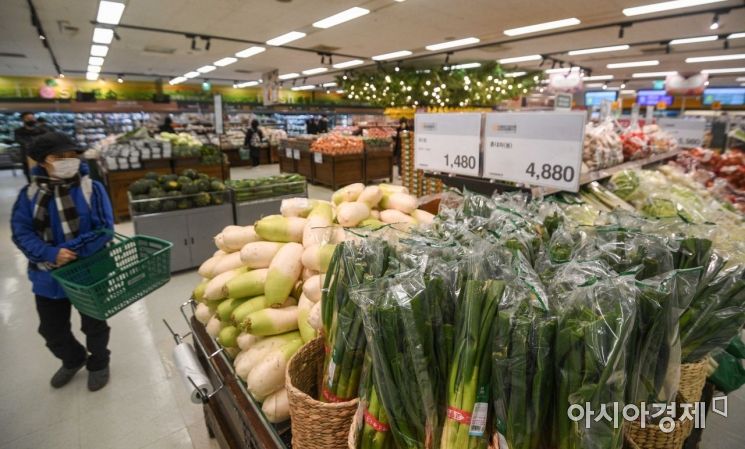
 Despite the low inflation trend, the prices of fresh food products, which have a significant impact on consumer perception, rose by 9.2% last month, and the prices of agricultural, livestock, and fishery products increased by 10%. On the 2nd, citizens shopping at a large supermarket in Seoul are seen buying groceries. Photo by Kang Jin-hyung aymsdream@
[Asia Economy Reporter Seungjin Lee] Contrary to the government's announcement that consumer prices have been rising at a rate below 1% for four consecutive months, prices of major food products have been steadily increasing, causing consumers to feel a greater burden from inflation.
According to the food industry on the 6th, CJ CheilJedang, which holds the number one market share in instant rice, plans to raise the price of 'Hetbahn' by about 6-7% at the end of this month. This is the first price increase for Hetbahn in two years since February 2019.
Ottogi also plans to raise the price of 'Ottogi Rice' by about 7-9% after the Lunar New Year holiday. This comes just five months after an 8% price increase in September last year. Earlier, Dongwon F&B raised the price of seven types of 'Ssen Cook' by 11%, from 1,350 won to 1,500 won, last month.
The reason food companies are raising instant rice prices is due to the increase in the price of rice, the raw material. According to the Korea Agro-Fisheries & Food Trade Corporation (aT), as of the 1st, the retail price of 20kg of rice was recorded at 61,059 won. This is the highest price ever recorded since rice prices have been tracked, representing about a 16% increase compared to one year ago (51,662 won).
Due to the ongoing avian influenza (AI) outbreak for four months, egg prices have skyrocketed, leading to simultaneous price increases in bread, hamburgers, and other products. Tous Les Jours notified franchisees of a 100 won price increase for about 90 representative products, including red bean bread, soboro bread, and croissants. With this price increase, the average selling price of red bean bread and soboro bread rose to 1,200 won, and croissants to 1,800 won.
Lotte Ria also raised prices for 25 products, including burgers and desserts, by 100 to 200 won starting from the 1st. The affected products include 13 types of burgers, 7 types of desserts, 2 types of drinks, and 3 types of chicken dishes. The average price increase rate is about 1.5%. Coca-Cola beverages, Lotte Chilsung Beverage, and Dong-A Otsuka also simultaneously raised their beverage prices.
Pulmuone recently decided to raise prices for tofu and bean sprouts. Prices for tofu and bean sprouts increased by about 10-14%, marking Pulmuone's first price hike in about two years since February 2019. Prices for canned goods used in stews also jumped significantly. Sempio raised prices for four types of canned seafood products, including 280g and 400g mackerel pike for kimchi stew and mackerel for braising, by an average of 42%.
With the Lunar New Year approaching, demand for fruits and vegetables is expected to surge, likely pushing prices even higher. This domino effect of price increases by food companies is expected to place a greater burden on consumers.
A food industry official explained, "Due to last year's record-long rainy season causing poor crop yields and the continuous rise in international grain prices, it has become difficult to absorb the increase in raw material costs," adding, "We minimized price increases considering the COVID-19 situation and consumer burden."
© The Asia Business Daily(www.asiae.co.kr). All rights reserved.
![Clutching a Stolen Dior Bag, Saying "I Hate Being Poor but Real"... The Grotesque Con of a "Human Knockoff" [Slate]](https://cwcontent.asiae.co.kr/asiaresize/183/2026021902243444107_1771435474.jpg)











