Insurance Companies Under Direct Pressure Lower Dividend Payout Ratios
Meanwhile, Card Companies Avoiding Regulatory Recommendations Expand Dividends
Hyundai Card Increases Dividends for 2nd Year... KB Kookmin Card Doubles Dividends
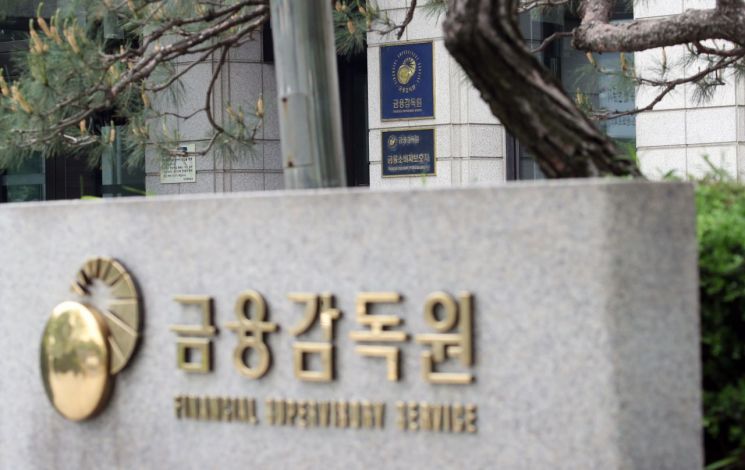
[Asia Economy Reporters Oh Hyung-gil and Ki Ha-young] As the financial authorities' 'dividend restraint order' expands to the secondary financial sector, the insurance and card industries are experiencing contrasting fortunes. The insurance industry, directly pressured by the financial authorities, faces an inevitable reduction in dividends. In contrast, some card companies not affiliated with financial holding groups, which are not subject to restrictions, are planning record-high dividend distributions, creating a stark contrast.
On the 5th, according to financial authorities and related industries, Kwon Dae-young, Director of the Financial Industry Bureau at the Financial Services Commission, said at a recent 'Financial Industry Bureau Work Plan' briefing, "The COVID-19 crisis and capital soundness are not issues exclusive to banks," adding, "Since the new international accounting standard (IFRS17) is being introduced in insurance, we expect CEOs and shareholders to make sound judgments and decide on appropriate (dividend) levels." Earlier, the Financial Supervisory Service also recommended insurance company executives to "maintain dividend payout ratios at the average level of the past three years."
Accordingly, insurance companies are deeply concerned. Samsung Life Insurance and Samsung Fire & Marine Insurance, which had already resolved cash dividends, also lowered their dividend payout ratios this year. Samsung Life decided on a cash dividend of 2,500 KRW per share, totaling 449.4 billion KRW, with a dividend payout ratio of 35.5%. This represents a decrease of 150 KRW per share and 1 percentage point from a year ago, when the dividend was 2,650 KRW per share (totaling 475.9 billion KRW) with a payout ratio of 36.5%. Samsung Fire & Marine Insurance also reduced its dividend payout ratio to 49.5% (8,800 KRW per share) from 56.2% (8,800 KRW per share) a year earlier.
Hanwha Life Insurance, which recorded a net profit of 242.7 billion KRW last year, a 313.7% increase from the previous year, had planned to expand its dividend payout ratio this year but found itself in a difficult position due to pressure from financial authorities. Hanwha Life's dividend payout ratio last year was 22.4%, up 4.3 percentage points from 18.1% in 2018.
The insurance industry feels compelled to comply with the financial authorities' recommendations. A life insurance company official said, "The financial authorities' recommendation is practically a mandatory guideline," adding, "We have decided to set dividends at previous levels." A casualty insurance company official also said, "Although performance improved last year due to better loss ratios amid COVID-19, we decided not to increase dividends," lamenting, "Financial holding companies are also reducing dividends, so insurance companies cannot afford to be defiant."
Card Companies Not Affiliated with Financial Holding Groups Hold Dividend Celebrations
On the other hand, card companies are increasing dividends. KB Kookmin Card decided on a cash dividend of 2,174 KRW per share, totaling 200 billion KRW. Compared to a year ago, when the dividend was 1,087 KRW per share and the total dividend was 100 billion KRW, this is about double. The dividend payout ratio rose 30 percentage points to 61.6% from 31.6% a year earlier. However, this is explained as a base effect, as the payout ratio has generally been around 60%.
Hyundai Card is also increasing dividends for the second consecutive year. Hyundai Card's final dividend is 914 KRW per share, totaling 146.7 billion KRW. The final cash dividend payout ratio is expected to be around 60%, similar to last year.
Samsung Card set its dividend per share at 1,800 KRW, 200 KRW higher than a year ago. The total dividend amount rose 12.5% to 192.1 billion KRW. However, the cash dividend payout ratio decreased by 1.4 percentage points to 48.2% from 49.6% the previous year.
Shinhan Card also decided on a cash dividend of 3,145 KRW per share, totaling 394.3 billion KRW. The dividend payout ratio is expected to be around 65%, similar to last year.
A card company official said, "As net profits increase, even if dividends rise, the payout ratio will remain similar or decrease," and added, "Bank-affiliated card companies are 100% subsidiaries of holding companies, so dividends have positive effects such as discovering new growth engines. Therefore, dividends will be made at levels that do not affect capital adequacy or leverage regulation ratios."
© The Asia Business Daily(www.asiae.co.kr). All rights reserved.

















