'Wido Ddibbaetnori', 'Imsil Pilbong Nongak', 'Gwangju Chilseok Gossaum Nori'
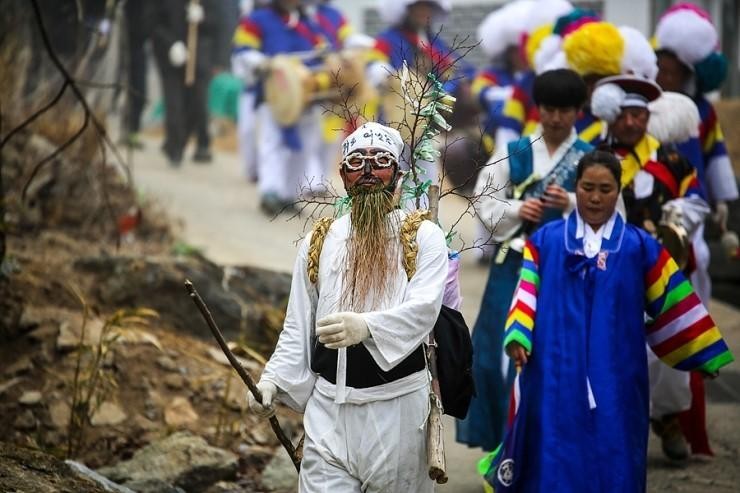
The public events for National Intangible Cultural Heritage, supported by the National Intangible Heritage Center, will take their first steps this year in Gwangju, Buan, and Imsil. These are 'Wido Ddibaetnori', 'Imsil Pilbong Nongak', and 'Gwangju Chilseok Gossaumnori'. They will be held on the 14th (Daeri Village, Wido-myeon, Buan-gun), the 26th (Gangun-ro, Gangjin-myeon, Imsil-gun), and from the 25th to the 27th (Gossaumnori Theme Park, Nam-gu, Gwangju Metropolitan City), respectively.
Wido Ddibaetnori is a communal village ritual and a bountiful catch festival held annually on the third day of the lunar new year in Daeri Village, Wido-myeon, Buan-gun. It is called Ddibaetnori because a ddibae (a type of small boat) is floated out to sea during the Dragon King ritual at the seaside. It is also called Wondangje because the ritual is performed at the Wondang (a sacred place). After setting offerings and performing the ritual at the Wondang, participants come down to the village, circle the mountain, and perform the Dragon King ritual at the seaside.
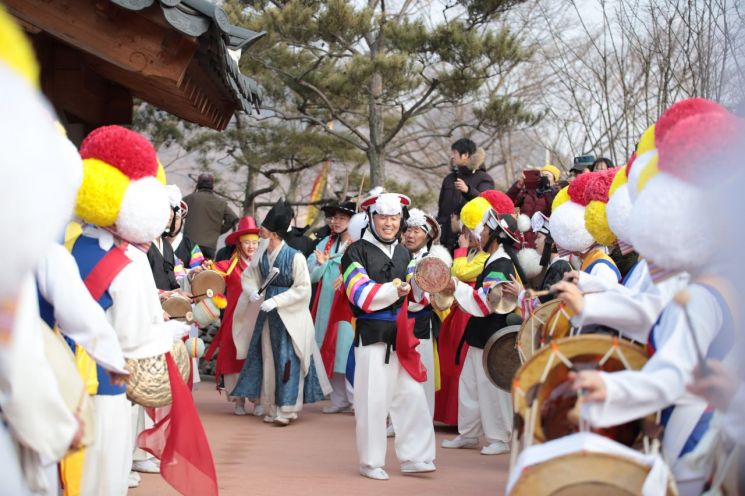
Imsil Pilbong Nongak is a type of nongak (traditional Korean farmer's music) passed down in Pilbong-ri, Gangjin-myeon, Imsil-gun. It emphasizes group harmony and unity over individual skill. The nongak performers wear white pants and jackets with navy vests and tricolor sashes. The cymbal players (those who play the kkwaenggwari or jing) wear sangmo (traditional hats with feathers or strings used in nongak), while the others wear pointed hats called gokka. Instruments such as nongi (farm tools), yongi (bowls), yeonggi (flags), long metal horns, samul (kkwaenggwari, jing, buk, janggu), beopgo (a small Buddhist ritual drum), and japsaek (characters like daeposu, changbu, yangban, jorijung, gaksi, hwadong) come together to produce vigorous and lively rhythms.
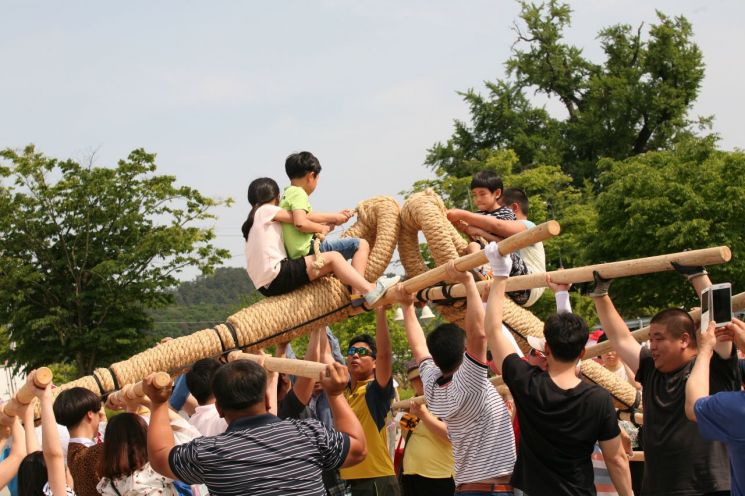
Gwangju Chilseok Gossaumnori is a group game of rope-pulling fights performed around the lunar first full moon in Jeonnam province. It is closely related to rice farming culture. The game proceeds by two ropes (go) facing off against each other in a fight. The term 'go' refers to a single strand of rope stretched out and tied into a circular shape. An official explained, "It is a form of agricultural ritual praying for abundance" and "It holds significance as a collective game that fosters cooperation and unity among villagers."
All events are organized by the Korea Cultural Heritage Foundation. Due to social distancing measures in response to the COVID-19 pandemic, the number of spectators will be limited to a minimum. Instead, videos will be released on the National Intangible Heritage Center's website about a month before and after the events.
© The Asia Business Daily(www.asiae.co.kr). All rights reserved.
!["The Woman Who Threw Herself into the Water Clutching a Stolen Dior Bag"...A Grotesque Success Story That Shakes the Korean Psyche [Slate]](https://cwcontent.asiae.co.kr/asiaresize/183/2026021902243444107_1771435474.jpg)


















