USGA and R&A Announce Club Length Limits "Necessary for Golf's Future," Simpson Opposes as "Regressive Equipment Measure"
 Since the beginning of the new year 2021, the debate over distance regulations related to club length restrictions has been intense.
[Asia Economy Reporter Noo Rae] The debate over distance regulation is heating up.
The United States Golf Association (USGA) and The Royal and Ancient Golf Club of St Andrews (R&A), which set the global golf rules, recently announced a proposed rule change to limit club length. The proposal is to reduce the maximum club length from 48 inches to 46 inches, excluding putters. This is not a finalized decision yet. They will gather opinions from various sectors until early March before making a final decision. The club length restriction is related to the trend of increasing players' driving distances.
Mike Davis, CEO of the USGA, explained, "If we do not regulate players' driving distances, the future of golf could be threatened," adding, "It is our responsibility to ensure that golf can progress for more than the next 100 years." According to a 2020 report on driving distances released by the USGA, the average driving distance on the European Tour last year was 301.9 yards, which is an increase of 15.6 yards compared to 286.3 yards in 2003.
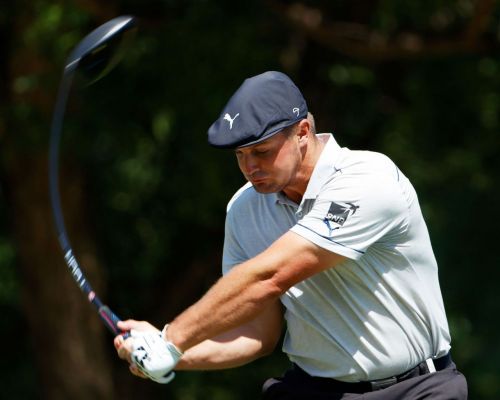
The PGA Tour also saw an increase from 277.9 yards in 2003 to 288.4 yards last year, a rise of 10.5 yards. Last year’s US Open champion Bryson DeChambeau (USA) said, "I will use a 48-inch driver in competition to increase my driving distance and attack the course." He ranked first this season with an average of 329.2 yards. While longer clubs make control more difficult, they increase distance. Cameron Champ (USA) hit an astonishing 434 yards at last month’s Sentry Tournament.
There are differing opinions on equipment regulation. Seven-time PGA Tour winner Webb Simpson (USA) is a representative voice. Simpson, who said, "If golf course design is changed, there is no need to take regressive measures on equipment," argued, "This issue stems from golf course architecture," and insisted, "Dogleg holes, narrow fairways, deep roughs, and small, firm greens are necessary." He explained that distance control is sufficiently possible through course settings, bunkers, and tree placements.
In fact, Brooks Koepka (USA) won the 2017 US Open at Erin Hills Golf Course, a battleground exceeding 7,700 yards, with a score of 16 under par. Among the 12 most difficult courses on the PGA Tour, six are under 7,261 yards. Simpson emphasized, "Even if equipment is restricted, Dustin Johnson (USA) and DeChambeau will still hit terrifying long drives," and added, "The same problem will likely recur 20 years from now," stressing, "A new approach to golf course setup is needed."
© The Asia Business Daily(www.asiae.co.kr). All rights reserved.

















