Major Points of 'Follow-up Action Implementation Progress Report' Released to Garner Public Interest
Video Comparing Ministry of Culture Recommendations and Non-compliance Produced... Cultural Heritage Administration Hosts International Seminar
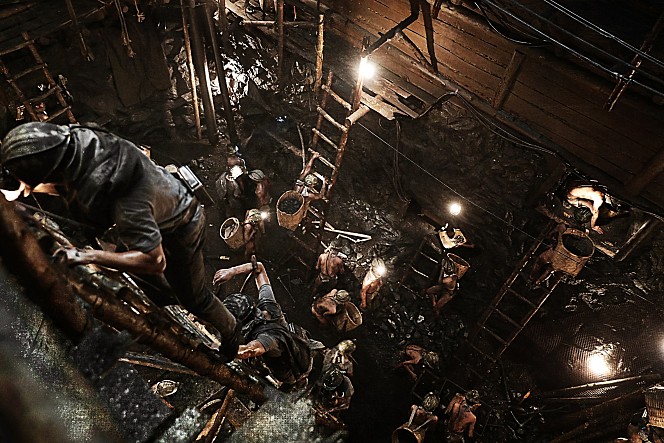
In July 2015, Japan registered the "Meiji Industrial Revolution Heritage" as a UNESCO World Heritage site. Among the 23 registered facilities, seven hold the history of forced labor of Koreans. These include Mitsubishi's Third Dry Dock, large cranes, and pattern shops in Nagasaki; Takashima Coal Mine; Hashima Coal Mine; Miike Coal Mine and Miike Port in Imike; and Shin Nippon Steel in Yahata.
Before the registration, in response to protests from our government, Japan acknowledged its shameful past, stating that "in some facilities during the 1940s, numerous Koreans were mobilized against their will and subjected to forced labor under harsh conditions." Japan pledged to include appropriate measures to honor the victims, such as establishing an information center, in its interpretation strategy. However, these promises have not been kept. Even the Industrial Heritage Information Center, which opened in June last year, excludes content honoring the victims and instead features exhibitions commemorating the Meiji Industrial Revolution.
The Ministry of Culture, Sports and Tourism and the Cultural Heritage Administration disclosed key points of the "Progress Report on the Implementation of Follow-up Measures for the Registration of Modern Industrial Facilities as World Heritage" on the 29th to urge Japan to comply with the recommendations. This is basic data investigating how much Japan has implemented the World Heritage Committee's recommendations and preservation management advice after registration. The Cultural Heritage Administration completed it in December 2019 and submitted it to UNESCO.
According to the report, Japan's Cabinet Secretariat, local governments, and owners of individual heritage elements did not mention the history of forced mobilization in their State of Conservation (SOC) reports. They ignored the intent of the "Decision of the 39th World Heritage Committee" by excluding our government from the "dialogue with relevant parties."
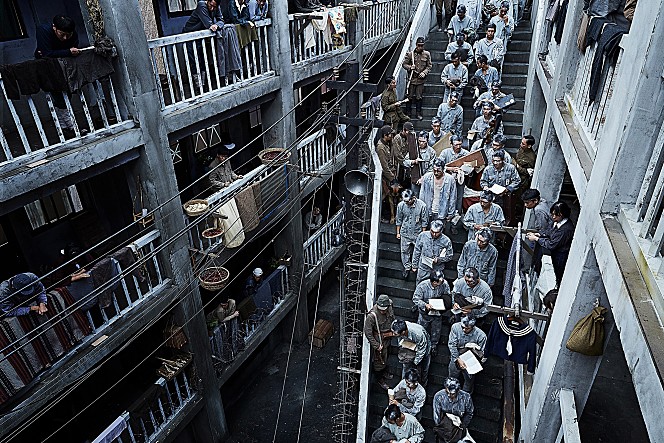
The progress report pointed out that "in the 39th recommendation, the 'Koreans forcibly mobilized against their will' were distorted in the 2018 SOC as 'many people from the Korean Peninsula who supported Japanese industry,' and the 2019 report omitted them entirely." It emphasized that "although the Industrial Heritage Information Center was presented as an alternative where 'interpretation of all heritage is possible,' the interpretation content at the information center is also not included in the report."
On the same day, the Ministry of Culture, Sports and Tourism and the Cultural Heritage Administration also disclosed the analysis results of Japan's "Implementation Report on the Interpretation Strategy for Modern Industrial Facilities World Heritage," submitted to the World Heritage Center in December last year. According to this, Japan emphasized that Japanese workers and workers from other regions were all in harsh environments rather than taking measures to honor the numerous Korean victims who were mobilized against their will and forced to work under harsh conditions. A Ministry of Culture, Sports and Tourism official said, "This is an evasion of the World Heritage Committee's recommendations and Japan's own promises at the time of World Heritage registration."
Ahead of the 44th World Heritage Committee meeting to be held this year, the government plans to promote various measures to raise public understanding of this issue and foster international expert opinion. A Ministry of Culture, Sports and Tourism official said, "We plan to produce and widely distribute a promotional video in the first quarter comparing the World Heritage Committee's recommendations for Japan's modern industrial heritage facilities and Japan's non-compliance." A Cultural Heritage Administration official said, "To increase international experts' interest, we will hold six seminars from February to July under the theme 'One Heritage, Different Memories.'"
© The Asia Business Daily(www.asiae.co.kr). All rights reserved.
![User Who Sold Erroneously Deposited Bitcoins to Repay Debt and Fund Entertainment... What Did the Supreme Court Decide in 2021? [Legal Issue Check]](https://cwcontent.asiae.co.kr/asiaresize/183/2026020910431234020_1770601391.png)
















