Eating About 'One and a Half Bowls' of Rice a Day
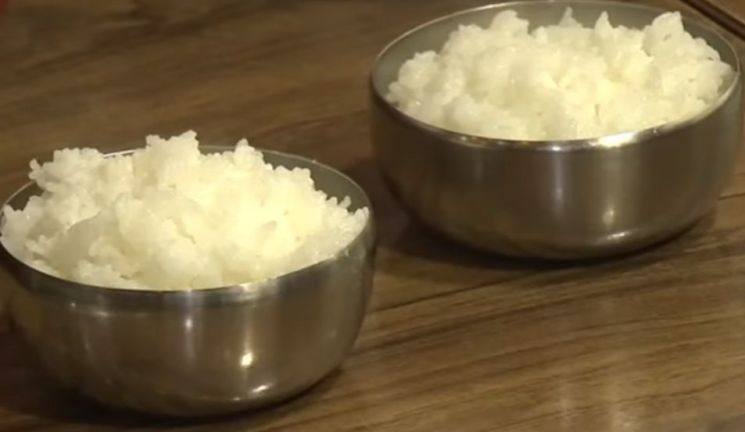
[Asia Economy Reporter Moon Chaeseok] As Koreans ate only one and a half bowls of cooked rice per day, rice consumption last year hit the lowest level since statistics began. For two consecutive years, the annual consumption remained in the 50kg range.
According to the '2020 Grain Consumption Survey Results' released by Statistics Korea on the 28th, the annual per capita rice consumption for the 2020 grain year (November 1, 2019 ? October 31, 2020) was 57.7kg, down 1.5% from 2019.
This is about half of the 130.5kg consumed 30 years ago in 1990. Since the peak of 136.4kg in 1970, consumption has steadily declined. Last year marked the first time that annual per capita rice consumption fell below 60kg, remaining in the 50kg range for two consecutive years.
In the 2020 grain year, the daily per capita rice consumption within households was 158g, a 2.5% decrease from the previous year. Since one bowl of cooked rice is about 100g, this means people ate about one and a half bowls per day.
Last year, the amount of rice used as raw material in manufacturing (business rice consumption) was 651,300 tons, down 12.6% (93,925 tons) from the previous year. This marks a decline for two consecutive years following a 1.5% decrease in 2019.
Industries with high rice consumption such as rice cake manufacturing (24.5% of total), alcohol manufacturing (24.2%), other processed food manufacturing for eating (15.8%), and other grain product manufacturing (8.4%) mostly saw reductions in consumption.
Rice cake (-9.8%), alcohol (-17.6%), and other grain products (-2%) all experienced overall decreases. Starch products and sugars (-14.9%), sauces (-14.9%), lunch boxes (-14%), and traditional rice wines (-12.4%) also declined.
However, 'other processed food manufacturing for eating,' including retort foods like instant curry and frozen prepared foods, increased by 4.6% compared to the previous year. Snack and cocoa product manufacturing also rose by 4.6%.
In response, the Ministry of Agriculture, Food and Rural Affairs stated, "To address the decline in rice consumption, we plan to continuously promote appropriate rice cultivation levels while expanding the rice consumption base through dietary habit improvements and fostering the processing industry."
The ministry projected that, given the decrease in rice consumption and public stockpiling purchases last year (planned 350,000 tons, actual 330,000 tons), the supply of new rice would be short by about 160,000 tons as initially forecasted. Considering this, the government plans to supply government-held grain sequentially within a range of 370,000 tons.
Some view that government policies such as reforming the public payment system to ensure appropriate rice production and promoting rice consumption will not easily reverse the declining rice consumption trend.
Professor Moon Junghoon of the Department of Agricultural Economics and Rural Sociology at Seoul National University advised, "The data released by Statistics Korea excludes dining out and school meals, only including cases where raw rice is purchased and cooked at home," adding, "The government should set policy directions that align with the trend of consumers shifting toward convenience foods."
© The Asia Business Daily(www.asiae.co.kr). All rights reserved.

















