Vacancy Rate of Medium to Large Commercial Buildings Nationwide at 12.7%
More Than 2 Out of 10 Stores Closed in 10 Areas Including Seoul Myeongdong and Itaewon
[Asia Economy Reporter Onyu Lim] "There are numerous listings coming out without the key money that used to be worth hundreds of millions of won, but no one is signing contracts." (A real estate agent near Hongik University, Mapo-gu, Seoul)
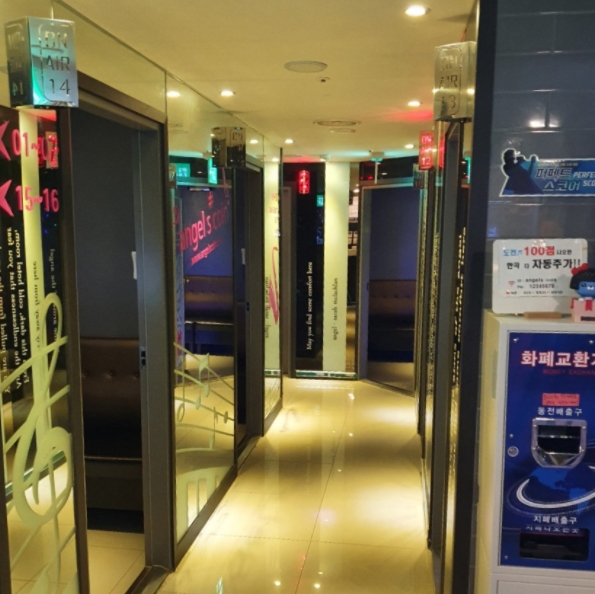
Due to the impact of the novel coronavirus disease (COVID-19), empty commercial spaces are increasing nationwide. As closures of multi-use facilities such as karaoke rooms and movie theaters continue, the number of stores shutting down without receiving any key money is rapidly rising.
According to the Korea Real Estate Board on the 28th, the vacancy rate of medium-to-large commercial spaces nationwide increased from 11.7% in the first quarter of last year to 12.7% in the fourth quarter, while small-scale commercial spaces rose from 5.6% to 7.1%.
The rising vacancy rate is interpreted as a result of an increasing number of self-employed business owners unable to endure the prolonged COVID-19 situation. The Korea Real Estate Board explained, "Due to the spread of COVID-19 last year and the implementation of stringent quarantine measures, vacancies and listings of commercial spaces increased, leading to a decline in rents."
Even in Seoul, where population density is high, the vacancy rate for medium-to-large commercial spaces rose by 0.9 percentage points to 8.8% in the fourth quarter compared to the first quarter, and small-scale commercial spaces increased by 3.5 percentage points to 7.5%. The vacancy rate for medium-to-large commercial spaces in the Itaewon commercial district, where a COVID-19 cluster infection occurred in May last year, reached 26.7%, and Myeongdong, affected by a sharp decline in foreign tourists, reached 22.3%.
While self-employed business owners are going through difficult times due to COVID-19, multi-use facilities that faced operational restrictions such as gathering bans were particularly hard hit. In fact, the number of karaoke room closures last year was 2,137, the highest in 13 years since 2007 (2,460 closures). In Gyeonggi Province alone, 524 karaoke rooms closed, followed by Seoul (369), Busan (163), and Daegu (141). The situation is similar for movie theaters. The total number of movie theaters that closed last year was 81, an 88.4% increase compared to the previous year. This is also the highest number in 12 years since 2008 (88 closures), when the financial crisis occurred.
Researcher Hyuntaek Cho of the Commercial Information Research Institute said, "Industries such as karaoke rooms, gyms, and cafes have suffered serious damage to their sales," adding, "Especially due to the perception of karaoke rooms as enclosed spaces, it will be difficult for sales to noticeably increase even with the easing of gathering ban orders."
Self-employed business owners, burdened with significant rent costs, are ultimately putting their stores up for sale, but it is not easy to find new owners. They are even forced to give up on key money. The average key money utilization rate last year was 55.4%, a sharp drop of 12 percentage points compared to the previous year. The average key money amount also fell by 4.7% to 40.74 million won compared to the previous year.
© The Asia Business Daily(www.asiae.co.kr). All rights reserved.
![From Bar Hostess to Organ Seller to High Society... The Grotesque Con of a "Human Counterfeit" [Slate]](https://cwcontent.asiae.co.kr/asiaresize/183/2026021902243444107_1771435474.jpg)
















