Expectations for Restructuring Benefits... Stock Price Recently Rises 60%
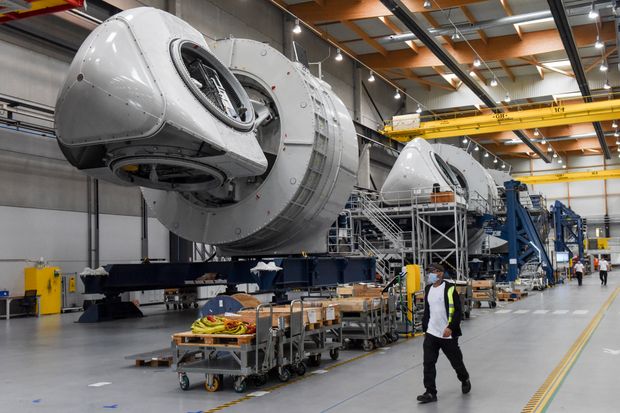
[Asia Economy Reporter Yujin Cho] General Electric (GE), which has undergone severe restructuring since the outbreak of the novel coronavirus disease (COVID-19), is approaching business normalization. It is being evaluated that the company is beginning to reap the fruits of high-intensity restructuring, almost dismantling the group to reduce its oversized body caused by past sprawling business expansions.
According to Bloomberg on the 26th (local time), GE announced in its earnings report that as of the end of the fourth quarter last year, cash flow showed a net inflow of $4.4 billion (approximately 4.85 trillion KRW), turning positive compared to the same period last year. This figure exceeded market expectations and continued the cash flow improvement trend following the previous quarter's $500 million.
The Wall Street Journal (WSJ) assessed that this was due to the reduction of workforce in the core aircraft engine manufacturing division by one-quarter and the beginning of profit improvement effects from the downsizing of the power and renewable energy businesses.
GE posted $22 billion in sales and earnings of 8 cents per share in the fourth quarter last year. Although slightly below the market expectation of 9 cents per share, sales exceeded market forecasts.
GE CEO Larry Culp said, "The increase in new orders in the power and renewable energy businesses influenced the improvement in cash flow." CEO Culp, the first external CEO since the company's founding, took office in October 2018 and has been leading the restructuring efforts for four years. He has sold or spun off more than ten businesses including healthcare and lighting, reorganizing the company to focus on aviation, power, and renewable energy.
CEO Culp self-assessed, "Last year was a year in which the results were as good as expected during the multi-year restructuring journey." He expressed optimism that GE's cash flow this year will improve to between $2.5 billion and $4.5 billion. The variable for performance improvement depends on the recovery of the aviation industry. He said, "The extent of cash flow improvement this year entirely depends on the turnaround of the aircraft engine division following the easing of the COVID-19 situation."
GE's aviation division sales plunged 35% year-on-year in the fourth quarter last year. This was largely due to a sharp decline in new aircraft orders caused by the COVID-19 impact. While he was confident that "the aviation industry will return to pre-COVID-19 pandemic levels this year," he refrained from predicting a specific recovery timeline due to significant uncertainties. He expected the aviation division's sales to show a recovery trend starting in the second half of this year.
GE's stock price closed at $11.29, up 2.73% from the previous day on the New York Stock Exchange. Expectations for normalization due to recent cash flow improvements, debt reduction, and cost savings have driven the stock up about 60% over the past six months.
Founded in 1892 by Edison as an electric consumer goods business, GE grew into the world's largest manufacturer by venturing into almost every field that electricity could power, including home appliances, medical devices, aircraft and automobile engines, nuclear fuel, and nuclear power plants. Early entry into finance in 1932, with subsidiaries like GE Capital, expanded its business through a sprawling expansion strategy. However, it suffered irrecoverable losses from the subprime mortgage crisis and has been undergoing company-wide restructuring since 2018.
© The Asia Business Daily(www.asiae.co.kr). All rights reserved.
!["The Woman Who Threw Herself into the Water Clutching a Stolen Dior Bag"...A Grotesque Success Story That Shakes the Korean Psyche [Slate]](https://cwcontent.asiae.co.kr/asiaresize/183/2026021902243444107_1771435474.jpg)
















