Ministry of the Interior and Safety 'Selected as Regional Balanced New Deal Representative Project'... Ministry of Trade, Industry and Energy Focuses on 'Strengthening Local Investment Promotion Subsidies' and More
Korean New Deal Fund to Invest 20 Trillion Won Over 5 Years in 40 New Deal Sectors
[Asia Economy Reporter Lim Cheol-young] The government has designated this year as the "First Year of Regional Balanced New Deal" and collaborated closely with 17 metropolitan cities and provinces to discuss detailed support measures.
On the afternoon of the 25th, the Ministry of the Interior and Safety held the "3rd Regional Balanced New Deal Subcommittee Meeting" via a non-face-to-face video conference and unveiled the "Detailed Support Measures for the Regional Balanced New Deal."
The meeting was attended by related ministries including the Ministry of the Interior and Safety, Ministry of Trade, Industry and Energy, Ministry of SMEs and Startups, Ministry of Land, Infrastructure and Transport, as well as Democratic Party lawmaker Hong Seong-guk (Head of the K-New Deal Committee Fund Support Team), and deputy heads of 17 metropolitan cities and provinces. Key departmental support strategies were introduced to create future growth engines through the selection of representative projects for the Regional Balanced New Deal and strengthening local investment promotion subsidies.
First, the Ministry of the Interior and Safety plans to select "Regional Balanced New Deal Representative Projects" among local government-led New Deal projects, considering their alignment with the Korean New Deal, and provide focused support to ensure rapid progress. Korean New Deal regional projects are selected based on criteria such as alignment, connectivity, specificity, and effectiveness with the Korean New Deal (digital, green, etc.). The selected Korean New Deal regional representative projects will be closely managed by quarterly progress checks and swift removal of obstacles. Projects that have undergone consultations with related agencies and preliminary procedures linked to the Korean New Deal comprehensive plan will be considered for inclusion in the 2022 budget proposal.
The Ministry of Trade, Industry and Energy will amend the Economic Free Zone Act to allow digital and green sectors to be designated as core strategic industries in each economic free zone, and expand benefits such as negotiated contracts and rent reductions for companies in these core strategic industries entering the economic free zones. Based on analysis of regional industrial bases and innovation capabilities, specialized industries such as digital and green New Deal sectors will be selected for each region, and incentives for local investment promotion subsidies will be strengthened for these industries (equipment subsidy support rate increased from 2% to 3~10%).
The Ministry of SMEs and Startups will support regulatory free zones to serve as hubs leading the Regional Balanced New Deal by supporting commercialization after demonstration exceptions and investing in the Regulatory Free Zone Fund (approximately 35 billion KRW). Following the designation of four new regulatory free zones related to the Korean New Deal at the end of last year, additional designations will be made within the year to expand their scale. Additionally, in connection with the Regional Balanced New Deal, existing regional key industries will be restructured by replacing and expanding them, and focused support (213 billion KRW) will be provided for regional industrial development such as new product development and prototype production according to the regional industrial promotion plan.
The Ministry of Land, Infrastructure and Transport will develop urban convergence special zones (Busan, Daegu, Gwangju, Daejeon, Ulsan) as regional innovation hubs and support corporate attraction and growth by combining comprehensive policies including industry, housing, and culture into cross-government projects. To this end, it plans to continuously discover incentive packages related to fostering innovative industries.
Furthermore, to discover and promote creative regional projects, practical financial management for "local government New Deal projects" will also be expanded.
Plans to support local government-led New Deal projects include simplifying local fiscal investment review procedures (exemption for representative projects and conducting reviews as needed), ongoing consultations on exceeding local bond issuance (holding review committee meetings as needed), and shortening the pre-feasibility study period for local public enterprises (from 6 months to 4~5 months) to enable timely project implementation by local governments. Special grants and differentiated incentives from the Local Allocation Tax and the Local Tax Special Account will also be provided to outstanding local governments. In May, a Regional Balanced New Deal Best Practice Competition involving local residents will be held to discover leading cases that are creative and have a strong public impact.
The Ministry of Land, Infrastructure and Transport will promote 10 collaborative projects to nurture innovation cities as hubs for the Regional Balanced New Deal together with relocated public institutions in innovation cities. Infrastructure such as eco-friendly energy platforms (Ulsan, Korea National Oil Corporation) will be established, and cooperation with local universities and companies will support the training of Regional Balanced New Deal talents through specialized department openings and practical training (Gangwon, National Health Insurance Service). Local public institutions will play a growth hub role by discovering and promoting Korean New Deal and Regional Balanced New Deal projects, providing manpower support, and pursuing regulatory innovation to create a sustainable Regional Balanced New Deal ecosystem.
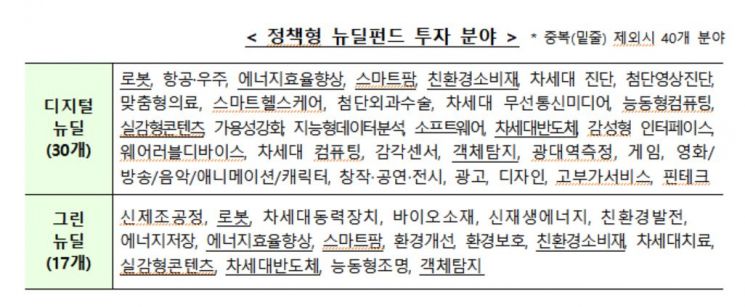
Meanwhile, lawmaker Hong Seong-guk and Korea Growth Finance also attended the meeting to present the Korean New Deal Fund, which will lead growth engines in new industrial sectors through focused investment in digital and environmental energy fields. The Korean New Deal Fund will be established as a policy-type New Deal fund totaling 20 trillion KRW over five years and will invest in 40 New Deal investment sectors according to joint New Deal investment standards.
Minister Jeon Hae-cheol stated, "This year marks the full-scale promotion of the Regional Balanced New Deal, and we will strengthen communication with the field so that local governments can fully utilize the support measures prepared by related ministries and achieve tangible results," and added, "Local governments should work together with residents and local companies to devise creative Regional Balanced New Deal strategies tailored to local circumstances."

© The Asia Business Daily(www.asiae.co.kr). All rights reserved.
![Clutching a Stolen Dior Bag, Saying "I Hate Being Poor but Real"... The Grotesque Con of a "Human Knockoff" [Slate]](https://cwcontent.asiae.co.kr/asiaresize/183/2026021902243444107_1771435474.jpg)

















