Ongoing Conflicts Expected Over Advanced Technologies Like Semiconductors
"Perspectives Unlikely to Change... Conflicts Must Be Endured"
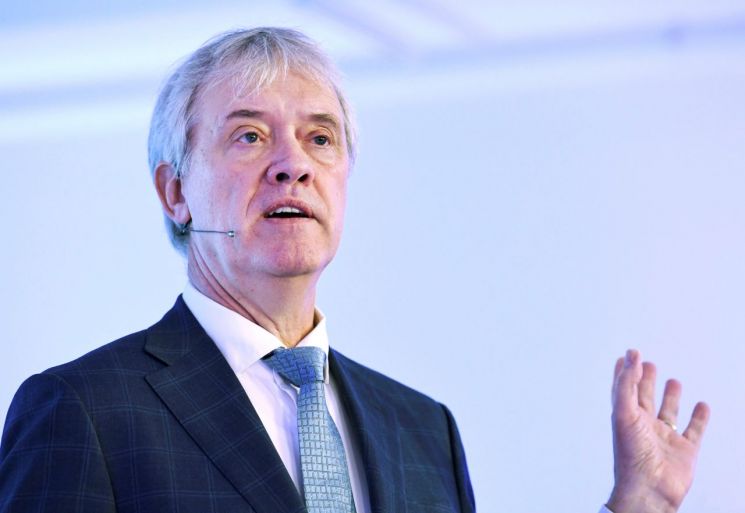
[Asia Economy Reporter Jeong Hyunjin] As U.S. President Joe Biden officially took office, attention is focused on the future direction of U.S.-China relations. Peter Wennink, CEO of Dutch semiconductor equipment company ASML, predicted that the fundamental U.S. perspective on China would not change from the time of former President Donald Trump, and that conflicts surrounding semiconductor technology would remain.
According to Bloomberg and others on the 22nd (local time), CEO Wennink stated in a recent interview following the announcement of ASML's Q4 performance last year that ASML had requested an export license from the Dutch government but had not yet received approval, preventing the shipment of extreme ultraviolet (EUV) lithography equipment to China. He said, "The Dutch, European, and U.S. governments are having very deep and lengthy discussions about the strategic nature of our technology," adding, "Even with a change in the U.S. administration, I do not expect the basic U.S. perspective on China to change. China is a huge competitor."
ASML is a company that manufactures EUV equipment essential for semiconductor fine processes. With rising demand for cutting-edge semiconductors needed for artificial intelligence (AI), 5G mobile communications, and autonomous driving, its value has significantly increased. Currently, it exclusively supplies this equipment to Samsung Electronics and Taiwan's TSMC. It is also a company that Samsung Electronics Vice Chairman Lee Jae-yong personally visited during a business trip to Europe in October last year to meet CEO Wennink and discuss ways to strengthen cooperation.
The company has faced difficulties regarding exports to China throughout the Trump administration. Due to U.S. government restrictions amid conflicts with China, the Dutch government did not grant export licenses, making it impossible to supply equipment to China's largest foundry SMIC. Earlier, the U.S. Department of Commerce banned transactions with SMIC in September last year, citing risks that exports could be used for military purposes. The Biden administration is also likely to continue restraining China regarding semiconductors and advanced technologies, so it is difficult to expect an immediate improvement in the challenging industry situation.
CEO Wennink also anticipated at a foreign media conference on the 14th that conflicts between the U.S. and China over semiconductor technology would intensify. He said, "(The U.S.-China conflict) will not change. To be honest, this (semiconductor) is at the core of both countries' industrial policies," adding, "Because it is semiconductor technology that creates value bases, it will not change, and we must endure these conflicts."
For ASML, Chinese companies are the third-largest customers after Taiwan and South Korea. According to Chinese economic media Caixin, ASML's lithography equipment sales last year amounted to 10.3 billion euros (approximately 13.8 trillion won), with 36% sold to Taiwan, 31% to South Korea, and 18% to China. Although exports to China increased by 6% compared to the previous year, exports have been blocked since the end of last year.
© The Asia Business Daily(www.asiae.co.kr). All rights reserved.
![Clutching a Stolen Dior Bag, Saying "I Hate Being Poor but Real"... The Grotesque Con of a "Human Knockoff" [Slate]](https://cwcontent.asiae.co.kr/asiaresize/183/2026021902243444107_1771435474.jpg)











