First, fully commit to creating a 'Safe Environment City' with comfortable living... Second, build a 'Future Economy City' that adds value... Third, establish a 'Welfare and Health City' where everyone is happy... Fourth, develop a 'Cultural and Educational City' with a rich life...
Fifth, lay the foundation for an 'Autonomous Sovereignty City' where residents are the owners
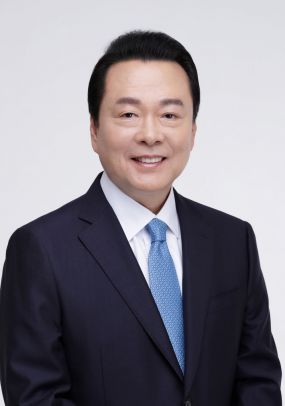
[Asia Economy Reporter Jong-il Park] Gangseo-gu, Seoul (District Mayor Noh Hyun-song) has announced the new year’s district administration direction to create a ‘Premium Gangseo’ and has begun full-scale operations.
The district plans to make 2021 a ‘year of leap’ with further growth through detailed plans aligned with district goals such as a safe and environmentally friendly city, future economic city, welfare and health city, cultural and educational city, and autonomous sovereignty city.
◆ Full Effort to Create a 'Safe and Environmentally Friendly City' Where Residents Live Comfortably
Construction of Gangseo Safety Education Center, Pursuit of WHO International Safe City Certification... Creating a Carbon Neutral City Focused on People and Environment
In the new year, the district will focus all efforts on making Gangseo a safe and environmentally friendly city where all residents can live comfortably.
First, it will actively promote the construction of the experience-centered Gangseo Safety Education Center. Full-scale construction will begin next year, aiming for opening in 2022.
The Gangseo Safety Education Center will be built in Naebalsan-dong with three above-ground floors and a total floor area of 3,780㎡. It will include hands-on facilities related to typhoons, earthquakes, fine dust, yellow dust, first aid, traffic safety, and a civil defense training center.
This will help make safety education a part of daily life in the region and secure the ability to respond to disasters.
Alongside this, the district is actively pursuing WHO International Safe City certification, targeting 2022.
To this end, in 2019, the Gangseo-gu Safe City Ordinance was enacted, and two rounds of research projects were conducted. The district also submitted a letter of intent to pursue international safe city certification to Ajou University’s Community Safety Promotion Research Institute and signed a business agreement with the International Safe Cities Support Center, laying the groundwork for certification.
This year, the district completed the formation of the Safety City Committee and the Working Committee, and submitted the certification application to the Swedish International Safe City Certification Center, advancing the certification process in depth to enhance residents’ sense of safety.
The district is also accelerating efforts to create a carbon-neutral city focused on people and the environment.
It will establish a greenhouse gas inventory capable of calculating emissions and reductions by source and develop a climate change roadmap.
With the goal of reducing greenhouse gas emissions by 40% by 2030 and achieving ‘carbon-neutral city Gangseo’ with zero emissions by 2050, the district will establish implementation plans across 17 sectors including energy, ecosystems, and jobs.
◆ Creating a 'Future Economic City' That Adds Value to the Region
Continued Negotiations to Ease Airport Height Restrictions, Early Start of Western Metropolitan Railroad Project... Establishing Basic Development Plans Tailored to Each Region, Enhancing Vitality by Linking Traditional Markets and Local Areas
In the new year, the district will swiftly pursue follow-up measures to ease the long-standing height restrictions.
Having led the revision of related laws and the designation and announcement of aeronautical review agencies, the district plans to continue close consultations with the government and others to ensure follow-up actions such as ICAO international standard revisions proceed.
Additionally, the Western Metropolitan Railroad project, which has been pursued for a long time, will continue efforts for early construction following the resolution of the vehicle depot issue and completion of the preliminary feasibility study.
Alongside this, the district will lead balanced regional development by establishing basic development plans tailored to each area to promote harmonious growth.
First, it will develop urban management plans for existing old downtown areas such as Hwagok-dong, strengthening commercial and business functions to revitalize the local economy and promote balanced development. It will also prepare maintenance plans for natural scenic zones and surrounding areas to improve aging residential environments.
Through regeneration projects considering local characteristics such as alleyways and low-rise residential areas, the district will create comfortable living environments for residents. It will also focus on new types of urban regeneration projects linking traditional markets and their surrounding areas to revitalize old downtown districts.
In particular, a customer support center and parking lot will be constructed within traditional markets to ensure convenience for shopping, and the district will continuously discover and nurture specialized factors of the Gangseo distribution complex, laying the foundation for enhancing competitiveness and self-sustained growth of local commercial districts.
To solve parking issues, the district plans to expand parking lots around residential areas.
In addition to small-scale parking lots promoted as part of living SOC, the construction of underground public parking lots at Ujang Neighborhood Park and Banghwa-daero will also be pursued.
◆ Establishing a 'Welfare and Health City' Where All Residents Are Happy
Discovering Welfare Blind Spots and Providing Continuous Care for Vulnerable Groups, Strengthening Publicness for Safe Childcare... Promoting Rights of Persons with Disabilities, Realizing Happiness in Daily Life for Middle-aged and Older Adults, Improving Working Conditions for Essential Workers
In the new year, the district will strengthen the discovery of welfare blind spots and the continuous care system for vulnerable groups.
It will organically build a social safety net through public-private cooperation and provide visiting welfare services based on communication and consideration.
For households facing complex crises, various services will be linked and provided using private resources. For low-income and working poor households, asset formation support will be offered to help them prepare self-reliance funds and advance socially.
Especially, by establishing an online welfare platform suited to the untact era, the district plans to improve the system to enable continuous case management and ongoing care for vulnerable groups even in non-face-to-face situations.
It will also expand publicness in childcare by increasing the number of national and public daycare centers, paying close attention to preventing child abuse and supporting services for children under protection, thereby strengthening the public role of the child protection system.
For persons with disabilities, the district will discover and provide various jobs, support social participation and independent activities, and offer life-oriented services.
It will early establish the 50+ Center to support life re-design for middle-aged and older adults, building a professional support system for education, jobs, leisure, and exchange.
Support for essential workers exposed to poor working conditions due to COVID-19 will also be expanded.
The district will activate the operation of rest shelters for mobile workers such as delivery drivers, create comfortable rest facilities for apartment complex workers like security guards and cleaners, and spread a culture of consideration for socially vulnerable groups.
◆ Creating a 'Cultural and Educational City' Where Everyone’s Life Is Enriched
Creating a Cultural Landmark in Magok Cultural Street, Expanding Open Spaces for Residents... Fostering Future Talents through Gangseo Innovation Education District
Magok Cultural Street, which will become the district’s new cultural hub, will be developed into a cultural landmark filled with seasonal festivals and street events by linking cultural facilities, connecting green spaces, cultural parks, and Magok Plaza with surrounding commercial areas.
In addition, with the construction of the Gangseo Arts Center, the district plans to revitalize the cultural street along the boulevard park to maximize synergy effects.
The district will also expand cultural, educational, and communication spaces for residents, including the confirmed branch of the Seoul Library and the Seonam District Citizen Hall, which is awaiting service results.
In education, responding to the new normal era, the district will build an integrated online and offline educational environment, support career experience activities, and operate customized programs, dedicating efforts to nurturing future creative talents.
The core projects of the Gangseo Innovation Education District will also flexibly respond to the changed educational paradigm by combining face-to-face and non-face-to-face methods, establishing a public-private-academic cooperation system to create an educational community that learns and grows together.
In particular, in the new year, to reduce the economic burden on students entering middle and high school and their parents, the district plans to support 300,000 KRW entrance preparation funds usable for purchasing school uniforms and tablet PCs, thereby strengthening the publicness of education.
◆ Laying the Foundation for a 'Self-Governing Sovereignty City' Where Residents Are True Owners
Realizing Genuine Resident Autonomy through Resident Participation... Launching Four Times Faster Free Public Wi-Fi Service
In the new year, the district will expand the resident autonomy committees, which were piloted in five neighborhoods, to all neighborhoods, activating them as self-sustaining organizations that discover, plan, and execute village agendas independently.
It will support the revitalization of village communities through community contest projects at different growth stages and resident-friendly village project support.
Since citizen participation budgeting, where residents directly discover and propose projects, has continuously achieved good results, the district plans to establish systematic plans to ensure that projects requested by residents are reflected in the participatory budget in the new year as well.
The district will actively develop Gangseo-style cooperative governance content and diversify autonomy and decentralization education at the Gangseo Campus of the Autonomy and Decentralization University, targeting local residents and public officials to foster understanding of local decentralization and awareness of autonomous sovereignty.
Additionally, Seoul’s public Wi-Fi service ‘Kkachion,’ piloted in the district, will provide services throughout living areas such as parks, traditional markets, and major roads starting from the new year.
District Mayor Noh Hyun-song said, “Starting with the development of the Magok district, the district has grown rapidly day by day and has now risen as the central city of the southwest area and a representative city of Seoul that everyone pays attention to. We will continue to cooperate and communicate with residents and devote ourselves to opening the future of Gangseo-gu as a sustainable innovative growth city.”
© The Asia Business Daily(www.asiae.co.kr). All rights reserved.
















