Korea Real Estate Board January 3rd Week Apartment Price Trends
Capital Region Apartment Price Increase Rate Highest in 9 Years
Seoul's Increase Also Growing Weekly
Jeonse Price Rising Trend Continues... Seoul Remains Flat
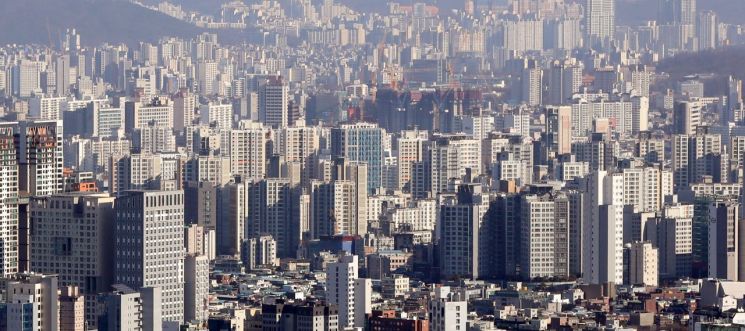
[Asia Economy Reporter Moon Jiwon] The upward trend in Seoul apartment prices is intensifying. Not only popular redevelopment complexes in the Gangnam area but also most other districts such as Dongdaemun and Mapo are seeing a recovery in buying demand, leading to a larger price increase.
In particular, the weekly increase rate of apartment prices in the Seoul metropolitan area recorded the highest level in about nine years.
Although the jeonse (long-term lease) market nationwide has seen a reduced rate of increase compared to the end of last year, it still maintains a high growth rate. In Seoul, apartment jeonse prices have risen for 82 consecutive weeks since July 2019.
According to the weekly apartment price trend for the third week of January announced by the Korea Real Estate Board on the 21st, as of the 18th, nationwide apartment prices rose by 0.29%, expanding the increase from the previous week (0.25%). After rising 0.29% in the third week of December last year, the rate of increase had narrowed for three consecutive weeks until last week, but this week the increase widened again.
Seoul's Increase Widens... Strong Performance in Gangnam Area including Songpa-gu
The apartment price increase rate in Seoul expanded from 0.07% last week to 0.09% this week. This is the first time since the second week of July last year (0.09%), right after the announcement of the July 10 measures, that the weekly apartment price increase rate in Seoul reached 0.09%.
Due to the government's continued regulations, Seoul apartment prices rose by only 0.01% to 0.03% weekly from August to November last year, but the rate of increase grew almost every week starting in December. This year, buying demand is recovering with increases of 0.06% → 0.07% → 0.09%.
In Seoul, Songpa-gu (0.18%) showed the highest increase rate. Other Gangnam area districts such as Gangnam and Gangdong-gu (0.11%) and Seocho-gu (0.10%) also showed strong upward trends. It is analyzed that buying sentiment is gathering in popular redevelopment complexes such as Jamsil-dong in Songpa-gu, Apgujeong-dong in Gangnam-gu, and Banpo-dong in Seocho-gu, driving prices up.
In the northern part of Seoul, price increases expanded mainly in popular complexes such as Dongdaemun and Mapo-gu. Dongdaemun-gu (0.15%) saw a larger increase than the previous week (0.09%) due to concentrated buying demand around newly built apartments near subway stations in Jeonnong and Dapsimni-dong. Gangbuk and Nowon-gu (0.10%) also saw significant rises mainly in new or redevelopment project areas.
The Korea Real Estate Board explained, "While market stabilization policies such as supply measures and strengthened household loan management continue, prices are rising mainly in areas with redevelopment projects, transportation benefits, new buildings, and near subway stations."
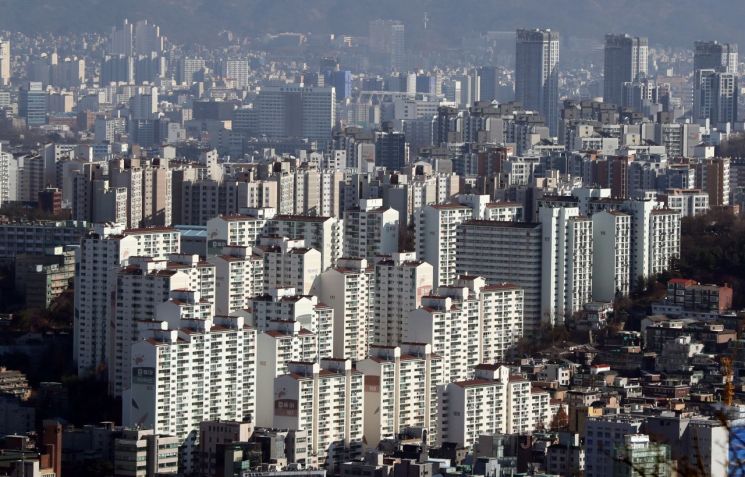
Metropolitan Area Apartment Prices Leap... Provincial Areas Also Rising
Apartment prices in the metropolitan area rose 0.31% this week, marking the highest weekly increase in 8 years and 8 months since the Korea Real Estate Board began compiling statistics.
In the metropolitan area, apartment prices in Gyeonggi-do led the upward trend, increasing from 0.36% last week to 0.42% this week.
Yangju-si (1.27%) saw a significant rise mainly in Okjeong, Deokjeong, and Goam-dong, areas benefiting from transportation improvements such as GTX-C and the extension of Line 7. Goyang-si (0.95%) and Uiwang-si (0.97%), centered around Deokyang-gu (1.10%), where buying demand has recently concentrated, as well as Namyangju-si (0.77%), also showed large increases.
Provincial areas rose 0.26% this week, also expanding from the previous week's 0.26% increase.
By city and province, the increases were in the order of Incheon (0.40%), Busan (0.38%), Daejeon (0.38%), Daegu (0.36%), Ulsan (0.36%), Chungnam (0.30%), Jeju (0.30%), Gyeongbuk (0.28%), Gangwon (0.25%), and Sejong (0.22%).
In Busan (0.38%), Gijang-gun (1.04%) rose mainly in newly built apartments in Jeonggwan-eup with favorable living conditions, and Nam-gu (0.72%) increased mainly in Yongho-dong and Daeyeon-dong subway station areas with redevelopment expectations. Haeundae-gu (0.38%) saw a strong rise in Jwadong.
In Ulsan (0.36%), the increases were in the order of Buk-gu (0.46%), Nam-gu (0.33%), Ulju-gun (0.32%), and Dong-gu (0.26%). The apartment price increase rate in Sejong City slightly narrowed from 0.24% to 0.22%.
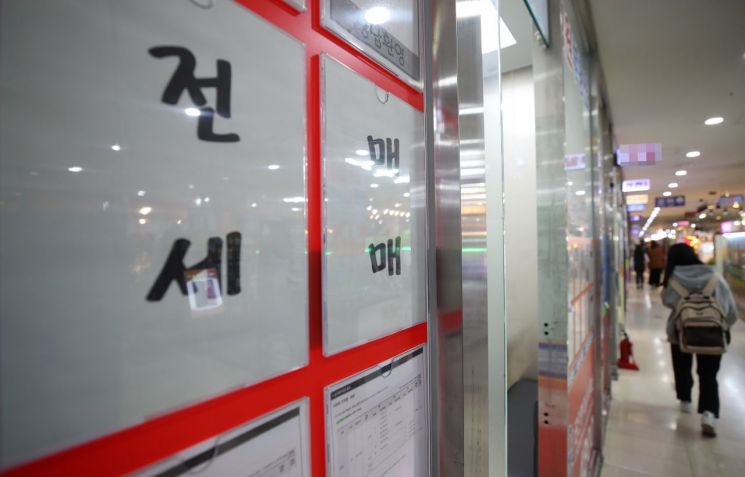
Jeonse Price Increase Rate Slows... Seoul Sees 82 Consecutive Weeks of Rise
The jeonse market continues its upward trend amid a persistent shortage of listings.
Nationwide apartment jeonse prices rose 0.24% this week, slightly narrowing the increase from 0.25% last week.
In Seoul, jeonse prices rose 0.13%, the same as last week. The Korea Real Estate Board explained, "In some parts of the Gangnam area where prices had surged, listings have accumulated and the rate of increase has narrowed, but in popular mid-to-low price or subway station areas in northern Seoul, the upward trend continues, maintaining last week's increase rate."
In Seoul, Songpa-gu (0.21%) showed the highest increase rate, followed by Gangnam-gu (0.15%), Gangdong-gu (0.13%), and Seocho-gu (0.11%), where jeonse prices also rose significantly.
Besides the four Gangnam districts, mid-to-low price complexes in Nowon-gu (0.17%) and Jungnang-gu (0.16%), as well as newly built complexes in Yongsan-gu (0.17%) and Mapo-gu (0.16%), saw significant jeonse price increases.
By city and province, jeonse prices rose the most in Sejong (1.17%), followed by Daejeon (0.48%), Ulsan (0.40%), Busan (0.33%), Jeju (0.32%), Incheon (0.30%), Gangwon (0.26%), Gyeonggi (0.25%), Daegu (0.25%), Chungnam (0.25%), and Gyeongbuk (0.23%).
© The Asia Business Daily(www.asiae.co.kr). All rights reserved.



















