Alipay and WeChat Pay Market Share Likely to Shake Up China's Payment Market
Seen as China's Government's Tough Measure to Protect Financial Market and Interpreted as 'Eumcham Ma Yun'
[Asia Economy Beijing=Special Correspondent Jo Young-shin] In the future, if a company’s market share exceeds 50% in China’s online and mobile payment market, it will become subject to antitrust investigations. This is expected to cause significant ripples in the Chinese online payment market, which is currently monopolized by Alipay (Zhifubao) and WeChat Pay (Weixin Zhifu).
According to China’s state-run Xinhua News Agency on the 21st, the People’s Bank of China (PBOC) released a draft of the "Non-bank Payment Institutions Regulation" (draft for public consultation) on its official website the day before. This draft includes definitions of electronic payment service types, business scope, and regulations on monopolies. This is the first time Chinese authorities have introduced regulations related to monopolies in the non-bank electronic payment service sector.
First, in the online payment market, if a single legal entity’s market share exceeds 50%, or if two legal entities’ combined market share exceeds two-thirds, they will be subject to antitrust investigations. If three legal entities’ combined market share exceeds three-fourths, they will also be subject to investigation.
If deemed monopolistic, the PBOC, together with the State Council, can investigate the relevant legal entity and may request the company’s division. The draft regulation also limits payer payment services to account opening and payment services.
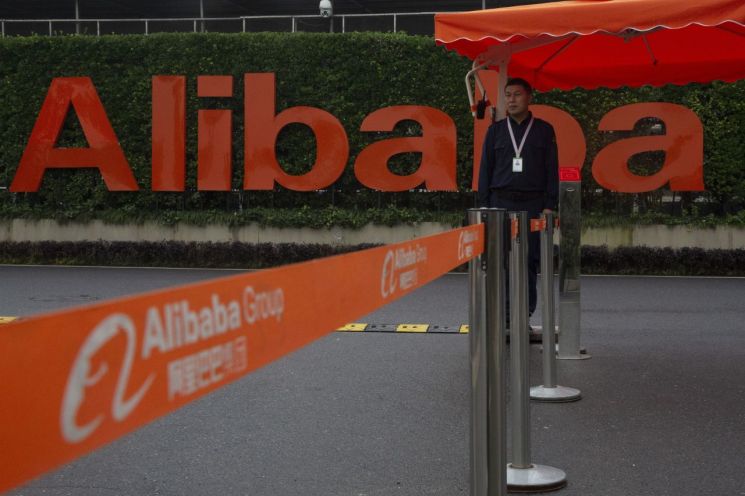
Xinhua News Agency evaluated that the supervisory authorities’ top priority with the draft regulation is to prevent financial risks and that it provides clear criteria for determining market dominance. It also reported that a fair market economy order will protect the legitimate rights and interests of market participants and promote the healthy development of the payment service market.
If the non-bank payment institution regulation prepared by Chinese financial authorities is finalized and implemented, Alipay and WeChat Pay are expected to take a direct hit. As of the end of June last year, Ant Group’s Alipay held a market share of 55.4%. WeChat Pay’s market share was 38.5%. The combined market share of the two legal entities is a staggering 93.9%. Some voices suggest that Alipay could be split. Alipay currently operates small credit loan services called "Jiebei" and "Huabei."
Within China’s financial sector, there are also criticisms that Chinese authorities have preemptively prepared related regulations in light of the opening of China’s financial market. The definition and scope of monopolies have been clearly stipulated: a single legal entity with over 50% market share, two legal entities with over 66.6%, and three legal entities with over 75% are subject to antitrust investigations.
If Alipay and WeChat Pay maintain a combined market share below 66.6%, foreign companies’ market share cannot exceed 8.4%. This means that even foreign companies with strong brands, capital, and technology will inevitably face growth limitations when entering China’s online and mobile payment market.
U.S. online and mobile payment company PayPal is set to officially enter the Chinese market soon after acquiring 100% of the shares of Chinese electronic payment company GoPay. PayPal has over 286 million active payment accounts in more than 200 countries worldwide and supports transactions in over 100 foreign currencies.
This is why some in China say this regulation is like "Eumchamma-sok (Eumchamma Yun)" (a pun referring to Jack Ma).

It is also analyzed as a desperate measure by Chinese authorities to protect the financial industry and that the Chinese government quickly established a protective shield in advance.
Along with this, it is not incorrect to analyze that the Chinese leadership was uneasy about a single private company controlling the financial information of over one billion Chinese individuals.
In fact, the Central Committee of the Communist Party of China (CPC Central Committee) is seeking ways to build a national integrated government service platform by 2022.
On the 10th, the CPC Central Committee announced the "China Rule of Law Construction Plan," which includes strengthening legal measures against unfair competition and market monopolies. The announcement contains the phrase "Internet + Government Services." The goal is to establish a national integrated government service platform by the end of 2022 to realize a unified network. This is also interpreted as the government taking over and directly managing and supervising the personal information (including financial transaction details) of over one billion people held by Chinese IT companies.
Meanwhile, the People’s Bank of China will accept public comments on this draft regulation until the 19th of next month.
© The Asia Business Daily(www.asiae.co.kr). All rights reserved.
!["The Woman Who Threw Herself into the Water Clutching a Stolen Dior Bag"...A Grotesque Success Story That Shakes the Korean Psyche [Slate]](https://cwcontent.asiae.co.kr/asiaresize/183/2026021902243444107_1771435474.jpg)

















