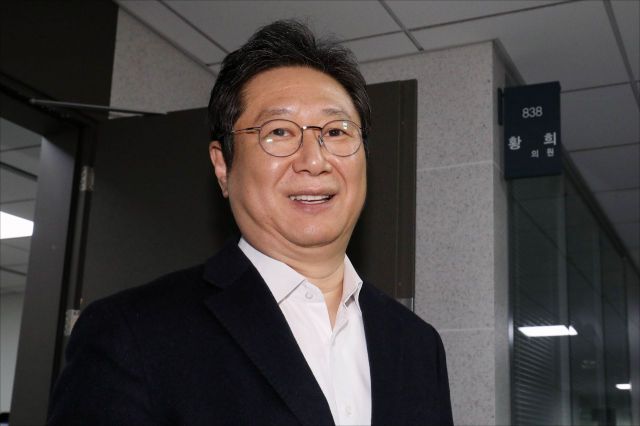
 On the 20th, when President Moon Jae-in reshuffled three ministries, Hwang Hee, a member of the Democratic Party of Korea who was nominated as the Minister of Culture, Sports and Tourism, expressed his thoughts at the National Assembly Members' Office Building. Photo by Yoon Dong-ju doso7@
[Asia Economy Reporter Lee Ji-eun] President Moon Jae-in has appointed a large number of politicians in the ‘third cabinet reshuffle’ to take charge of the second half of his term. Among the three ministries subject to reshuffle, politicians were nominated for two. This is interpreted as a strategic move to increase the likelihood of passing confirmation hearings and to secure control over ministries in the latter half of the term. However, no female ministers were included in this reshuffle, causing the proportion of female ministers in the cabinet to drop to 16%, half of the originally pledged 30%.
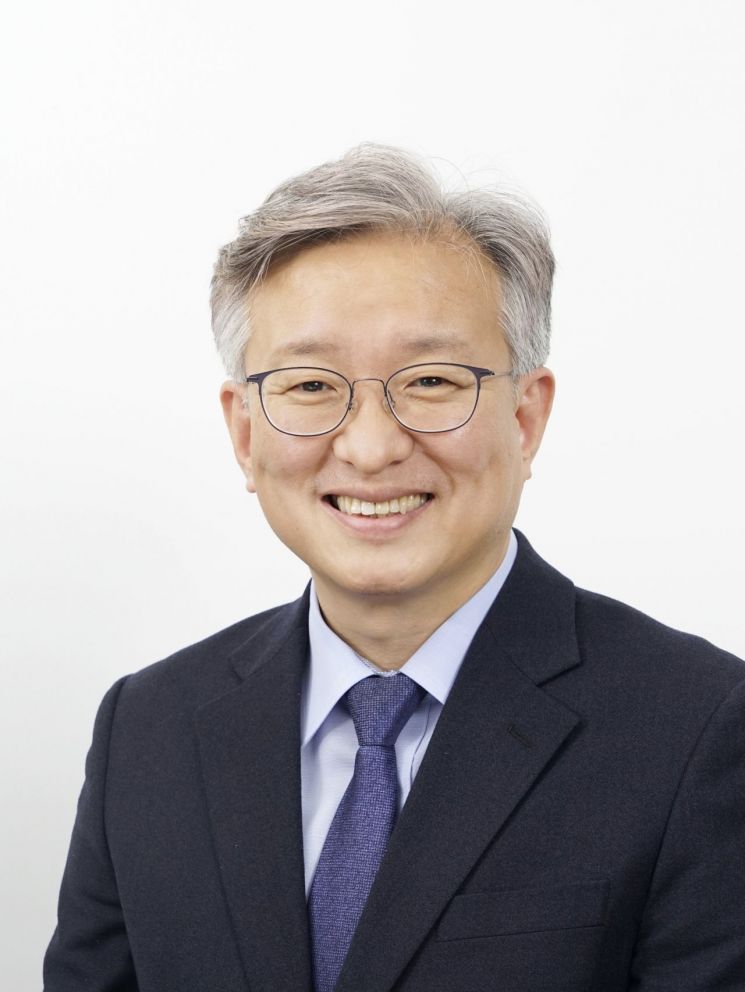
On the 20th, the Blue House announced the reshuffle of three ministries, nominating Jeong Eui-yong, former Blue House National Security Office chief, as the successor to Foreign Minister Kang Kyung-wha. For the Ministry of SMEs and Startups, Park Young-sun, who resigned that morning to run in the Seoul mayoral by-election, was succeeded by Kwon Chil-seung, a member of the Democratic Party. Hwang Hee, also a Democratic Party member, was nominated as Minister of Culture, Sports and Tourism.
Nominating re-elected lawmakers for two of the three ministries is seen as a measure to facilitate smooth governance in the second half of the term. This is not a ‘bureaucratic reshuffle’ aimed at stability but suggests a push for rapid progress on key policy tasks. Additionally, it likely considered the generally higher chances of lawmakers passing confirmation hearings. Amid ongoing crises such as the recent decline in presidential approval ratings, it is believed that the president’s intention was to avoid any mid-process disqualification of cabinet nominees. Politician ministers have the advantage not only in policy execution but also in controlling their ministries.
On the other hand, the entry of ruling party politicians into the cabinet inevitably raises concerns about threatening the ‘separation of powers.’ In response to such concerns, Chief Secretary Jeong dismissed them, stating, "The criteria for appointments are morality, expertise, and leadership rather than background." This reshuffle was somewhat smaller than the initially expected four to five ministries. When asked if there would be an additional reshuffle, Chief Secretary Jeong said, "It is difficult to comment on personnel authority," but left the door open by adding, "If necessary, it can be done at any time."
There were predictions that female ministers would be appointed to maintain the pledge of ‘30% female ministers,’ but the outcome was contrary. In the previous reshuffle, the positions of Minister of Justice Choo Mi-ae and Minister of Land, Infrastructure and Transport Kim Hyun-mi were replaced by male ministers, and with Minister Park, who was likely to run for Seoul mayor, resigning, and Foreign Minister Kang Kyung-wha also replaced in this reshuffle, the proportion of female ministers significantly decreased.
Including Han Jeong-ae, the nominee for Minister of Environment currently undergoing confirmation hearings, only three female ministers remain: Deputy Prime Minister and Minister of Education Yoo Eun-hye, and Minister of Gender Equality and Family Jeong Young-ae. This accounts for 16% of the 18 ministries, half of the 30% originally pledged by President Moon. Regarding this, President Moon reportedly said, "We plan to expand through future appointments and organizational improvements," and "We will continuously discover female talents," as relayed by Chief Secretary Jeong.
© The Asia Business Daily(www.asiae.co.kr). All rights reserved.
![User Who Sold Erroneously Deposited Bitcoins to Repay Debt and Fund Entertainment... What Did the Supreme Court Decide in 2021? [Legal Issue Check]](https://cwcontent.asiae.co.kr/asiaresize/183/2026020910431234020_1770601391.png)
















