Liquidity Supply Mitigated COVID-19 Shock... Concerns Over Quantitative Easing Reduction Rise
Financial Markets 'Wobbled' After Bernanke's Remarks... Powell Emphasizes Communication
[Asia Economy Reporter Jeong Hyunjin] "Another lesson from the global financial crisis is that we must be cautious and not rush to seek an exit too quickly."
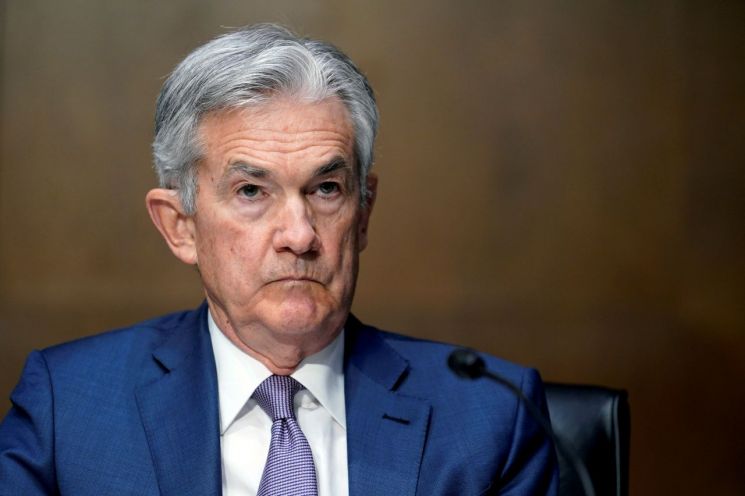
Jerome Powell, Chairman of the U.S. Federal Reserve (Fed), attempted to calm the market. In a speech on the 14th (local time), as concerns grew that the quantitative easing policy actively implemented to prevent the economic recession caused by COVID-19 would be scaled back, he emphasized that more time is needed and that it is not yet time to discuss the 'exit.' This aligns with the statement made the day before by Christine Lagarde, President of the European Central Bank (ECB), who said, "We should not hint at the possibility of tapering quantitative easing too early."
The reason why the heads of central banks in the U.S. and Europe have made such remarks consecutively is due to concerns about the 'taper tantrum.' Recently, as worries about rapid inflation due to liquidity have increased, there have been suggestions that quantitative easing might be reduced as early as this year. To understand the connection between quantitative easing, inflation, and the taper tantrum, one must first understand the meaning of 'tapering.'
According to Bloomberg and others on the 16th, tapering is used in financial markets to mean the gradual reduction of quantitative easing policies by central banks. Originally, it was a sports term used to describe endurance athletes like marathon runners or swimmers reducing their training volume before a competition, but in May 2013, Fed Chairman Ben Bernanke used this term to mean the reduction of quantitative easing during his testimony to Congress, and it was applied to financial markets.
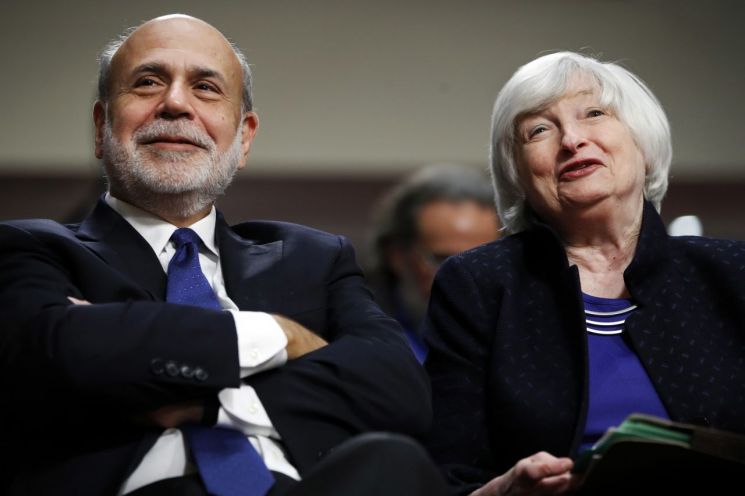 Ben Bernanke (left in the photo), former Chairman of the U.S. Federal Reserve (Fed), and Janet Yellen, former Fed Chair and nominee for the next U.S. Treasury Secretary
 [Image source=AP Yonhap News]
The taper tantrum refers to the market shock caused by such tapering, where investors suddenly withdraw funds, causing emerging market currencies or stock markets to plummet in a tantrum-like reaction. After central banks inject liquidity into the market to prevent economic recession, if inflation rises sharply, they withdraw liquidity by raising benchmark interest rates or reducing bond purchases to lower inflation. Investors, fearing that the previously rising market will turn downward, strengthen their risk aversion and rapidly pull funds out of high-risk emerging markets. The shock caused here is called the taper tantrum.
The taper tantrum remembered by current central bank heads began with the remarks of then-Fed Chairman Bernanke in May 2013, just eight years ago. At that time, the Fed was supplying liquidity and maintaining quantitative easing policies such as asset purchases to revive the market after the global financial crisis, and as a result, the Fed's total assets had increased significantly from about $1 trillion in 2008 to about $3 trillion in 2013. Based on this, the economy recovered significantly, and Bernanke said, "We may reduce the pace of asset purchases in some upcoming meetings."
This statement shook the global financial markets greatly. Investors believed that without the liquidity supplied by the Fed, the economy would fall into recession. The possibility of the Fed reducing asset purchases caused U.S. Treasury yields to surge, and funds that had flowed into emerging markets were rapidly withdrawn, causing emerging market stock prices and currencies to plummet. Especially, the five vulnerable countries with insufficient foreign exchange reserves?India, Indonesia, Turkey, Brazil, and South Africa?faced concerns of a foreign exchange crisis.
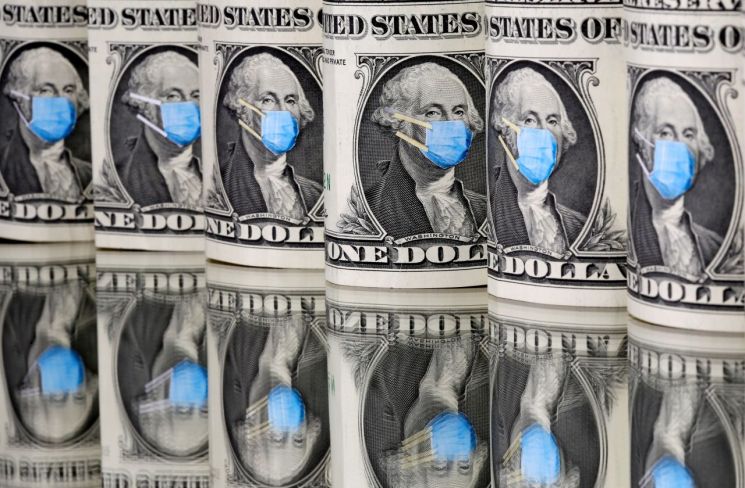
The Fed's current asset size reaches $7 trillion. Since it has rapidly purchased assets in large volumes to prevent economic damage caused by COVID-19, a large amount of funds have been injected into the market. However, despite the distribution of COVID-19 vaccines, lockdown measures for quarantine are still being implemented worldwide, and concerns about a 'double dip' remain. In a situation of high uncertainty about the global economy, if a sudden message about tapering quantitative easing emerges, it could cause a shock greater than that of 2013. This is the background behind the remarks of Chairman Powell and President Lagarde.
Chairman Powell has repeatedly emphasized communication with the market. He said that when it is time to taper quantitative easing, "the whole world will know," and stressed, "We will communicate very clearly with the public long before considering the start of a gradual reduction in asset purchases." Thomas Barkin, President of the Richmond Federal Reserve Bank, said, "We have clearly learned from the experience six to seven years ago. Powell was at the Fed at that time," and added, "I expect they will do their best to communicate."
© The Asia Business Daily(www.asiae.co.kr). All rights reserved.
![Clutching a Stolen Dior Bag, Saying "I Hate Being Poor but Real"... The Grotesque Con of a "Human Knockoff" [Slate]](https://cwcontent.asiae.co.kr/asiaresize/183/2026021902243444107_1771435474.jpg)


















