Energy Economics Institute "Total Energy Demand Expected to Increase by 4.1%... Decreased by 4.6% Last Year"
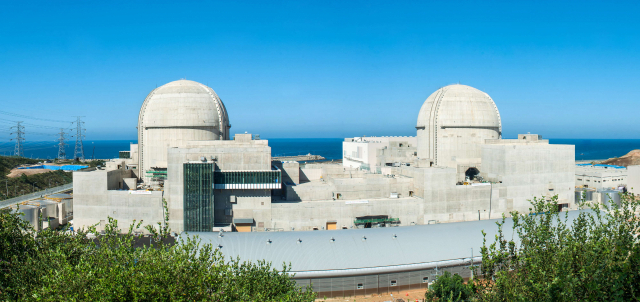
[Asia Economy Reporter Moon Chaeseok] As South Korea's economy and society gradually recover from the shock of the novel coronavirus disease (COVID-19) this year, energy demand is expected to rebound for the first time in two years. Nuclear power is anticipated to increase by 11.5% due to the entry of Shin Hanul Units 1 and 2.
According to the "Energy Demand Outlook" released on the 17th by the Korea Energy Economics Institute (KEEI), total energy demand this year is projected to rise by 4.1% compared to last year.
This optimism stems from the gradual recovery from the impact of COVID-19, thanks to vaccine development, which is expected to revitalize production activities in manufacturing and service sectors.
Energy demand (consumption) is an indicator that reflects the real economy and generally follows a curve similar to the economic growth rate.
By energy source, demand is predicted to increase for most sources except coal.
Oil demand is expected to grow significantly by 4.4%, driven by increased demand in the industrial and transportation sectors.
Nuclear power is forecasted to grow by 11.5% due to the commissioning of Shin Hanul Units 1 and 2.
Natural gas demand is expected to rebound by 7.5%, driven by increased demand for city gas and power generation. Renewable energy is projected to increase by 6.8%.
Conversely, coal demand is expected to decline by 2.2%. Although demand for steel production is expanding with the recovery of the global steel industry, the demand for power generation will decrease more sharply due to the retirement of aging coal power plants and reduced operating rates.
By final consumption sector, balanced growth is expected across all sectors: industry (up 4.1%), transportation (up 5.6%), and buildings (up 2.4%).
KEEI anticipates that the expansion of industrial production activities due to economic recovery and the restoration of mobility in road and air transportation sectors will drive the increase in energy demand.
However, demand in the aviation sector within transportation is expected to remain stagnant for some time.
KEEI explained, "As COVID-19 vaccination accelerates, the economy will recover and mobility demand will increase, but the aviation sector's recovery will be significantly delayed depending on vaccination progress in other countries."
Last year, total energy demand decreased by 4.6% compared to the previous year due to the impact of COVID-19. This marks a decline for two consecutive years following 2019 (-1.2%), with a much larger decrease.
Demand fell across most energy sources, including oil (-5.1%), coal (-9.7%), and natural gas (-5.7%). Nuclear power and renewable energy increased by 7.0% and 6.1%, respectively.
By sector, industry demand decreased by 3.1%, and transportation demand dropped sharply by 10.3% due to international route closures and social distancing measures.
Building sector demand remained nearly flat (-0.5%) as the decrease in commercial demand was offset by increased demand in the residential sector due to expanded remote work.
© The Asia Business Daily(www.asiae.co.kr). All rights reserved.
![Clutching a Stolen Dior Bag, Saying "I Hate Being Poor but Real"... The Grotesque Con of a "Human Knockoff" [Slate]](https://cwcontent.asiae.co.kr/asiaresize/183/2026021902243444107_1771435474.jpg)
















