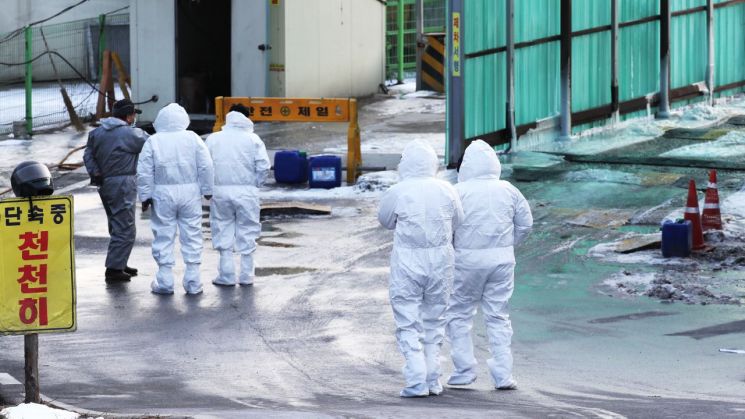
[Sejong=Asia Economy Reporter Kim Hyunjung] Over the past week, confirmed cases of highly pathogenic avian influenza (AI) in domestic wild birds have surged, prompting related authorities to strengthen quarantine measures.
On the 16th, the Ministry of Agriculture, Food and Rural Affairs and the Ministry of Environment announced that during the surveillance of avian influenza in wild birds, tests conducted on collected wild bird carcasses, feces, and captured specimens confirmed 14 cases of H5N8 highly pathogenic AI from January 8 to 14. Since October 1 of last year, the cumulative number of H5N8 highly pathogenic avian influenza cases in wild birds has reached 74.
The authorities evaluated that highly pathogenic avian influenza has been continuously detected in wild birds recently, and compared to the severe 2016?2017 winter season, the number of detections in wild birds has significantly increased. As of the first week of January, the number of cases during the 2016?2017 winter season was around 41.
The Ministry of Agriculture, Food and Rural Affairs and the Ministry of Environment are strengthening surveillance and controlling human and vehicle access in areas where highly pathogenic avian influenza has been detected in wild birds, including the newly confirmed regions. To prevent the introduction of highly pathogenic avian influenza into farms, they are conducting intensive disinfection using wide-area sprayers and quarantine vehicles on roads near migratory bird habitats and farm entrances.
Lee Gijung, Head of the Avian Influenza Quarantine Division at the Ministry of Agriculture, Food and Rural Affairs (Leader of the Domestic Quarantine Team), stated, "Highly pathogenic AI antigens are continuously being detected in wild birds nationwide, creating a very serious situation with concerns about additional outbreaks in poultry farms." He urged, "Poultry farms should prohibit external people and vehicles from entering as much as possible, and do their best to implement biosecurity measures such as changing boots before entering the barns, establishing lime belts, and cleaning and disinfecting anterooms."
Jang Seonghyun, Team Leader of the Wild Bird AI Response Team at the Ministry of Environment, emphasized, "This winter, to prevent the spread of avian influenza, please refrain from visiting migratory bird habitats as much as possible. If visits are unavoidable, thoroughly practice personal hygiene such as disinfection and wearing masks, and avoid contact with wild bird carcasses. Please report immediately to the authorities if any are found."
© The Asia Business Daily(www.asiae.co.kr). All rights reserved.

















