Former President Park Geun-hye's Supreme Court Final Ruling Draws Attention to the Blue House... Legal Permissibility of Pardoning an Impeached President Also a Key Issue
[Asia Economy Reporters Ryu Jeong-min and Jeon Jin-young] The pardon of former Presidents Park Geun-hye and Lee Myung-bak is an issue that will change the course of the new year's political landscape. With the Supreme Court's final ruling on former President Park on the 14th, the burden of untangling the complicated situation has fallen entirely on President Moon Jae-in. The focus of attention is whether President Moon will take decisive action or demonstrate a 'long-breathed politics' by waiting for the right moment.
In a special interview marking the second year of the Moon Jae-in administration in May 2019, during the event 'Asking the President,' when asked about the issue of pardoning former presidents, he expressed his feelings by saying "It pains my heart," which reflects the president's deep concern about this issue that he would inevitably face someday.
He conveyed both a human sympathy for the situation of elderly former presidents serving prison sentences and a dilemma regarding his own decision. The problem is that pardoning former presidents cannot be approached solely as a matter of compassion.
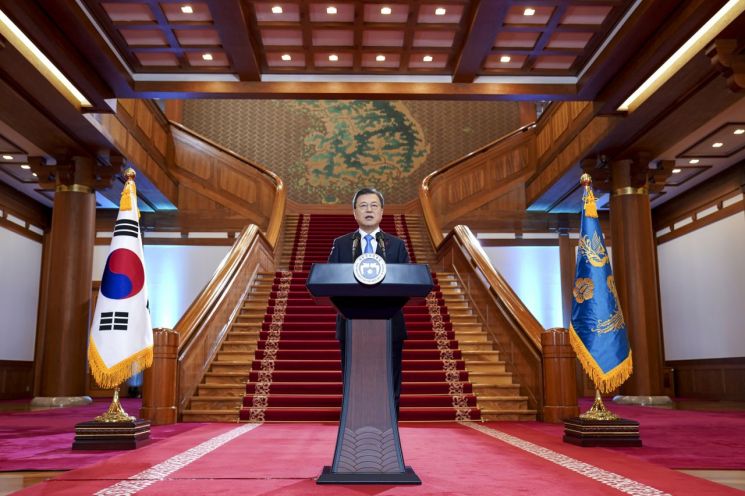
The Blue House is cautious about pardons while attributing historical significance to the final rulings on former presidents for this reason. Blue House spokesperson Kang Min-seok said, "We must take the unfortunate event of former presidents serving prison sentences as a historical lesson." A senior Blue House official added, "It is not appropriate to mention pardons immediately after the Supreme Court's ruling."
The Blue House is maintaining a cautious atmosphere to prevent unnecessary controversy regarding pardons until the upcoming New Year's press conference. It is generally analyzed that President Moon will be asked questions in some form during the press conference and is preparing responses accordingly.
On the 15th, Woo Sang-ho, a member of the Democratic Party of Korea, said in an interview with KBS Radio's 'Kim Kyung-rae's Strong Current Affairs,' "Although it is painful that two former presidents are in prison, I expect only a general statement." It is anticipated that he will not directly express a positive or negative stance on pardons.
Another point of interest is that in the case of former President Park, it is linked to the special case of 'impeachment' rather than a general confirmed sentence. This could lead to a legal debate over the president's authority to grant pardons. Article 79 of the Constitution of the Republic of Korea states that the president may grant pardons, commutations, or reinstatements as prescribed by law.
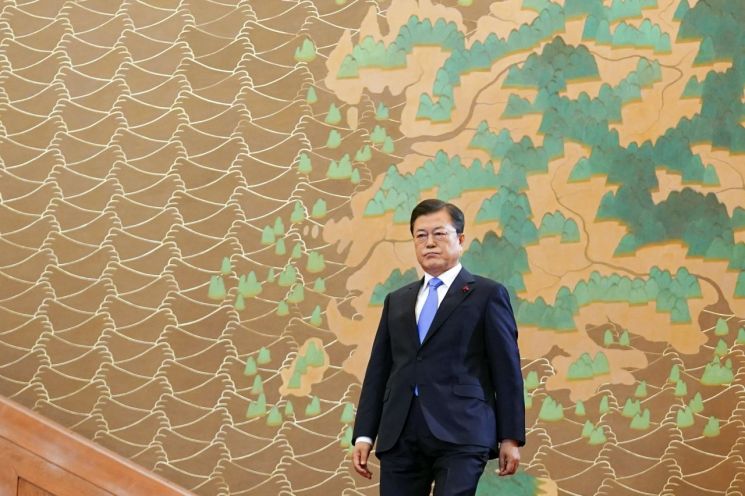
This guarantees comprehensive delegated authority over pardon subjects. In other words, the Korean Constitution does not explicitly regulate the president's pardon authority concerning those who have been impeached. In contrast, Article 2 of the U.S. Constitution limits this authority by stating 'except in Cases of Impeachment.' It specifies a restriction on the president's pardon power.
There are interpretations related to this domestically as well. According to the Constitutional Court Research Institute's research report titled 'Constitutional Review on the Limits of Pardon Authority,' it states that "Impeachment is an exceptional and important constitutional guarantee, and the authority of the National Assembly and the Constitutional Court regarding impeachment should not be undermined."
If President Moon grants a pardon to former President Park, it could lead to a dispute over authority as it would overturn the decisions of the three constitutional institutions: the National Assembly, the Supreme Court, and the Constitutional Court.
On the other hand, many legal scholars argue that since the pardon authority is an inherent presidential power stipulated in the Constitution, comprehensive recognition is necessary. Since impeachment is decided through democratic procedures, pardoning an impeached person should also be possible through appropriate procedures. A bill to amend the pardon law, which includes conducting public opinion polls or gathering opinions through the National Assembly, was proposed in the National Assembly in 2013.
© The Asia Business Daily(www.asiae.co.kr). All rights reserved.


















