[Asia Economy Reporter Seungjin Lee] The average sodium content in lunch boxes sold at convenience stores was found to be high, at about 68% of the recommended daily intake.
The Korea Consumer Agency announced on the 13th the results of an investigation into the sodium content of a total of 25 lunch boxes, five each from five convenience stores: CU, GS25, 7-Eleven, Emart24, and Ministop.
According to the investigation, the average sodium content of the lunch box products was 1361 mg, which corresponds to 68.1% of the recommended daily intake for adults (2000 mg).
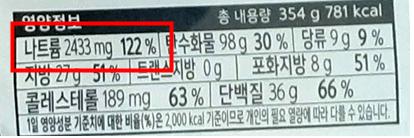
Among them, one product had a sodium content reaching 2433 mg, which is 122% of the recommended intake. Following the Consumer Agency's recommendation, this product reduced its sodium content to about 1137 mg.
The average calorie content of the 25 products was 716 kcal, which is 35.8% of the recommended daily intake (2000 kcal). Additionally, the carbohydrate content was 35.8%, protein content 49.9%, and fat content 43.6% of the daily recommended intake, indicating levels suitable for a typical meal.
Furthermore, among the 25 lunch box products, two were found to contain Escherichia coli, and another two contained Bacillus cereus, a bacterium classified as a cause of food poisoning; however, all were within the hygiene standards.
In addition, the Consumer Agency investigated the safety of 20 sashimi and sushi products sold at five large marts?Lotte Mart, Emart, Costco, Hanaro Club Mart, Homeplus?and five department stores?Galleria, Lotte, Shinsegae, Hyundai, and NC.
As a result, no microorganisms or antibiotics were detected in all products tested, or they were detected at levels within the relevant standards, confirming compliance with hygiene standards. Bacillus cereus was detected at 10?50 CFU/g in 10 flatfish (Kwang-eo) sushi products, but all were below the standard limit (1000 CFU/g).
The Consumer Agency recommended that lunch box manufacturers reduce sodium content. Regarding sashimi and sushi, consumers were advised to purchase fresh products whenever possible and consume them immediately, and if immediate consumption is difficult, to refrigerate them quickly at 5 degrees Celsius or below.
© The Asia Business Daily(www.asiae.co.kr). All rights reserved.

















