Discovery of Anticancer Microbiome
Expectations for New Cancer Drug Development
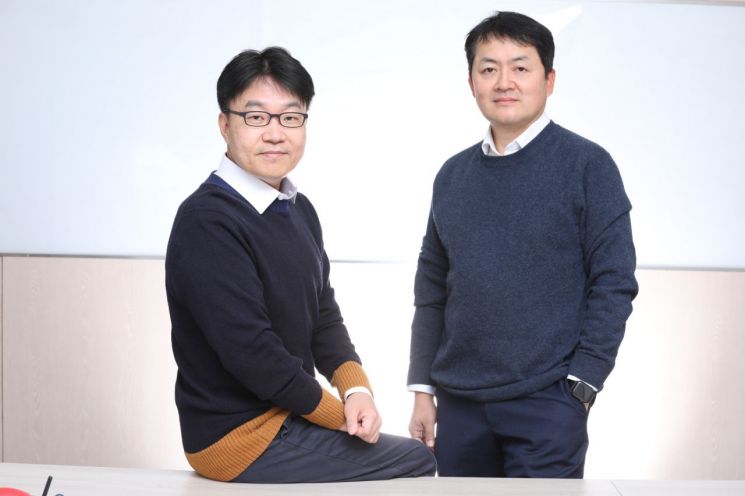
[Asia Economy Reporter Junho Hwang] Domestic researchers have discovered gut microbiota (microbiome) that enhance the efficacy of immune checkpoint inhibitors and demonstrated the underlying mechanism. The research team expects that new cancer treatments can be developed through the discovery of anticancer microbiomes. On the 12th, Gwangju Institute of Science and Technology announced that a research team led by Professor Hansoo Park of the Department of Biomedical Engineering and Genome & Company, an immune checkpoint inhibitor startup founded by Professor Park, achieved these research results through joint research. This research outcome was published in the international journal Nature Microbiology.
Gut Microbiota Enhancing Anticancer Efficacy in Korean Lung Cancer Patients
The research team analyzed the gut microbiota of a total of 235 normal non-small cell lung cancer (NSCLC) patients. As a result, they confirmed that Bifidobacterium bifidum was significantly more abundant in the group of Korean NSCLC patients who responded well to anticancer drug treatment. This microbiome is a bacterial species of the genus Bifidobacterium that resides in the stomach and intestines of the human body. Lung cancer is broadly classified into small cell lung cancer and non-small cell lung cancer based on histological type. Types of NSCLC include lung adenocarcinoma, squamous cell carcinoma, and large cell carcinoma.
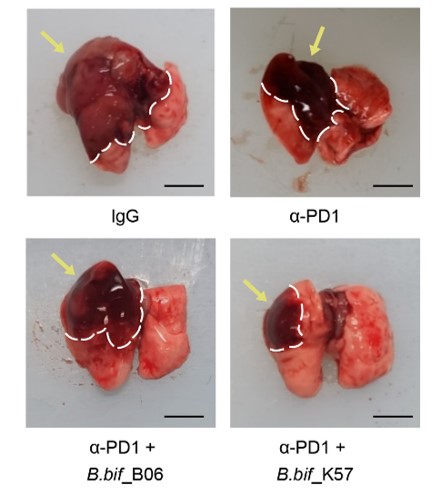
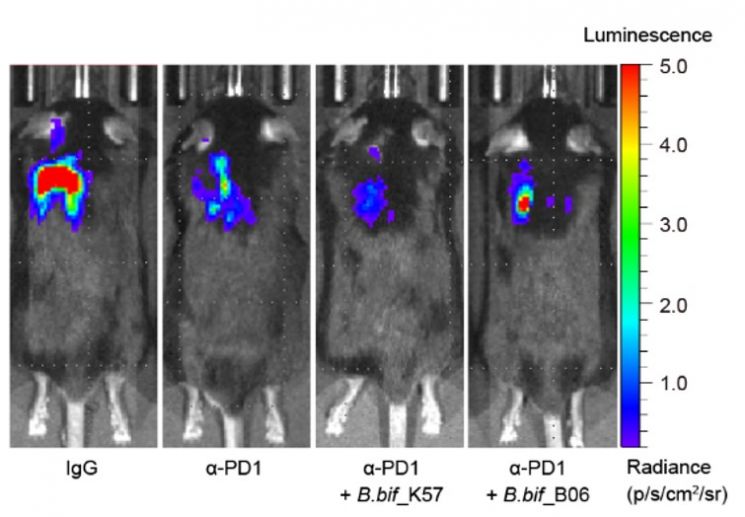
Using a cancer model mouse, the research team confirmed that even within the same species Bifidobacterium bifidum, the degree of tumor suppression varied by strain when co-administered with the immune checkpoint inhibitor (anti-PD-1). They subsequently identified a Bifidobacterium bifidum strain that significantly suppressed tumors more when co-administered with the immune checkpoint inhibitor compared to immune checkpoint inhibitor monotherapy.
Elucidation of the Mechanism Enhancing Anticancer Efficacy
Additionally, the research team elucidated the anticancer mechanism of the Bifidobacterium bifidum strain through multi-omics analysis. Through gut metagenome and transcriptome analysis in mice, they observed increased expression of genes related to the regulation of interferon-gamma, an anticancer cytokine, upon administration of the anticancer strain. Furthermore, serum metabolome and lipidome analyses revealed an increase in metabolites that promote interferon-gamma secretion upon strain administration.
Moreover, the research team confirmed that Bifidobacterium bifidum strains effective in immune checkpoint inhibitor therapy significantly increased interferon-gamma secretion compared to less effective strains when co-cultured with human immune cells (monocytes, CD8+ T cells).
Subsequent genomic analysis revealed an increase in the peptidoglycan synthesis pathway in strains that enhance immune checkpoint inhibitor efficacy. Mouse experiments demonstrated that differences in peptidoglycan, a component of the bacterial cell wall, are the key mechanism by which Bifidobacterium bifidum strains enhance immune checkpoint inhibitor efficacy.
Professor Hansoo Park said, "For the first time in the world, we discovered a microbiome that enhances anticancer drug efficacy in Asian NSCLC patients and further elucidated the mechanism by which anticancer effects vary significantly by strain within the same species through multi-omics analysis. Based on these research results, we hope to develop microbiome-based new drugs to provide hope for cancer treatment to cancer types and patients resistant to immune checkpoint inhibitors."
© The Asia Business Daily(www.asiae.co.kr). All rights reserved.



















