Radioactive Accumulation Causes Genetic Mutation
Detected 300 Meters North of Central Site
Experts: "Contamination May Have Spread Outside"
KHNP: "Cannot Consider It External Leakage"
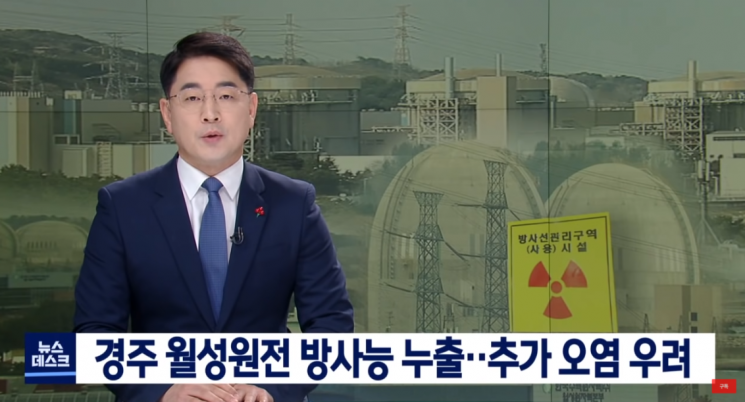 On the 7th, Pohang MBC reported, "Korea Hydro & Nuclear Power's internal investigation revealed that the Wolseong Nuclear Power Plant site may have been extensively exposed to radioactive contamination." Photo by MBC Broadcast Screen Capture.
[Asia Economy Reporter Kim Bong-ju] It has been revealed that the Wolseong Nuclear Power Plant site in Gyeongju, Gyeongbuk, is extensively contaminated with radioactive materials. The cause of the leak has not yet been identified.
On the 7th, Pohang MBC reported that Korea Hydro & Nuclear Power's (KHNP) internal investigation indicated that the Wolseong Nuclear Power Plant site may have been exposed to widespread radioactive contamination.
According to the report, tritium, a radioactive material, was detected in all groundwater samples from more than ten locations at the Wolseong Nuclear Power Plant site last year.
Due to the structure of nuclear power plants, radioactive materials must be completely sealed and isolated for safety, and should not be detected outside designated facilities. Until now, there has been no confirmation of radioactive material leakage outside nuclear power plants in South Korea.
However, significant amounts of tritium, reaching up to 713,000 becquerels?18 times the management standard?were detected at various locations throughout the Wolseong Nuclear Power Plant site.
Tritium, a radioactive material, was a controversial substance heavily contained in contaminated water from the Fukushima nuclear accident.
When water or food containing tritium is ingested, it is expelled through urine, feces, or sweat within 7 to 14 days, but prolonged ingestion can lead to accumulation of radioactive material in the body.
If tritium displaces normal hydrogen in the body and occupies its place, a 'nuclear transmutation' occurs where tritium changes into helium. When nuclear transmutation occurs in DNA, it can cause genetic mutations, cell death, and reduced reproductive function, resulting in damage to the human body.
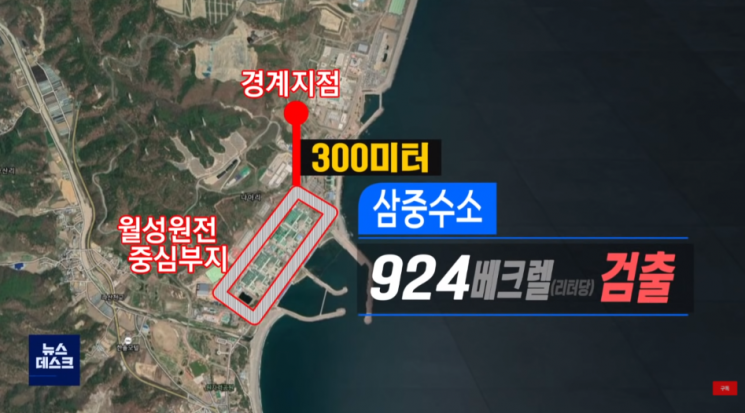 On the 7th, Pohang MBC reported, "An internal investigation by Korea Hydro & Nuclear Power revealed that the Wolseong Nuclear Power Plant site may have been extensively exposed to radioactive contamination." Photo by MBC Broadcast Screen Capture.
At the northern boundary area located 300 meters from the central site of the nuclear power plant, tritium was detected at a maximum of 924 becquerels. Experts are concerned that contamination may have spread not only within the nuclear power plant site but also to the surrounding areas.
Additionally, there are suspicions of poor management as the impermeable barrier that prevents the spread of radioactive materials in the waste storage pool of Wolseong Unit 1 has been left damaged for eight years.
KHNP stated to MBC, "All tritium detections are located within the nuclear power plant site, so it cannot be considered an external leak," and added, "No unplanned leaks have been confirmed."
© The Asia Business Daily(www.asiae.co.kr). All rights reserved.

![Clutching a Stolen Dior Bag, Saying "I Hate Being Poor but Real"... The Grotesque Con of a "Human Knockoff" [Slate]](https://cwcontent.asiae.co.kr/asiaresize/183/2026021902243444107_1771435474.jpg)















