ICT Regulatory Sandbox
14th Deliberation Committee
5 Temporary Permits, 1 Special Exemption for Demonstration
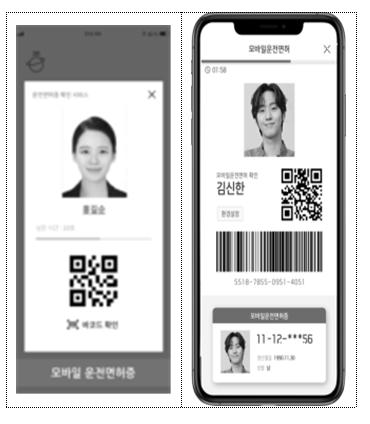
[Asia Economy Reporter Koo Chae-eun] Driver's licenses, which are often forgotten, are now being issued in the form of smartphone mobile driver's licenses, allowing them to be used as identification cards. So-called 'dukkeobijip' (circuit breakers) are being equipped with Internet of Things (IoT) technology to enable remote monitoring.
On the 30th, the Ministry of Science and ICT approved a total of five cases for temporary permits, one case for demonstration exceptions, and one case for proactive administrative measures at the 14th New Technology Service Review Committee.
The 'Mobile Driver's License Verification Service,' which received temporary approval in this review, was prepared to prevent loss of licenses, save reissuance costs, and expand consumer choice.
Under the current Road Traffic Act, there are no regulations regarding mobile driver's licenses, so if a license is lost, reissuance was required each time. Accordingly, the Ministry of Science and ICT granted temporary approval to give mobile licenses the same legal effect as actual driver's licenses.
The mobile driver's license can be used not only to verify driving qualifications but also to confirm adulthood and serve as a substitute for identification cards. Applicant companies such as Shinhan Card and ICONLOOP plan to start the service after consulting with the National Police Agency and establishing systems to prevent personal information leaks and forgery risks.
IoT technology is also being applied to automatic reset circuit breakers (dukkeobijip). Geumseong Electric applied IoT technology to power boxes installed in unmanned relay stations, base stations, railroads, and highway traffic enforcement equipment.
Existing safety standards for 'automatic reset circuit breakers' only regulate up to three automatic resets within 30 minutes, so products capable of remote monitoring and recovery after more than three trips could not be released to the market. In the case of unmanned base stations, this caused side effects such as dispatches for simple faults and high maintenance costs.
Accordingly, the Ministry of Science and ICT issued a 'temporary permit' to allow related businesses to start after passing safety standards for automatic reset circuit breakers.
In addition, KB Kookmin Bank and LG Uplus consortium received temporary approval for non-face-to-face mobile communication subscription services. Kakao Mobility, which applied for a prepaid fare taxi service, received a demonstration exception, and Coway, which applied for a rental smart subscription service, received temporary approval.
Kim Jung-won, Director of the Information and Communication Policy Office at the Ministry of Science and ICT, stated, “Going forward, we will actively cooperate and communicate with related ministries to ensure that new tasks discovered and designated, as well as those confirmed for safety and innovation in the market, lead to prompt regulatory improvements.”
© The Asia Business Daily(www.asiae.co.kr). All rights reserved.
!["The Woman Who Threw Herself into the Water Clutching a Stolen Dior Bag"...A Grotesque Success Story That Shakes the Korean Psyche [Slate]](https://cwcontent.asiae.co.kr/asiaresize/183/2026021902243444107_1771435474.jpg)
















