Alibaba Shares Fall 8% on Hong Kong Stock Exchange
Tencent and JD.com Also Decline
Rising Concerns Over Potential Next Target of Chinese Government
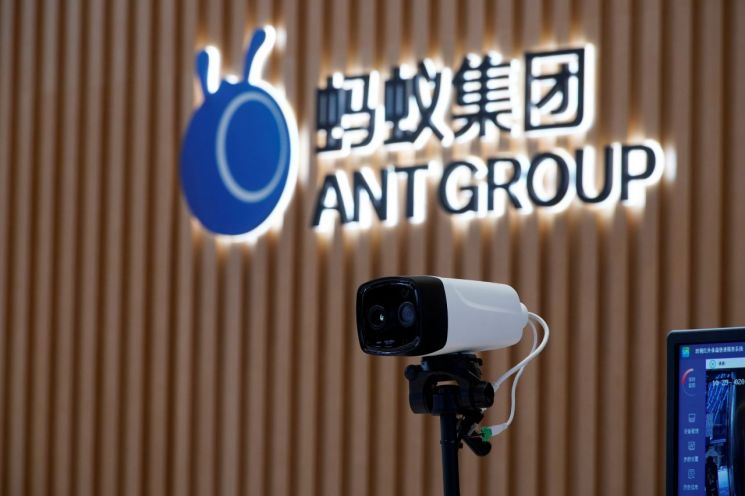
[Asia Economy Reporter Kwon Jae-hee] Amid the Chinese government's ongoing 'crackdown on Ma Yun,' anxiety is rising among Chinese information technology (IT) companies such as Alibaba, Tencent, and JD.com. This is due to growing concerns that not only Alibaba but also other IT companies could become targets of the Chinese government.
According to Bloomberg on the 28th (local time), after Chinese authorities publicly criticized Ant Group, a subsidiary of Alibaba, Alibaba's stock closed at 27.08 Hong Kong dollars on the Hong Kong stock exchange, down 7.9%. This is the lowest level since July and marks a sharp decline for two consecutive days following an 8.1% drop on the previous trading day (24th). Alibaba is the largest shareholder, holding more than 30% of Ant Group's shares.
Earlier, on October 24th, Alibaba founder Ma Yun strongly criticized Chinese financial authorities at an event attended by high-ranking officials including Wang Qishan, Vice President of China, and Yi Gang, Governor of the People's Bank of China, saying, "Chinese financial authorities still have not escaped from the 'pawnshop business' that requires collateral for loans." As a result of this incident, Alibaba's market capitalization has evaporated by about 25% since October. Alibaba's market capitalization had approached $859 billion due to expectations for Ant Group's listing, but the IPO was suddenly canceled last month by order of Chinese authorities, reducing the market cap to $586 billion (as of the 24th). Consequently, Ma Yun's wealth also decreased from $62 billion to $49.3 billion.
As the Chinese government intensifies its crackdown on Ma Yun, anxiety is rising among Chinese IT companies about becoming the 'second Alibaba.' These companies, which attended the government summons along with Alibaba, include JD.com, Tencent, Meituan, Pinduoduo, and Didi. In fact, Tencent's stock fell 2.6% and 6.6% on the Hong Kong stock exchange on the 24th and 28th, respectively. During the same period, JD.com also dropped 2.2% and 2.1%.
The fall of Alibaba has spread investor distrust across Chinese IT companies, including Alibaba. Colin Sebastian, an analyst at investment bank Baird, said, "The ongoing investigations by the Chinese government into major online platforms including Alibaba are unpredictable," and analyzed, "Along with the uncertainty of Chinese government regulations, there is a high possibility that such direct regulatory measures will continue next year." He lowered Alibaba's target price on the New York Stock Exchange from $325 to $285.
To prevent further stock price declines, Alibaba announced before the market opened on the 28th that it would expand its share buyback program from the original $10 billion to $60 billion and maintain this policy until 2022, but this was deemed insufficient to retain investors. Bloomberg evaluated, "This potentially signifies the official start of the Communist Party's regulations not only on Alibaba but also on a broader range of technology companies."
© The Asia Business Daily(www.asiae.co.kr). All rights reserved.

















