Free Trade Agreement Included in Future Relationship Negotiations Reached
UK Prime Minister Johnson: "Fulfilling the Brexit Promise Made to the People"
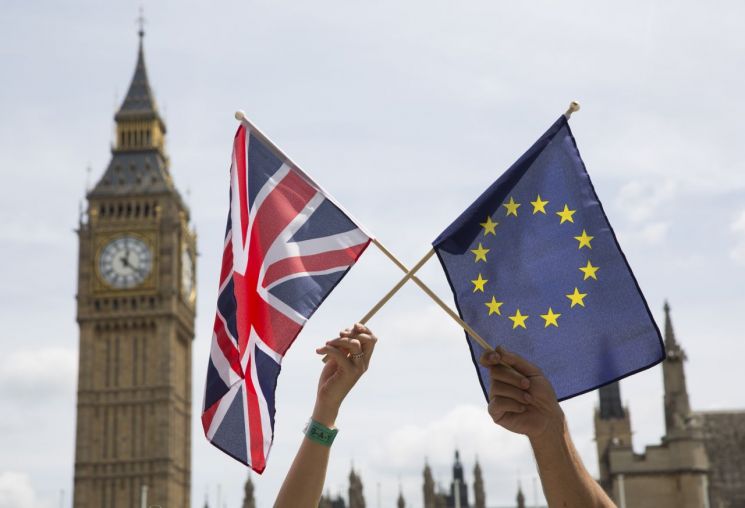
[Asia Economy Reporter Hyunwoo Lee] The United Kingdom and the European Union (EU) have dramatically concluded future relationship negotiations, including a free trade agreement, successfully ending the so-called Brexit (the UK's withdrawal from the EU) negotiations that lasted for four and a half years and achieving a complete separation. With concerns over uncertainties following the Brexit aftermath disappearing, this is expected to be a significant boon for the international economy.
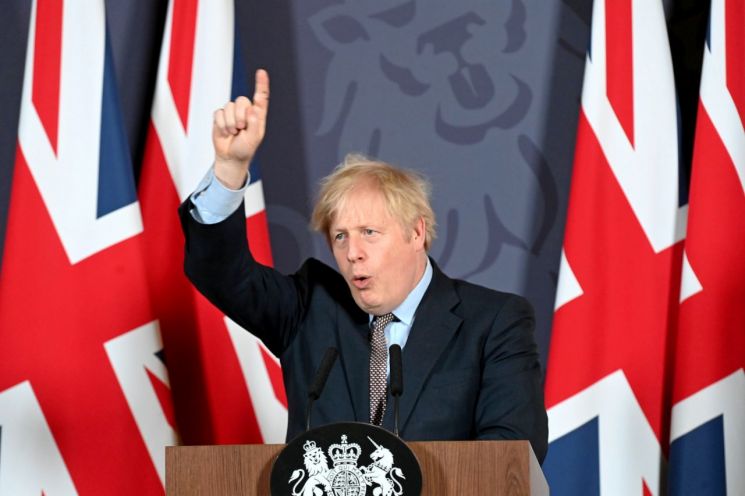
According to foreign media such as the Associated Press, the UK and the EU announced on the 24th (local time) that the previously difficult future relationship negotiations had finally reached an agreement. UK Prime Minister Boris Johnson stated in a press release that "this agreement fulfills what was promised to the people in the 2016 referendum and general election," emphasizing that "the UK has regained control over its finances, borders, laws, trade, and waters."
He continued, "This agreement is fantastic news for households and businesses across the UK," explaining, "For the first time, we have signed an agreement with the EU based on zero tariffs and zero quotas. This is the largest bilateral agreement for both sides." Prime Minister Johnson added, "We will be friends, allies, supporters, and truly the best market for Europe," and "Although we have left the EU, the UK will remain connected to Europe culturally, emotionally, historically, strategically, and geopolitically."
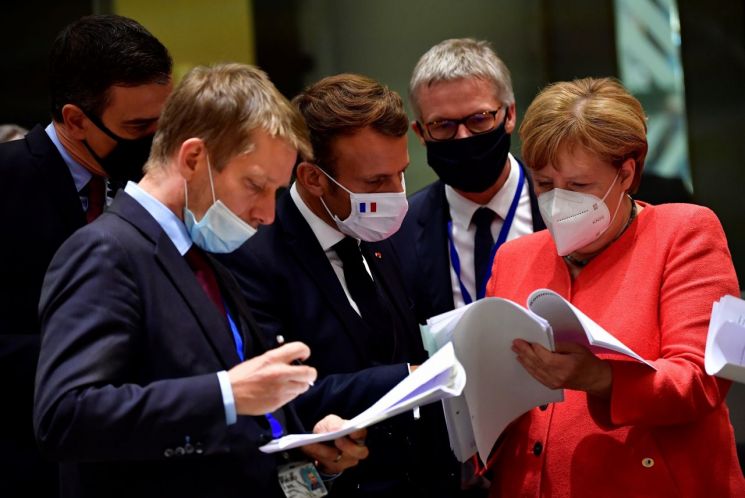
With the year-end, when there was a high risk of a 'no-deal Brexit' starting, now just around the corner, the agreement's conclusion has also brought relief to the European Commission. Ursula von der Leyen, President of the European Commission, said at a press conference following the agreement, "We have finally reached an agreement," adding, "It was a long and winding road, but at the end, we made a good deal." She evaluated it as "a fair and balanced agreement, appropriate and responsible for both sides."
President von der Leyen said, "I believe this agreement also serves the UK's interests," adding, "This will lay a solid foundation for a new start with an old friend. It means that we can finally leave Brexit behind and that Europe will continue to move forward." Michel Barnier, the EU's chief negotiator for the future relationship talks with the UK, said at a press conference, "The clock will no longer turn back," calling today "a day of relief."
The future relationship agreement between the UK and the EU will soon undergo ratification procedures in both parties' parliaments. As the UK Parliament is currently in its Christmas recess, it plans to convene on the 30th to push for approval of the agreement. The UK House of Commons stated that "the Speaker has approved the government's request to reopen the House at 9:30 a.m. on the 30th," and "Members of Parliament will debate the bill to give effect to the agreement with the EU." Since the ruling Conservative Party holds a majority well above the threshold and the main opposition Labour Party supports the agreement as better than a 'no deal,' it is expected to pass without significant difficulty.
The agreement must also be approved by the EU member states and the European Parliament to take effect. Ambassadors of the 27 EU member states are scheduled to meet on Christmas Day, the 25th, to begin reviewing the agreement. It is expected to take about two to three days for member states to analyze the agreement and decide on provisional implementation approval.
Specifically, the EU proposed that, considering the exceptional situation where the agreement was reached just before the year-end deadline and might not be applied on time, causing damage and disruption to businesses and individuals, member states temporarily apply the agreement from January 1 to February 28 of next year. If the EU member states approve this, the official signing of the agreement can take place, followed by the European Parliament's consent procedure, according to the European Commission.
Earlier, the UK withdrew from the EU member states at the end of January through the Brexit agreement with the EU and set a transition period until the end of the year to maintain everything exactly as it was before Brexit to ensure smooth implementation of bilateral activities such as trade and diplomacy after withdrawal. Since then, both sides have continued negotiations for nine months from March but had not reached an agreement until recently, raising concerns about potential chaos from a no-deal Brexit.
If the two sides had failed to reach an agreement by the end of the transition period, the World Trade Organization (WTO) regime would have applied from next year. In that case, tariffs would be imposed on exports and imports between the two sides, and non-tariff barriers would arise, making confusion inevitable.
© The Asia Business Daily(www.asiae.co.kr). All rights reserved.
![User Who Sold Erroneously Deposited Bitcoins to Repay Debt and Fund Entertainment... What Did the Supreme Court Decide in 2021? [Legal Issue Check]](https://cwcontent.asiae.co.kr/asiaresize/183/2026020910431234020_1770601391.png)