Professor Kim Ja-young of International St. Mary's Hospital: "Rapid Antigen Testing Inappropriate for Asymptomatic Individuals"
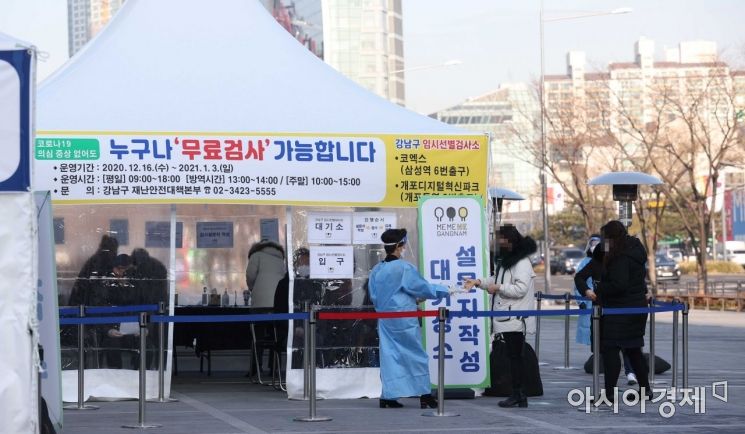
[Asia Economy Reporter Seo So-jeong] As the number of confirmed domestic cases of the novel coronavirus infection (COVID-19) approaches the 1,100 mark again, concerns have been raised about the need to manage hidden spreaders who received 'false negative' results in COVID diagnostic tests.
On the 23rd, Professor Kim Ja-young of the Department of Laboratory Medicine at Catholic Kwandong University International St. Mary's Hospital said in a phone interview with Asia Economy, "Rapid antigen tests are inappropriate for screening asymptomatic patients," adding, "Because infected individuals who receive false negative results from rapid antigen tests, which are not highly accurate, continue to circulate and transmit the virus, 'asymptomatic transmission' is possible."
According to the Central Disease Control Headquarters of the Korea Disease Control and Prevention Agency, as of midnight on the same day, a total of 6,171 rapid antigen tests had been conducted at temporary screening clinics in the metropolitan area. Among these, 21 cases that tested positive underwent a second nasopharyngeal swab polymerase chain reaction (PCR) test for more accurate diagnosis. Of these 21 cases, 11 were ultimately confirmed positive, 7 were negative, and 3 are still pending.
Professor Kim pointed out, "False positives result in isolation measures and thus pose little problem, but if an actual infected person receives a negative result from a rapid antigen test, they can further spread the virus," emphasizing, "A negative rapid antigen test result should be considered a 'presumed negative' rather than a confirmed negative, and a PCR test must be conducted within 48 hours."
Due to the low accuracy of rapid antigen tests, separate guidelines have been established in the United States and Europe. Last month, the European Centre for Disease Prevention and Control (ECDC) recommended conducting rapid antigen tests only on symptomatic individuals when genetic testing is difficult and the positivity rate exceeds 10%. The U.S. Centers for Disease Control and Prevention (CDC) has removed the term 'rapid' from antigen tests and recommends confirming antigen test results with molecular diagnostic tests based on pre-test probability (the likelihood that a patient has the disease before testing).
Professor Kim said, "Even former U.S. President Donald Trump caused controversy by releasing only rapid test results, which are less accurate than PCR tests, just before his campaign," and stressed, "In places with frequent cluster infections such as nursing hospitals or island regions where PCR testing is difficult, rapid antigen tests should be used, but in areas with high prevalence, symptomatic individuals and asymptomatic close contacts require continuous isolation and follow-up observation."
As the government actively pursues finding 'hidden infected individuals,' diagnostic testing has increased significantly. The number of COVID-19 diagnostic tests conducted domestically yesterday reached 107,218, approaching the daily testing capacity maximum of 110,000. This is about seven times higher than the average daily tests of 15,113 conducted last month. The number of tests conducted at 142 temporary screening clinics in the metropolitan area also reached a record high of 53,077. Professor Kim added, "With the aggressive testing pushing the capacity of metropolitan screening clinics to their limits, it is necessary to identify hidden spreaders through effective testing methods."
© The Asia Business Daily(www.asiae.co.kr). All rights reserved.
![User Who Sold Erroneously Deposited Bitcoins to Repay Debt and Fund Entertainment... What Did the Supreme Court Decide in 2021? [Legal Issue Check]](https://cwcontent.asiae.co.kr/asiaresize/183/2026020910431234020_1770601391.png)
















