Gwangju City Announces Innovation Plan Containing 4 Major Directions and 18 Measures
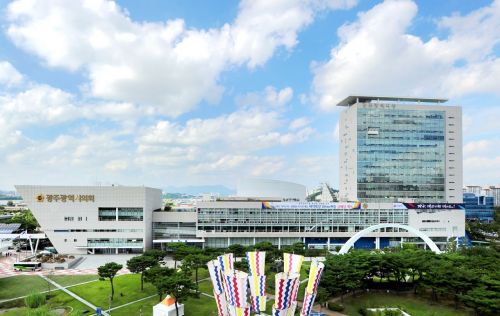
[Asia Economy Honam Reporting Headquarters Reporter Park Seon-gang] Gwangju Metropolitan City announced on the 22nd a comprehensive innovation plan for the professional football club Gwangju FC, revealed through a recent city audit.
The city's innovation plan includes a total of 18 measures under four main directions: ▲ Establishing an efficient operation system centered on the players ▲ Ensuring financial transparency and establishing an administrative support system in the secretariat ▲ Building an organic cooperation system among the players, secretariat, and Gwangju Metropolitan City ▲ Expanding citizen participation and operating a citizen-friendly club.
▲ To establish an efficient operation system centered on the players, a CEO with a background in football management will be appointed as a full-time position, the team manager will concurrently serve as CEO, and the coach will focus on communication and leadership with players to normalize the team early and prepare for next season.
For season preparation, the players' opinions will be maximally reflected to establish systems for supplies and meals, support player equipment management, provide convenience in accommodation operations, and improve training environments, actively supporting the players.
Additionally, to efficiently manage the team, the Player Operations Committee will be actively utilized to enhance fairness, objectivity, and transparency in player recruitment, transfers, and team operations.
Efforts will be made to optimize the team size for efficient cost reduction, strengthen communication channels between the club owner and players to gather opinions and devise development plans, benchmark best practices from other cities, and identify and improve secretariat operation cases.
▲ Financial transparency will be strengthened, and an administrative support system centered on the players will be established in the secretariat.
Management and supervision will be reinforced to prevent subsidies from being used for unintended purposes, and the mid-term subsidy settlement, previously conducted once a year, will be increased to twice a year to enhance transparency in execution.
In particular, the regular board meetings will be increased from twice to up to four times a year to report and inspect important matters such as supplementary budgets and FC operational status more frequently.
When purchasing goods and bidding contracts, the Local Contract Act will be applied, and the evaluation committee for proposal assessments will be required to include external personnel and city officials to induce transparent contract signing.
Overtime work will only be recognized if pre-approved and registered in the fingerprint system, and strict attendance management regulations will be introduced and reorganized to prevent improper payments regarding budget limits, recognized overtime hours, and compensatory leave.
Especially, the secretariat will avoid excessive interference with the players and faithfully perform its original role, enhancing administrative support capabilities for local community marketing tasks such as attracting sponsorships from local companies.
Regular surveys and sports human rights education will be conducted, and revisions to the Gwangju FC employment regulations concerning workplace harassment will be pursued to strengthen the human rights of secretariat staff.
▲ An organic cooperation system will be established among the players, secretariat, and Gwangju City.
To build an organic cooperation system among the players, secretariat, and Gwangju City, regular meetings will be held every two months involving the CEO, coach, and city officials to share operational status and discuss cooperation matters.
Until the organization is normalized, three city personnel will be supported, and the club owner will be required to report quarterly on major matters such as club operations.
The board of directors' term will be shortened from three years to two years, and the board will be gradually reorganized with directors related to football such as shareholders, sponsors, and players. When forming various committees (Personnel Committee, Proposal Evaluation Committee), prior consultation with the city will be required.
▲ Citizen participation will be expanded, and the club will be transformed into a citizen-friendly organization.
Various fan service programs will be organized, and regular meetings with supporters will be promoted to activate communication with citizens.
To review excessive operating budgets and various system improvement measures, up to two citizen directors will be appointed to reflect citizens' voices appropriately for a citizen club.
A ‘Citizen ANGEL CLUB’ will be formed and operated to support Gwangju FC, strengthening local community marketing, seeking systematic marketing plans for attracting new sponsors and maintaining existing ones, promoting the activation of the dedicated stadium and increasing spectators through new fan recruitment programs, and conducting on-site season ticket promotions such as football clubs.
Lee Yong-seop, mayor of Gwangju Metropolitan City and owner of Gwangju FC, stated, “We have prepared an innovation plan at the level of reestablishment by broadly listening to opinions from the local sports community and players,” adding, “We will do our best to support Gwangju FC to overcome the current difficulties quickly and develop into a top-class club trusted and loved by citizens.”
© The Asia Business Daily(www.asiae.co.kr). All rights reserved.

















