South Korean Government Also Considering Direct Support Linked to Sales Decline
Support Scale and Criteria in Various Countries
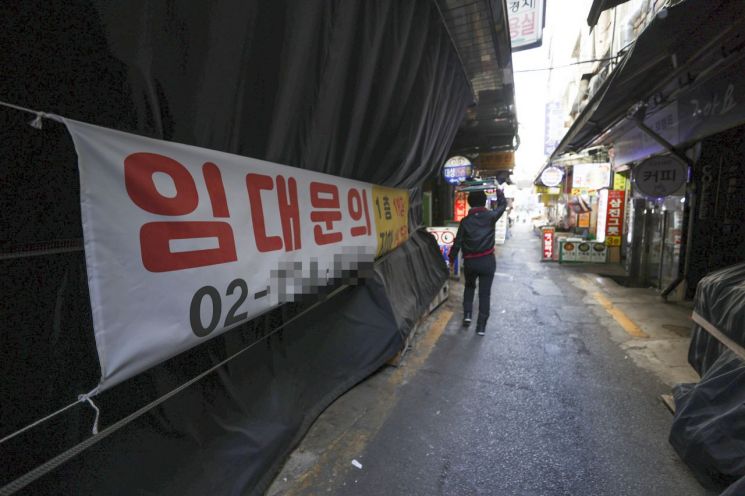
[Sejong=Asia Economy Reporter Kim Hyunjung] To alleviate the damage suffered by small business owners due to the COVID-19 pandemic, the government is considering 'direct cash support' linked to the extent of sales decline. Previously, disaster relief funds were uniformly provided in the form of cash of the same amount by industry, but there is great expectation that the relief measures will become more realistic by providing differentiated payments considering the degree of sales damage.
According to government and National Assembly officials on the 20th, the Ministry of Economy and Finance is currently reviewing a 'two-track' plan that directly provides cash linked to the scale of damage to small business owners affected by the COVID-19 situation and simultaneously offers tax benefits for landlords who reduce rent. In this regard, the Ministry of Economy and Finance is known to have recently compiled support measures for small business owners from advanced foreign countries that implemented economic lockdown measures earlier than South Korea and reported them to the ruling party. As the number of confirmed COVID-19 cases exceeded 1,000 and the implementation of 'social distancing level 3' was raised, increasing the possibility of business closures, they began to refer to cases from other countries.
The case cited in the Ministry of Economy and Finance's report is the direct cash support method. Some countries provided cash to small business owners who suffered damage such as business suspension and sales decline due to lockdown measures. The industries, support criteria, and support amounts varied by country.
According to submitted data, the UK has been providing up to 3,000 pounds (about 4.45 million KRW) per month to approximately 600,000 small businesses and restaurants in lockdown areas since last month, and up to 2,100 pounds retroactively to businesses in indirectly affected areas. The UK is expected to require 1 billion pounds monthly in funding solely for supporting businesses in level 3 lockdown areas.
Japan, too, while extending the COVID-19 state of emergency, provides differentiated payments of up to 6 million yen (about 63.65 million KRW) to corporations and up to 3 million yen to sole proprietors to ease rent burdens. Eligible recipients include mid-sized companies with capital under 1 billion yen, small and medium enterprises, and small-scale business owners. As of the 29th of last month, a total of 740,000 applications were submitted, with 590,000 payments made.
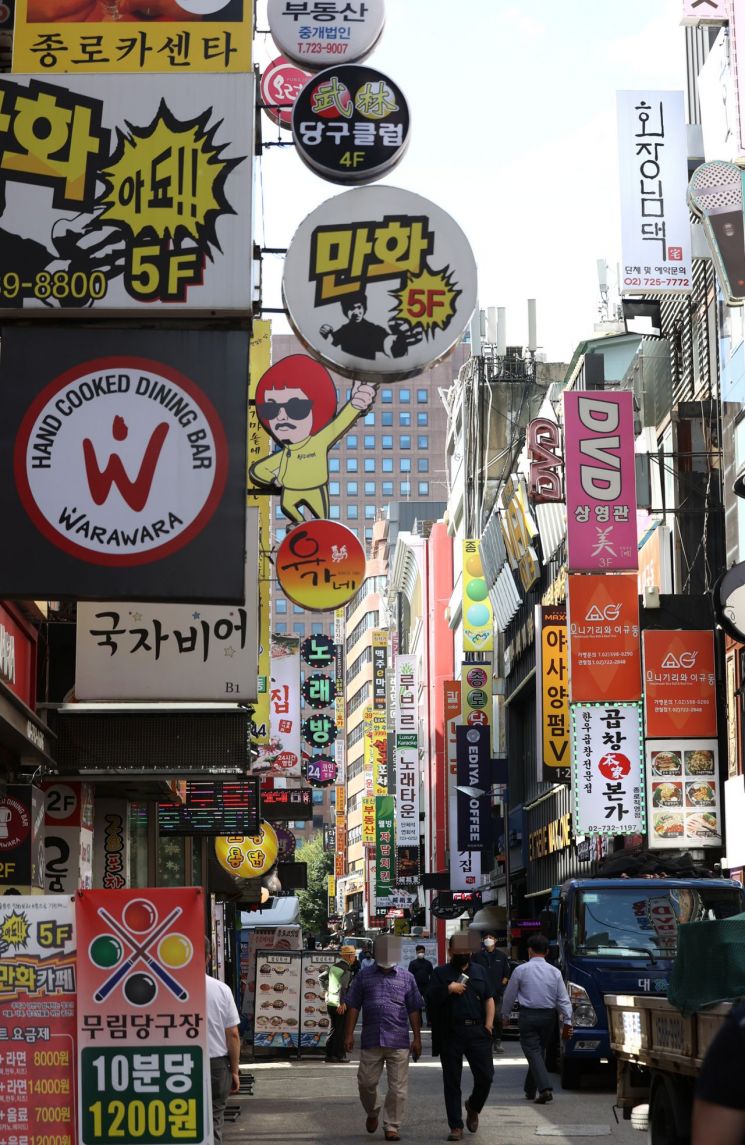
France combines cash and tax support; during the first lockdown, it provided up to 1,500 euros (about 2.01 million KRW) per month to hotels and restaurants that either suspended operations or experienced a sales decline of over 70%. During the second lockdown, it supported industries with a sales decline of over 50% up to a maximum of 10,000 euros per month based on the sales damage amount. Simultaneously, landlords who waived rent receive a 50% tax credit on the corresponding amount. The tax credit applies to certain industries such as hotels, restaurants, cafes, tourism, and sports.
Germany also provided up to 15,000 euros per month for three months during the first full lockdown, and during the second lockdown, it paid up to 75% of the sales decline amount (compared to the previous year) in cash for two months.
Belgium supports restaurants, cafes, non-essential shops, dental clinics, and physiotherapists whose operations were suspended due to government measures with 1,614.10 euros per month. Additionally, at the federal government level, Brussels provides 3,000 euros to restaurants and cafes, 20,000 euros to hotels with fewer than 18 rooms, and up to 9,000 euros to event and tourism companies. Furthermore, social security contributions are deferred, reduced, or exempted when business operations are suspended due to government measures.
Our government also recognizes that supporting small business owners is essential to achieve the 3.2% economic growth rate next year. Hong Nam-ki, Deputy Prime Minister and Minister of Economy and Finance, said at a joint briefing on the '2021 Economic Policy Direction' with related ministries yesterday, "We will include various measures to alleviate the rent burden of small business owners in the damage support plan and review them together." He particularly hinted at direct support measures, stating, "Cash support is not limited to rent but can be used for various other public charges or operating funds. We understand that the burden on businesses restricted by gathering bans is significant as the number of confirmed cases rapidly increases." Along with this, the government also announced it will extend the application period for a tax credit of 50% on rent reductions in income and corporate taxes until the end of June next year.
Experts also advise that the government should focus more intensive support on the groups that have suffered actual damage. Professor Kim Taegi of Dankook University's Department of Economics said, "Assuming the complete exclusion of universal basic income or universal disaster relief funds, compensation for damages should be strengthened for small business owners and self-employed people who have been directly hit," adding, "Realistic compensation and consolation should be provided on the ground through cooperation with local governments."
© The Asia Business Daily(www.asiae.co.kr). All rights reserved.