LGU+ 5G Autonomous Parking Solution
Real-Time Parking Space Recognition
Finds Empty Spots Using Deep Learning Technology
Public Demonstration Scheduled for Next Month
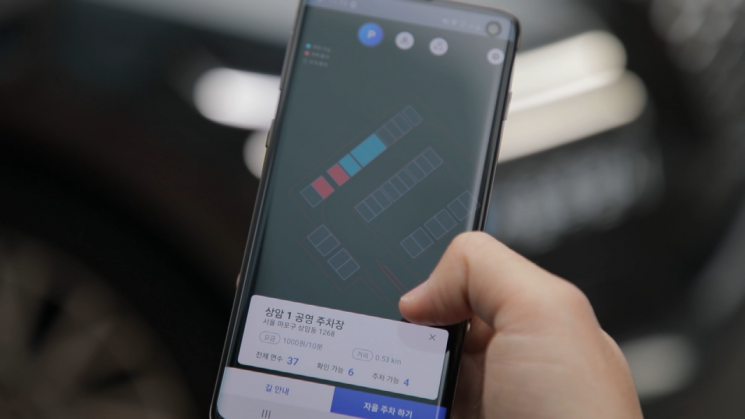
[Asia Economy Reporter Koo Chae-eun] 'Available 6. Parking available 4. Sangam1 Public Parking Lot. Distance 0.53 km.'
In front of Sangam Culture Plaza. I got into the autonomous vehicle A1 (Hyundai Motor GV80) and launched the 5G autonomous parking application (app). A parking lot screen resembling a theater seat layout appeared on a black background. The number of available parking spaces and their locations were also displayed. It was the screen for Sangam1 Public Parking Lot, located 530 meters away.
This app reads vacant spots in the parking lot in real-time through parking lot CCTV. Parking lot boundary lines appeared, with available parking spots marked in blue and already occupied spots in red. I tapped one of the blue squares and pressed 'Start Autonomous Parking' at the bottom of the screen. It works similarly to selecting a seat you want to sit in at a movie theater. A banner saying "Autonomous parking in progress" appeared. The car started moving.
5G Autonomous Parking Made Convenient with Deep Learning
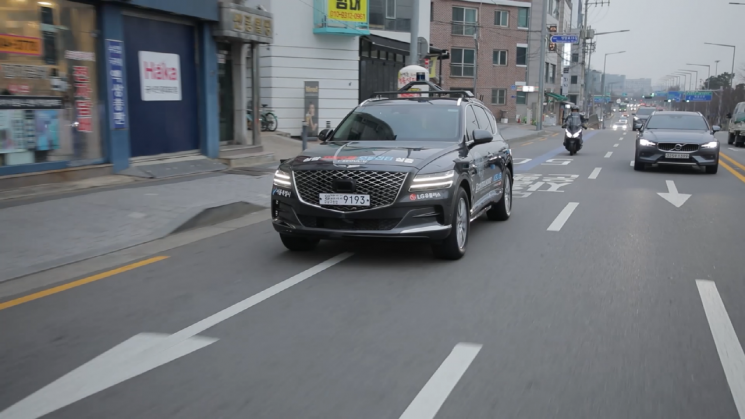
On the way to the parking lot, the car encountered a total of five crosswalks and three intersections. The car communicated with traffic lights via 5G-V2X and continuously decided whether to proceed or brake at every moment. During driving, AI-based driving environment recognition technology played a key role. Using information from five LiDAR sensors installed on the vehicle, it responded to lane changes and sudden cut-ins from vehicles in front, behind, and on the sides.
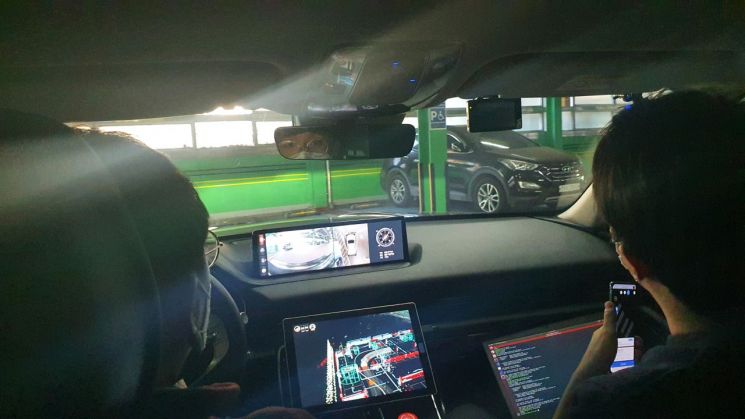
The car entered the entrance to Sangam1 Public Parking Lot. The parking barrier lifted, and the car entered the parking lot. The car stopped at the designated parking spot through autonomous parking. The trapezoidal parking lines and parking assist guide lines appeared on the rearview camera. The reverse gear was automatically engaged, and the steering wheel turned. When the leftmost corner of the car aligned parallel with the parking line, the steering wheel turned in the opposite direction and then straightened. The side mirrors showed equal clearance on both sides as if measured with a ruler. Parking was completed with a single reverse maneuver so that the parking lines and parking assist guide lines on the rearview camera matched perfectly.
There was no need to repeatedly move forward and backward or check the side mirrors again. The entire process was done autonomously. A 'Parking Complete' notification appeared on the app screen. The engine turned off. Autonomous driving and parking were completed with just a click on the app. Park Jae-hyun, a researcher at Hanyang University’s Automotive Control Laboratory ACELAB who conducted the demonstration, explained, "The core of this solution is leveraging 5G’s ultra-high speed, ultra-low latency, and ultra-connectivity to enhance the convenience of autonomous vehicles and simultaneously improve the convenience of parking, which drivers often find difficult."
Foundation of Driverless Cars Completed... Public Demonstration Next Month
The '5G Autonomous Parking' solution developed jointly by LG Uplus, ACELAB, and ControlWorks focuses on parking technology that novice drivers find challenging. Special attention was given to the 'Real-time Parking Space Recognition Solution.' It uses deep learning technology to detect vacant spots in parking lots. AI learns the available parking spaces and identifies empty spots solely from parking lot CCTV footage. Data on vacant parking spaces captured by CCTV is collected on a 5G cloud control platform, and this information is delivered to a mobile app so drivers can check it. Professor Sunwoo Myung-ho of Hanyang University ACELAB said, "5G autonomous driving and parking services based on core technologies of the 4th Industrial Revolution will greatly contribute to enhancing the competitiveness of domestic automotive technology in the global market. We especially hope it will play a significant role in services for transportation-vulnerable groups such as the disabled, elderly, and pregnant women in the future."
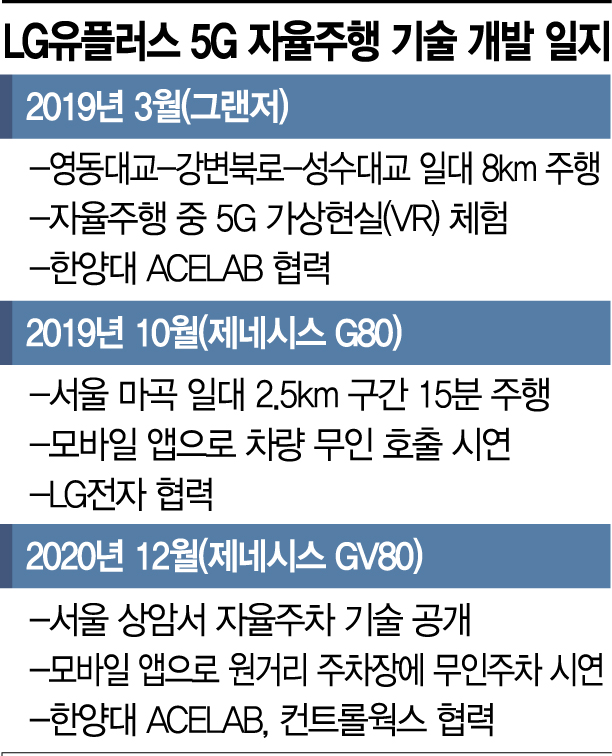
LG Uplus’s demonstration on this day was conducted about a year after unveiling vehicle unmanned remote call technology in October last year. LG Uplus first collaborated with Hanyang University ACELAB in March last year to autonomously drive areas including Yeongdong Bridge, Gangbyeonbuk-ro, and Seongsu Bridge, and later in October of the same year, publicly demonstrated unmanned vehicle call technology over a 2.5 km section in Magok. An LG Uplus official said, "With the completion of autonomous parking following unmanned remote call technology, the foundation of driverless car technology has been established. Having conducted 137 private 5G autonomous parking trials, we plan to start public demonstrations for general citizens as early as next month."
© The Asia Business Daily(www.asiae.co.kr). All rights reserved.
![User Who Sold Erroneously Deposited Bitcoins to Repay Debt and Fund Entertainment... What Did the Supreme Court Decide in 2021? [Legal Issue Check]](https://cwcontent.asiae.co.kr/asiaresize/183/2026020910431234020_1770601391.png)

















