Oil Industry Crisis Amid COVID-19
Different Choice from Other Oil Companies Increasing Renewable Energy
[Asia Economy Reporter Naju-seok] ExxonMobil, a global oil company that once held an unshakable position as the world's number one by market capitalization, is now facing instability.
According to the New York Times (NYT) on the 10th, ExxonMobil, which had no competitors in terms of scale and profitability, recorded a loss of $2.4 billion (2.62 trillion KRW) in just the first to third quarters of this year, and its stock price fell by 35%. Investors, including hedge fund D.E. Shaw, one of ExxonMobil's major shareholders, are demanding that ExxonMobil take cost-cutting measures. They are urging the company to restructure its business to maintain dividends. The company has already reduced its workforce by 14,000 employees, which is 15% of its total staff.
ExxonMobil has already begun large-scale business restructuring. Last month, it announced that its investment scale for next year would be $19 billion, and between 2022 and 2025, it planned capital expenditures of $20 billion to $25 billion. This is a significant retreat from its previous business plan, which pledged investments exceeding $30 billion by 2025.
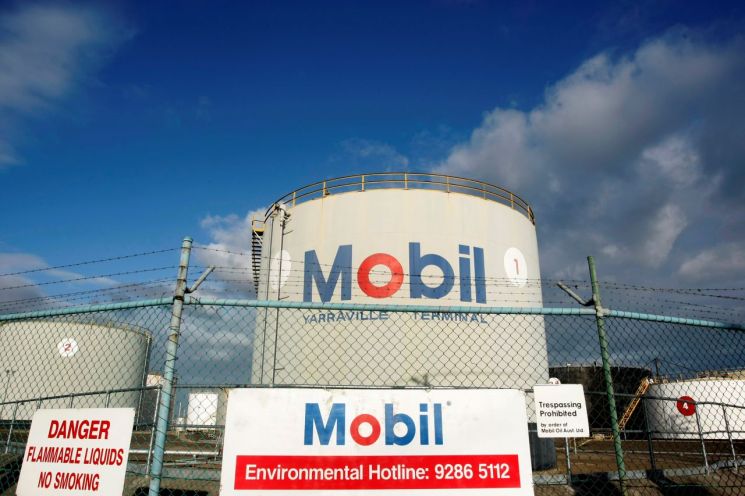
The difficulties ExxonMobil is facing are due to a combination of factors.
The most urgent problem is that both oil prices and demand have decreased due to the novel coronavirus disease (COVID-19). In the longer term, as climate change becomes a growing concern, questions about the future of the oil-related industry have increased. Financial companies that do not make efforts to reduce carbon dioxide emissions are beginning to reduce their holdings. The election of U.S. President Joe Biden, who has expressed a strong commitment to actively addressing climate change, also darkens the business outlook.
In fact, last month, the Wall Street Journal (WSJ) cited an internal ExxonMobil report stating that the company lowered its oil price forecasts for the next seven years by about 11-17% compared to previous projections. Just last year, ExxonMobil expected oil to trade at an average of $62 per barrel over the next five years and rise to $72 per barrel in 2026 and 2027. However, the forecast prepared this year expects oil prices to be $50-$55 per barrel over the next five years and only $60 per barrel in 2026 and 2027.
All global oil companies are facing similar difficulties, but ExxonMobil's situation is somewhat different. For example, oil companies like Royal Dutch Shell and BP are turning their attention to renewable energy in addition to the oil-related industry. In contrast, ExxonMobil remains focused on its current business structure, including oil and natural gas. For instance, ExxonMobil has announced that it will continue investing in coal and natural gas in next year's capital expenditures.
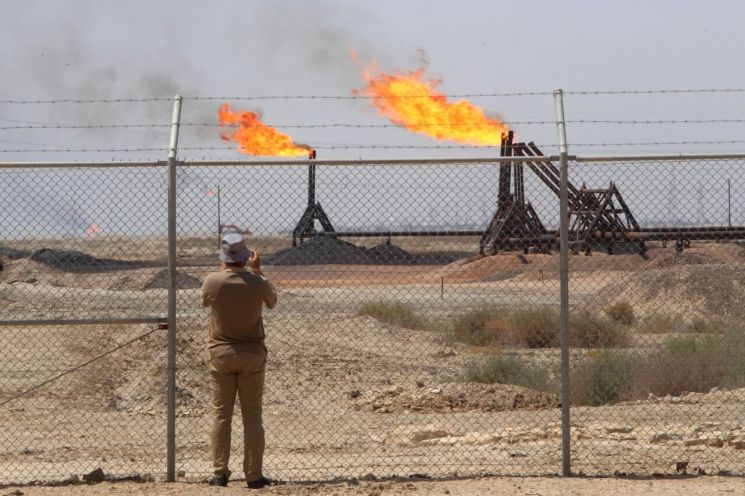
Of course, ExxonMobil also acknowledges the need for change. However, while other European oil companies are pursuing plans to use seaweed as biofuel for cars and aircraft instead of solar or wind power, ExxonMobil has announced such plans for years but has yet to announce commercial production.
Jennifer Rowland, an energy analyst at investment firm Edward Jones, said, "If you ask whether ExxonMobil can survive, the answer is definitely yes. It has assets, personnel, and technology worldwide," but added, "If the question changes to whether it can prosper, I am skeptical about that."
© The Asia Business Daily(www.asiae.co.kr). All rights reserved.


















