[Asia Economy Reporter Donghyun Choi] The urban regeneration companies (CRC) being discovered and nurtured by the Seoul Metropolitan Government are drawing attention as they create new opportunities and generate profits despite the challenges posed by the COVID-19 pandemic.
On the 10th, Seoul announced that it selected 12 urban regeneration companies last year and has been supporting them with subsidies and expert consulting. Urban regeneration companies refer to community-centered enterprises that pursue sustainable urban regeneration by participating in public seed projects and, even after project completion, combining and utilizing various local issues arising within the regeneration project areas with local resources. They can participate as corporations such as cooperatives and village enterprises or as locally based companies.
Haebangchon CRC 'The Space Friends' developed ‘MOC (Meet On Cloud)’, a real-time multi-video conferencing platform that enables interactive communication with 10 to 15 people simultaneously via video. They provide services to alternative schools for North Korean defector youth like Yeomyeong School, Yongsan Education Welfare Center, and Yongin Cultural Center, leading efforts to improve the educational environment for vulnerable groups affected by COVID-19. Through MOC and other services, they recorded sales of 45 million KRW as of the end of last month.
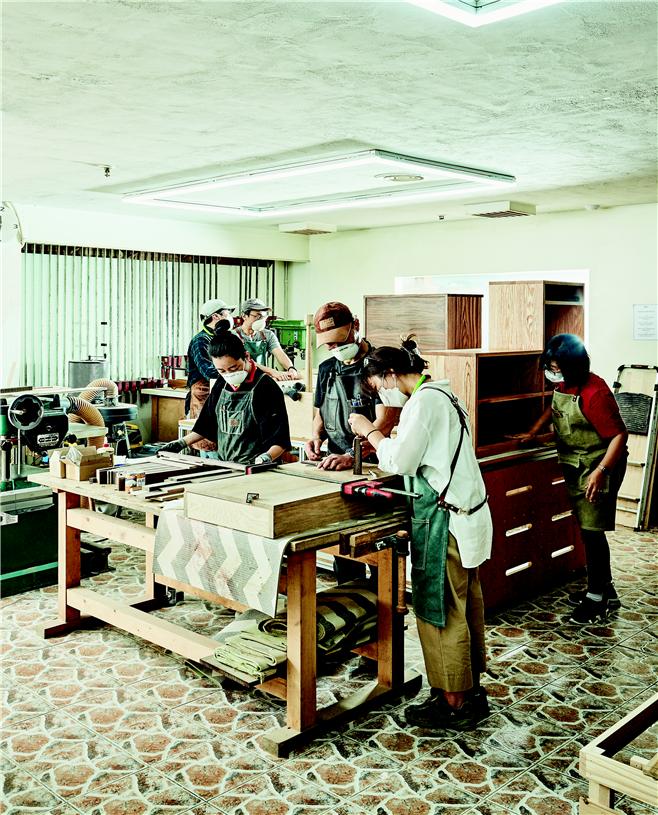
Amsa-dong urban regeneration company ‘Oracle Lounge’ generates revenue by selling recycled furniture and products made from discarded wood materials and paint. They also operate a resident technical school that trains local experts in woodworking and are conducting home repair projects within the community. As of September, they recorded sales of approximately 48 million KRW.
‘About M Cooperative’ in the Majang-dong urban regeneration area operates a caf? accessible to residents, contributing to the activation of the local community. Additionally, for students in the area who could not attend graduation and entrance ceremonies due to COVID-19, they set up a photo zone with residents and ran a ‘Graduation Cap Photo Program.’ Through various projects, they achieved sales of about 85 million KRW as of October.
Based on these achievements, Seoul selected seven additional urban regeneration companies this year, expanding the total from 12 to 19. The newly added companies are ▲ Seoul-ro Village Doctor Woodworking Cooperative (Seoul Station area) ▲ Sewing Design Eum Cooperative (Seoul Station area) ▲ Cooperative Our Paradise (in front of Changdeokgung Palace in the heart of the city) ▲ Amsa Urban Regeneration Social Cooperative (Amsa-dong) ▲ Seongsu Jiaeng Cooperative (Seongsu-dong) ▲ Garibong Village Life Cooperative (Garibong-dong) ▲ Village Mom Cooperative (Jangwi-dong), all located within six urban regeneration areas.
The city is providing multifaceted support to urban regeneration companies so that residents can independently create sustainable local regeneration models even after the urban regeneration projects conclude. In particular, emphasis is placed on enabling residents to resolve newly emerging local issues themselves amid the COVID-19 crisis and further develop these into business models.
Yang Yong-taek, Director of Regeneration Policy Planning at Seoul City, stated, "Urban regeneration companies are another fruit and a new challenge born from the growth of residents and local capabilities through urban regeneration projects. We will continue to support the emergence of various sustainable local regeneration models."
© The Asia Business Daily(www.asiae.co.kr). All rights reserved.

















