Controversy Arises from Global Companies
Concerns Grow Over Application Only to Native Firms
Agent System and Enforcement Are Key
[Asia Economy Reporter Koo Chae-eun] The 'Nth Room Prevention Act' and the 'Netflix Act' will come into effect starting today (the 10th). The core of these laws is to mandate the prevention of illegal filming distribution and to impose network stability obligations on content providers as well.
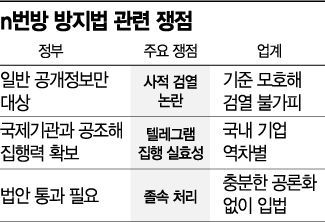
However, concerns remain that enforcement against overseas companies such as Telegram and Netflix, which were initially problematic, cannot be secured, and the controversy over discrimination against domestic companies is expected to continue. Both the Nth Room issue and free-riding on networks stem from global companies, but the law only tightens restrictions on domestic companies, raising concerns that it will be ineffective and exacerbate discrimination.
Uncertainty over Applying the Nth Room Act to Telegram
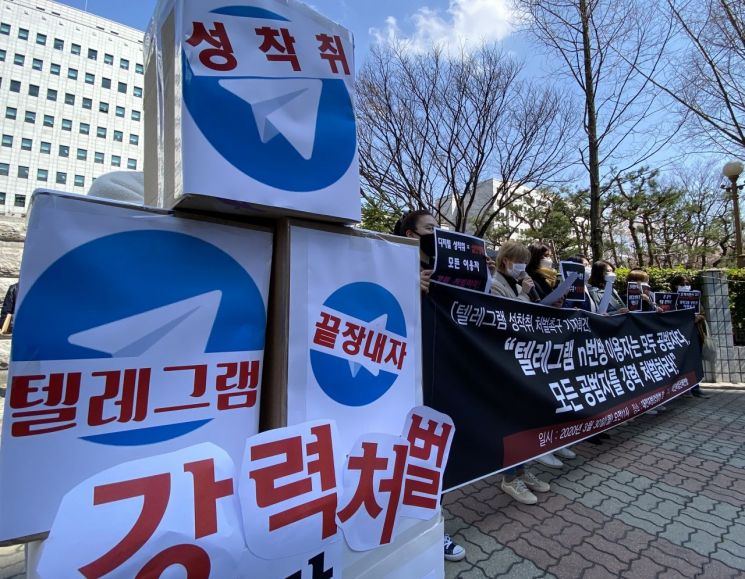
According to the industry on the 10th, the 'Nth Room Prevention Act (Amendment to the Information and Communications Network Act)' focuses on strengthening the responsibility to prevent the distribution of illegal filming. It targets about 70 value-added telecommunications service providers with annual sales exceeding 1 billion KRW or more than 100,000 daily users, including social networking services (SNS), communities, chat rooms, internet personal broadcasting, and search platform operators such as Naver and Kakao.
These companies must implement measures such as illegal filming reporting functions, banned words, and filtering, and inform users of the possibility of punishment if illegal filming is distributed. They must also designate at least one person responsible for preventing the distribution of illegal filming. Additionally, when illegal filming is reported to sexual violence counseling centers or the Korea Women's Human Rights Institute, value-added telecommunications service providers must immediately delete and block access.
The problem is that law enforcement is difficult for overseas companies with unclear headquarters locations, such as Telegram, leading to criticism that the law is only 'half-baked.' During the legislative discussions, concerns were raised that the Nth Room Prevention Act would exclude non-registered overseas service providers like Telegram from its scope and instead apply only to manageable domestic operators.
Netflix Act... Controversy over Discrimination Against Domestic Companies Paying Network Usage Fees
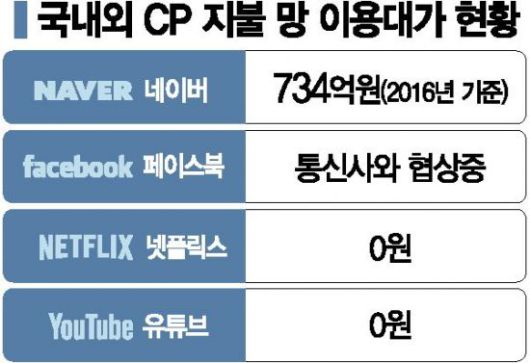
The 'Netflix Act (Amendment to the Telecommunications Business Act)' has also been criticized for failing to resolve discrimination issues. The Netflix Act imposes the burden of maintaining network quality due to the surge in high-definition video traffic on content providers. Major domestic and international content providers such as Google (YouTube), Facebook (including Instagram), Netflix, Naver, and Kakao are subject to this law.
There are concerns that this law only tightens restrictions on domestic companies that pay network usage fees, while global companies using free networks are exempt. It is pointed out that there are no proper means to enforce the law against companies like YouTube, Facebook, and Netflix that do not pay network usage fees. If overseas companies do not comply with Korean law, they can only be punished through the 'domestic representative' system, but this system is not being effectively operated.
The National Assembly Legislative Research Office stated, "It may be difficult to compel domestic representatives to submit materials regarding the obligation to ensure service stability," and added, "Since there is a lack of effective enforcement measures against overseas operators, it is necessary to continue considering the issue of extraterritorial application so that the obligation to ensure service stability does not become a burden solely on domestic value-added telecommunications service providers."
© The Asia Business Daily(www.asiae.co.kr). All rights reserved.
![User Who Sold Erroneously Deposited Bitcoins to Repay Debt and Fund Entertainment... What Did the Supreme Court Decide in 2021? [Legal Issue Check]](https://cwcontent.asiae.co.kr/asiaresize/183/2026020910431234020_1770601391.png)

















