Revenue projected at 55 trillion yen... 8 trillion yen below initial estimates
Fiscal soundness warning... Deficit bonds double in 11 years
Nihon Keizai expresses concern over "increased spending without verification"
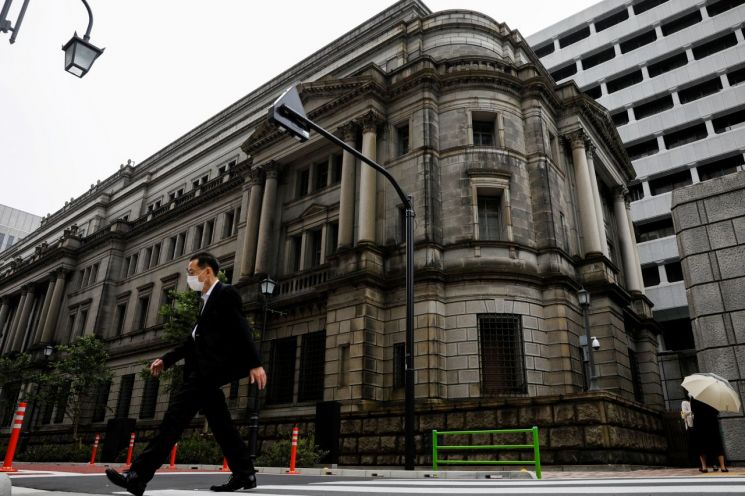
[Asia Economy Reporter Jeong Hyunjin] The Japanese government’s national finances are facing an emergency due to the aftermath of the novel coronavirus infection (COVID-19) crisis. Tax revenues are decreasing while national debt is soaring. Concerns about the sustainability of fiscal policy are growing, especially among experts.
According to the Nihon Keizai Shimbun on the 9th, the Japanese government’s general account tax revenue for the 2020 fiscal year is expected to be 55 trillion yen (approximately 573 trillion won), about 8 trillion yen below this year’s target of 63.5 trillion yen. Nihon Keizai explained, “Due to the COVID-19 crisis, corporate earnings have worsened, and income tax revenue is also likely to decrease due to the impact of unemployment.” The Japanese government’s tax revenue last year was 58.4 trillion yen, about 2 trillion yen less than the previous year. Considering this, tax revenue is expected to decline significantly for two consecutive years.
While tax revenue is decreasing, the scale of new deficit government bond issuance this year is likely to exceed 100 trillion yen for the first time. Deficit government bonds are bonds issued by the government to cover revenue shortfalls. The Japanese government has already expanded the scale of government bond issuance to 90.2 trillion yen through two supplementary budget appropriations this year. This is an increase of 57.6 trillion yen from the original scale. In addition, the Suga Yoshihide Cabinet decided on an additional economic measure totaling 73.6 trillion yen, combining 40 trillion yen in fiscal spending and private sector spending. Nihon Keizai reported, “Considering the decrease in tax revenue and the additional economic measures announced the day before, including COVID-19 response, the amount of government bond issuance this year is expected to far exceed 100 trillion yen.” This is twice the record high of 52 trillion yen in 2009.
Concerns about fiscal soundness are growing due to the decrease in tax revenue and the increase in national debt. Since the debt scale is already large, issuing large-scale deficit government bonds inevitably increases pressure on repayment. Nihon Keizai pointed out, “The Bank of Japan (BOJ) is also continuing its monetary easing policy by purchasing large amounts of government bonds,” adding, “Although there are currently no voices in the market worrying about interest rate hikes, the government needs to explain how it will maintain fiscal sustainability.”
Japan’s national debt ratio is relatively high compared to other advanced countries. According to the International Monetary Fund (IMF), Japan’s government debt-to-GDP ratio is expected to be 266% this year, far exceeding that of the United States (131%) and Italy (162%). However, Prime Minister Suga stated at his inauguration in September that fiscal soundness is “impossible without reviving the economy,” emphasizing prioritizing economic recovery. Nihon Keizai, in an editorial on the same day, said, “There is no disagreement on the necessity of fiscal input due to the COVID-19 crisis, but there is a judgment that the scale is becoming too large,” and criticized, “There is an impression that spending is increasing without sufficiently verifying the purpose and effectiveness of the economic measures implemented so far.”
© The Asia Business Daily(www.asiae.co.kr). All rights reserved.

















