UNIST Graduate Student Josu-gyeong Wins Two Top Awards in 2020 National Land and Urban Data Analysis Contest
Proposes Solutions for Gwangyang-si and Anyang-si Using Public Data … Prize Money of 9 Million Won

[Asia Economy Yeongnam Reporting Headquarters Reporter Kim Yong-woo] The person who presented the most ‘model answer’ to the complex problems of cities was a graduate student.
Graduate student Jo Soo-kyung from Ulsan National Institute of Science and Technology (UNIST) solved the difficult problems posed by Gwangyang City in Jeonnam Province and Anyang City in Gyeonggi Province through extensive analysis of national land and urban data, winning two awards. In other words, one graduate student stepped up as a city problem solver.
Here are the cases of Gwangyang City and Anyang City where Jo Soo-kyung proposed solutions.
#1. Gwangyang City plans to install a total of 40 electric vehicle charging stations. By utilizing data such as terrain, population, and traffic to find the locations most needed by citizens, the optimal sites were identified, predicting future demand as well.
#2. Anyang City was considering installing complex sensors necessary for various policies such as fine dust, noise, and security. Using a self-developed model, the locations that could achieve maximum effect at minimum cost were found.
Jo Soo-kyung, a graduate student in the Department of Industrial Engineering at UNIST (President Lee Yong-hoon, advisor Professor Kwon Sang-jin), provided solutions using public data for the problems faced by the two cities, Gwangyang and Anyang, effectively relieving their difficulties.
Jo participated in the ‘2020 National Land and Urban Data Analysis Project’ conducted through the Korea Land and Housing Corporation (LH)’s urban problem-solving platform ‘COMPAS’ and completed the tasks set by Gwangyang City and Anyang City, winning the highest award in both categories.
COMPAS is an online data analysis platform where local governments present problems they want to solve, and experts, citizens, and university students from various fields propose solutions.
This year, a total of three tasks were proposed, with about 30 teams participating in each task. Graduate student Jo Soo-kyung participated individually and ranked first in two of the tasks, winning a total prize of 9 million KRW.
The two tasks were ‘Optimal Location Selection for Electric Vehicle Charging Stations in Gwangyang City’ and ‘Selection of IoT Sensor Installation Locations for Urban Data Collection in Anyang City.’
Jo developed an optimal location selection model based on the provided public data and related policies to solve each task.
He said, “I have always been interested in mobility-related location optimization research and have been implementing related models. When I heard about the contest where I could propose models reflecting actual data and policies, I participated and achieved good results.”
Jo carried out the tasks by designing an optimal location index using public data provided by local governments and the government, such as population status, major facility locations, and traffic volume, and deriving optimized facility locations. He also considered factors such as related policies and budgets to propose realistic solutions.
The location of electric vehicle charging stations in Gwangyang City was highly evaluated as a proactive installation plan predicting areas where future users would need them based on data.
In Anyang City’s sensor installation plan for collecting various urban data such as fine dust monitoring, Jo attracted attention by proposing customized location selection methods for each sensor.
Jo said, “After winning the award, an official from Anyang City asked for help to use the model in the actual installation process. I felt very rewarded to have my self-developed model recognized for its potential application in real life.”
Professor Kwon Sang-jin of the Department of Industrial Engineering said, “I am proud that student Jo Soo-kyung applied the skills accumulated in the lab to solve real problems and achieved good results. This competition must have been very helpful in learning how to solve field problems using real data.”
The final results of the 2020 National Land and Urban Data Analysis Project for Gwangyang City and Anyang City were announced on November 16 last month, and the award ceremony was held on the 19th.
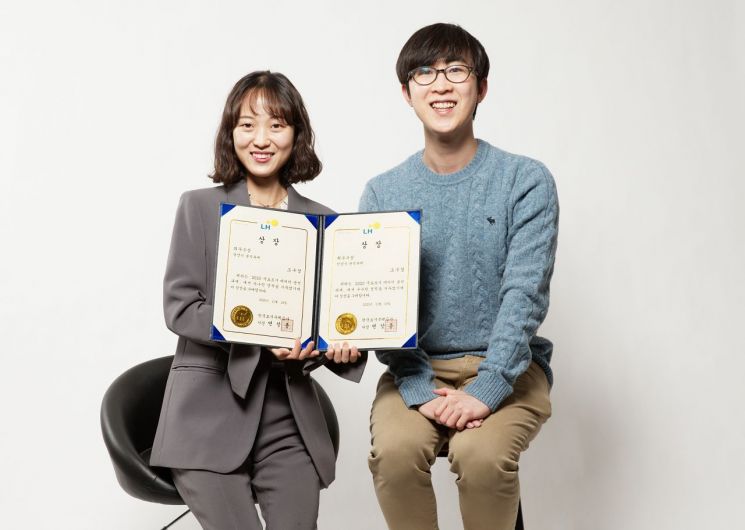 Graduate student Jo Su-gyeong (left) and her advisor, Professor Kwon Sang-jin of the Department of Industrial Engineering (right) at UNIST.
© The Asia Business Daily(www.asiae.co.kr). All rights reserved.


















