7,873 COVID-19 Confirmed Cases in Isolation... 415 More in One Day
More Isolated Patients Than During Shincheonji First Wave
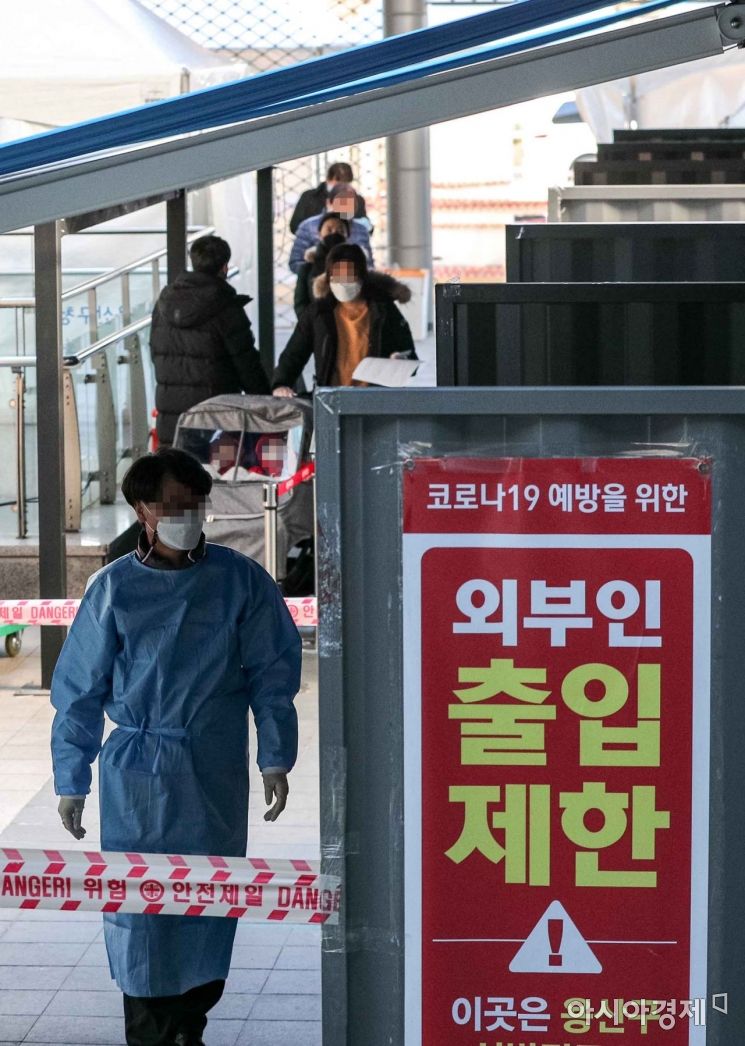 Citizens waiting for testing on the 4th at the screening clinic set up at Yongsan-gu Public Health Center in Seoul. Photo by Jinhyung Kang aymsdream@
[Asia Economy Reporter Choi Dae-yeol] It has been revealed that the number of patients infected with the novel coronavirus (COVID-19) who are isolated in hospitals or residential treatment centers is approaching 8,000. This is the highest level since the COVID-19 outbreak began in South Korea. During the first wave centered around Daegu and Gyeongbuk in mid-March, the number of patients never exceeded 7,500, but this current wave has seen even more patients.
According to the domestic status compiled by the Central Disease Control Headquarters as of midnight today, the number of isolated patients is 7,873, an increase of 415 from the previous day. Recently, about 200 to 300 patients have been released from isolation daily or a few have died, but the number of newly confirmed cases is much higher, causing a rapid increase in isolated patients. Since about 500 to 600 new cases have been reported daily recently, the number of isolated patients is likely to continue rising for the time being.
Since the first COVID-19 patient was confirmed in South Korea in late January, the highest number of isolated patients before today was on March 12 (7,470 patients as of midnight). At that time, a large-scale cluster infection occurred mainly among Shincheonji Church of Jesus members in the Daegu and Gyeongbuk areas, causing a rapid surge in patients within a short period.
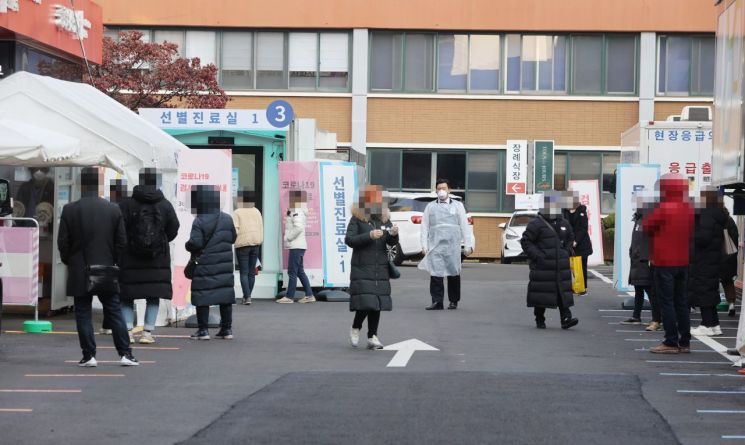 On the morning of the 6th, people waiting for tests lined up at the screening clinic of the National Medical Center in Jung-gu, Seoul.
 In that region, there was a shortage of hospital beds, and many had to wait at home for several days even after testing positive. Some died while waiting at home before receiving hospital treatment. During the second wave, when confirmed cases increased through metropolitan area churches and urban rallies, the number of isolated patients peaked in early September. On September 3 (as of midnight), the number of isolated patients was 4,786, which is more than 3,000 fewer than now. This indicates how many patients there are currently.
When confirmed with COVID-19, patients are designated for isolation and admitted to hospitals or residential treatment centers. If there are no symptoms at the time of confirmation and no symptoms appear within ten days, isolation can be lifted the next day. Some members of the South Korean national soccer team and staff who were collectively confirmed positive in Austria were released from isolation immediately after medical staff confirmed they showed no outward symptoms. Asymptomatic patients can also be released if they test negative twice by PCR tests 24 hours apart after one week.
Even symptomatic patients can be released from isolation if ten days have passed since symptom onset, there has been no fever for 72 hours, and clinical symptoms are improving. It is also possible if they test negative twice by PCR tests 24 hours apart after one week from symptom onset. Isolation release does not necessarily coincide with hospital discharge. Isolation release is possible when medical staff determine that the COVID-19 patient is unlikely to infect others. Even after isolation release, some patients with other symptoms may remain hospitalized for treatment.
© The Asia Business Daily(www.asiae.co.kr). All rights reserved.


















