Differences Remain on Fair Competition Environment, Governance, and Fisheries Issues
'No Deal' Not Ruled Out... Leaders of Both Sides to Talk Again on the 7th
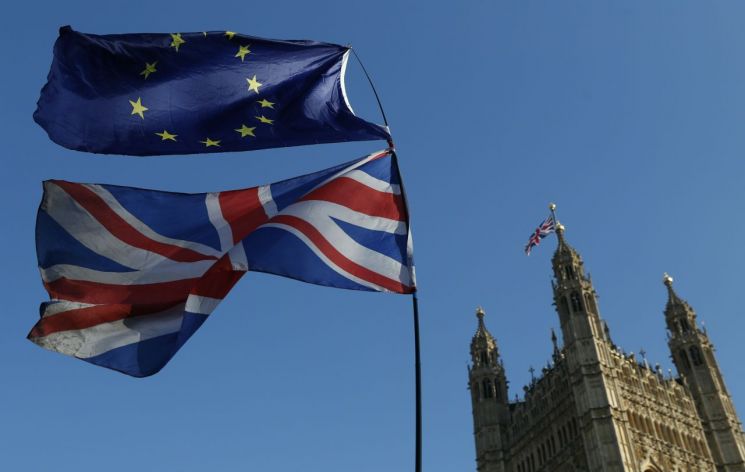
[Asia Economy Reporter Jeong Hyunjin] The United Kingdom and the European Union (EU) have agreed to resume negotiations on their future relationship following Brexit (the UK's withdrawal from the EU). Although negotiations were halted amid difficulties with less than a month remaining before the end of the transition period, both sides have decided to keep the door open for a deal until the very end and continue discussions. The possibility of a no-deal scenario remains if no agreement is reached, suggesting intense final discussions ahead.
Johnson and von der Leyen Talk by Phone: "Negotiations to Resume"
According to Bloomberg and other sources on the 5th (local time), UK Prime Minister Boris Johnson and EU Commission President Ursula von der Leyen held a phone call to review the progress of future relationship negotiations, including trade agreements, and issued a joint statement. They said, "We welcome progress in many areas," but also noted, "Significant differences remain on three key issues: a level playing field, governance (for resolving future disputes), and fisheries."
The two leaders emphasized, "If these issues are not resolved, there is a possibility that no agreement will be reached," and added, "Recognizing the seriousness of these differences, both sides agreed that negotiation teams must make additional efforts to see if solutions can be found."
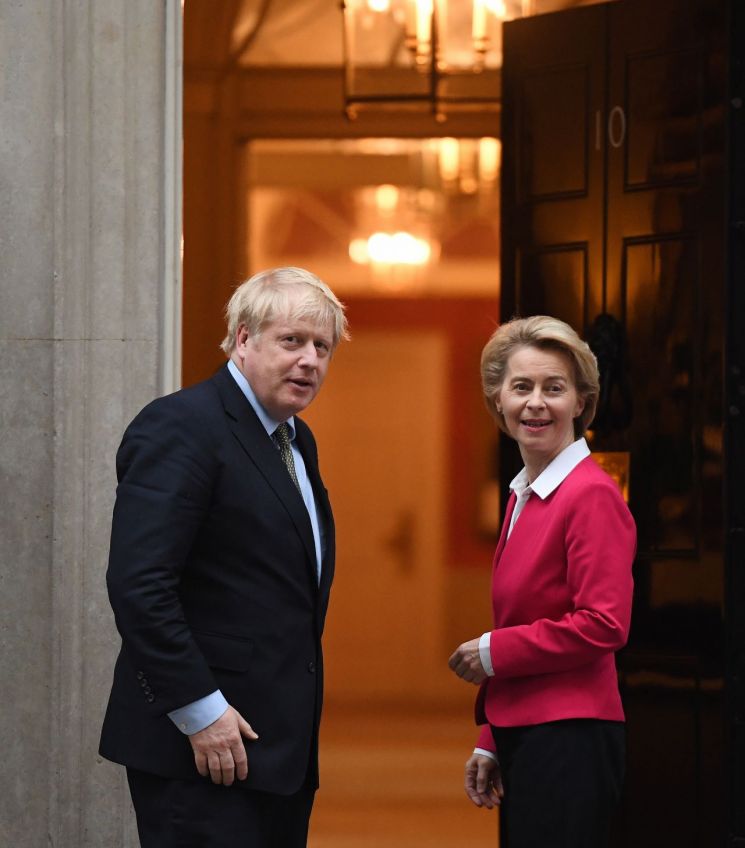 British Prime Minister Boris Johnson (left) and Ursula von der Leyen, President of the European Commission [Image source=EPA Yonhap News]
Accordingly, the chief negotiators from both sides are scheduled to meet again in Brussels, Belgium, on the 6th for two days of intensive talks. Bloomberg reported that "sources said the next 48 hours are very important." With Prime Minister Johnson and President von der Leyen planning another conversation on the evening of the 7th, the outcome of the negotiators' discussions will likely determine whether an agreement is reached or the talks end with no deal.
Negotiations on 6-7th → Leaders' Call on 7th → EU Summit on 10th: 'Urgent'
Foreign media predict that next week will be the "last chance" for UK-EU negotiations. With the transition period ending at the end of this year, negotiations have reached their final stage, and on the 10th of this month, the leaders of the 27 EU member states will convene for a summit. Since the summit is expected to decide whether to accept the negotiation results, the meetings on the 6th and 7th are seen as effectively the last opportunity.
At present, the key to reaching an agreement appears to be the political decisions made on major issues where both sides differ. The two sides are currently at odds over the level playing field, governance, and fisheries. On the 4th, David Frost, the UK's chief negotiator, and Michel Barnier, the EU's chief negotiator, conducted intensive talks in London for a week but failed to reach an agreement due to these issues. A source from the EU told The Guardian that it is now time for major political decisions to be made on these matters.
In particular, regarding fisheries, France, a major EU member state, has stated it cannot accept the UK's demands, and other member states have voiced support for this position, making it difficult to find common ground. The UK demands a significant increase in fishing quotas for its vessels within UK waters, as it has left the EU, but the EU insists on maintaining the current catch levels for EU vessels.
Transition Period Ending at Year-End... Will 'No Deal' Cause Trade Shock?
The UK officially left the EU at the end of January. Under the Brexit agreement, it relinquished its status as an EU member state but maintained the status quo for 11 months through a transition period until the end of this year to avoid chaos. Both sides have been negotiating for nine months since March to finalize future relationship agreements, including trade, within the transition period. Initially, they aimed to conclude negotiations by November, considering ratification procedures, but due to differences over key issues, talks have continued until this month, one month before the transition period ends.
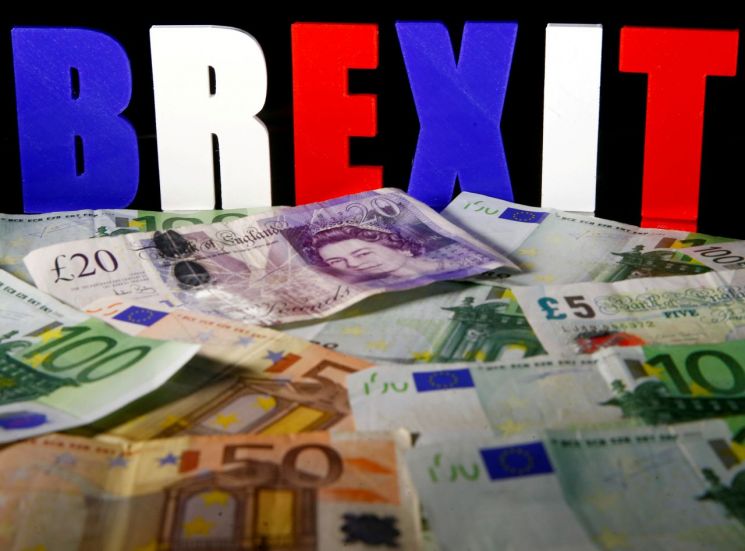
This is not the first time the two sides have exceeded the planned negotiation deadline. However, if no agreement is reached by the end of the year, there are concerns that the UK could effectively leave the EU without any deal, akin to a no-deal Brexit. Especially in trade, failure to reach an agreement by year-end means both sides will be subject to World Trade Organization (WTO) rules starting next year, resulting in tariffs on imports and exports and the emergence of non-tariff barriers.
Bloomberg stated, "The average EU tariff rate is 3%, but some products will face higher tariffs," and forecasted, "UK car manufacturers will face a 10% tariff on exports to the EU, and dairy products will face a 35.4% tariff." The Society of Motor Manufacturers and Traders (SMMT) in the UK estimates that the automotive industry alone could suffer losses of around ?55 billion (approximately 80.3 trillion KRW) due to tariffs and reduced demand.
With ?300 billion worth of exports, accounting for 43% of the UK's total exports, heading to the EU annually, such a tariff "bomb" would inevitably have a negative impact on the UK economy. Bloomberg Economics predicts that if no trade agreement is reached, the UK's gross domestic product (GDP) could shrink by about 1.5% in the short term. The UK's Office for Budget Responsibility (OBR) also forecasted at the end of last month that if future relationship negotiations end with no deal, GDP could decline by an additional 2%.
© The Asia Business Daily(www.asiae.co.kr). All rights reserved.



















