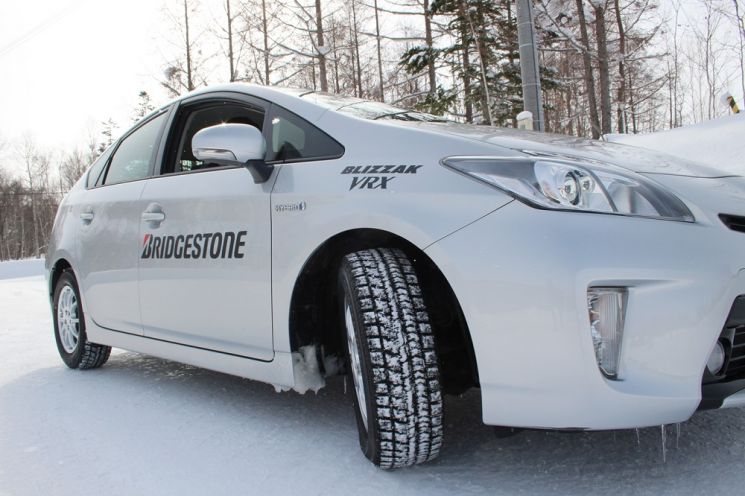
[Asia Economy Reporter Kiho Sung] As winter approaches, the season of snow, ice, and black ice, checking vehicle tires becomes increasingly important. Especially since loss of traction is a major cause of traffic accidents in winter, winter tires are essential.
According to the Road Traffic Authority's Traffic Accident Analysis System on the 5th, last winter had an average temperature of 3.1°C, making it the warmest winter on record with little cold or snow. However, there were 465 traffic accidents caused by frost and ice, and 162 accidents caused by snowfall. In 2018, when the average temperature was maintained, there were 1,349 accidents caused by frost and ice, and 885 accidents caused by snowfall. These figures exclude accidents that occurred on wet or damp road surfaces.
In particular, tire specialist Bridgestone Korea advised that even if winter temperatures are above freezing, the road surface can still be icy. Weather reports usually measure temperature at about 1.5 meters above ground (the average height of the temperature measurement Stevenson screen). Therefore, even if the temperature is above freezing, winter road surfaces can be frozen. Especially on high bridges, overpasses, and tunnels where strong winds blow, ice formation is frequent and easy. If the minimum temperature is 3°C, the road surface temperature can be below freezing, causing water droplets and moisture on the road to freeze. This is why the risk of black ice on winter roads always exists.
There is a significant difference in braking performance on icy roads between winter tires and regular tires, with regular tires having a braking distance 30-40% longer than winter tires. According to an experiment conducted by Bridgestone Korea at the Mokdong indoor rink, winter tires and regular tires showed about a 30-40% difference in braking distance. When driving at 20 km/h, vehicles equipped with regular tires had an average braking distance of 17.82 meters on ice, whereas vehicles with Bridgestone winter tires recorded 10.92 meters. There was a 6.9-meter difference between the two.
Winter tires are, as the name suggests, developed to suit winter climates and road conditions. Winter tires provide superior traction compared to summer or all-season tires not only on snowy roads but also on most winter road conditions such as low temperatures, wet surfaces caused by rain or snow, ice, and black ice.
Winter tires are designed with deeper tread grooves than regular tires. Deep tread grooves prevent snow from easily sticking to the grooves, maintaining traction without slipping. Thanks to the deep tread grooves, winter tires offer higher traction on snowy roads compared to regular tires. The tread pattern design of winter tires is also engineered to enhance drainage performance, quickly expelling snow, ice, and moisture.
Song Jin-ho, Team Leader of Passenger Product Planning at Bridgestone Korea, said, "In winter, roads can suddenly change to snowy, icy, or glazed conditions. During early morning, dawn, or after sunset, temperatures drop below freezing, causing road surfaces to freeze easily. Especially on bridges and overpasses, road surface freezing occurs faster than on ground level. Considering these winter road characteristics, equipping winter tires is essential for safe driving in winter."
© The Asia Business Daily(www.asiae.co.kr). All rights reserved.

















