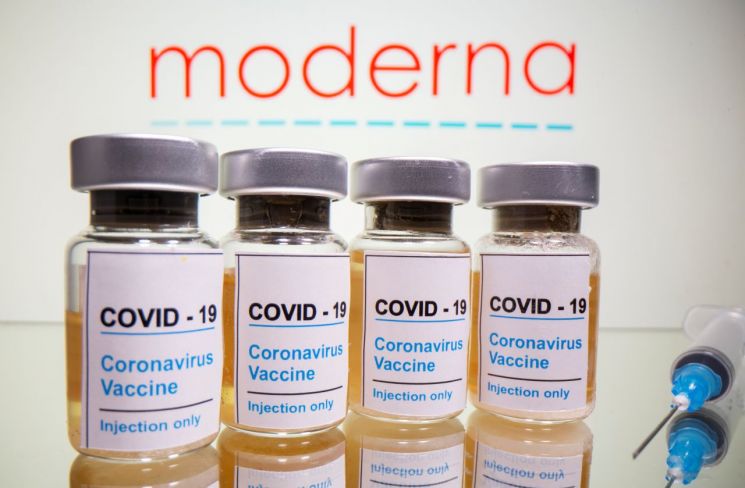
[Asia Economy Reporter Jeong Hyunjin] U.S. pharmaceutical company Moderna announced that vaccination with its COVID-19 vaccine under development induces antibodies that last for at least three months.
On the 3rd (local time), according to AFP, researchers at the U.S. National Institute of Allergy and Infectious Diseases (NIAID) studied immune responses in 34 adult participants from the first phase of Moderna's vaccine clinical trial, confirming these results. The Moderna vaccine, called mRNA-1273, is administered twice at 28-day intervals.
The study found that although antibody levels gradually decreased over time, all participants maintained high levels of antibodies for three months after vaccination. Antibodies prevent the virus from invading human cells. Experts believe that even if antibody levels decline, the human immune system remembers the COVID-19 virus and is likely to produce new antibodies.
This study also confirmed that immune cells that help memory responses were activated by the vaccine. The question remains whether these cells actually trigger memory responses. It is encouraging that the duration of antibody persistence was longer after additional doses and that a strong immune response was observed regardless of age.
The Moderna vaccine, along with the vaccine developed by Pfizer-BioNTech, is considered a frontrunner in resolving the COVID-19 pandemic. Both the U.S. and Europe are expected to soon decide on emergency use authorization for the Moderna vaccine.
© The Asia Business Daily(www.asiae.co.kr). All rights reserved.

















