[Sejong=Asia Economy Reporter Kim Hyunjung] The annual per capita consumption of meat, including beef, pork, and chicken, has increased by an average of 4.2% each year over the past 39 years. The income of livestock farms reached 75 million KRW last year, increasing by an average of 4.4% annually over 27 years since 1993.
According to the 'Structural Changes in Livestock Industry through Statistics' released by Statistics Korea on the 4th, per capita meat consumption rose from 11.3 kg in 1980 to 53.9 kg in 2018.
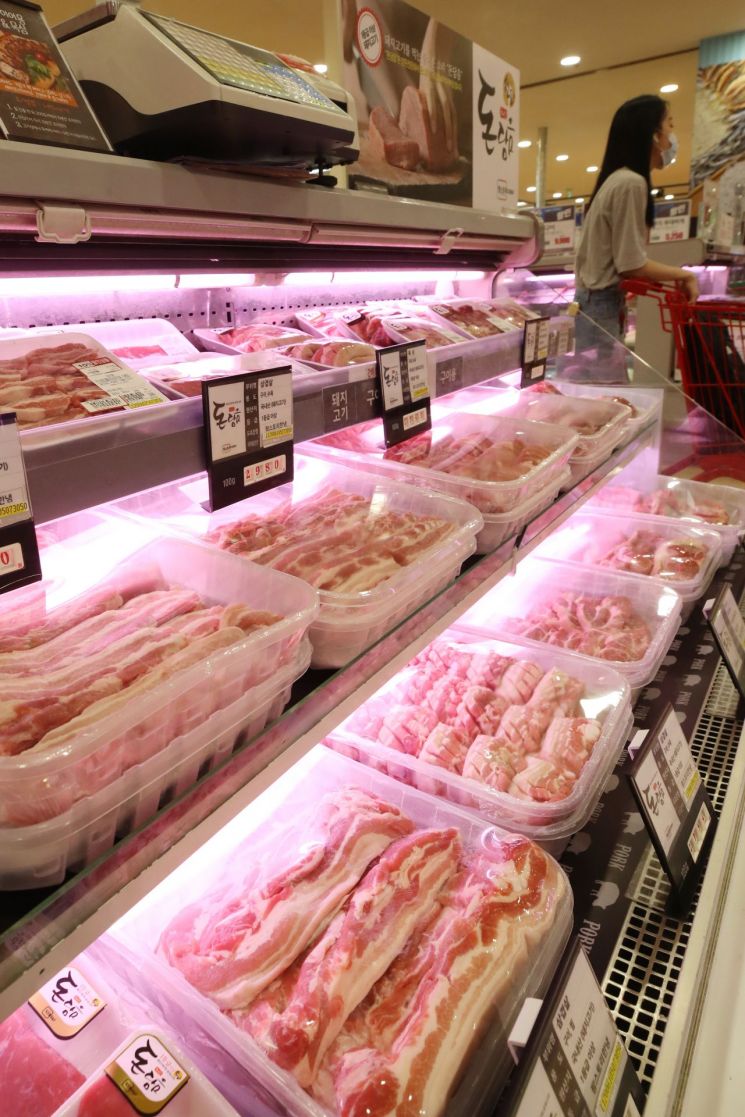
The highest consumption was pork, which was 27.0 kg in 2018. It increased by an average of 3.9% annually from 6.3 kg in 1980. Chicken consumption grew by an average of 4.8% annually from 2.4 kg in 1980 to 14.2 kg in 2018. Beef consumption increased from 2.6 kg in 1980 by an average of 4.3% annually, reaching 12.7 kg in 2018. This represents about a fivefold increase over 39 years.
Meat supply increased at an average annual rate of 5.0% over 39 years, which was higher than the growth rate of consumption. Production growth rates were highest for chicken at 5.1%, followed by pork at 3.7%, and beef at 2.5%. Import growth rates were highest for pork at 9.9%, followed by chicken at 5.0%, and beef at 3.0%.
Egg consumption increased by an average of 2.6% annually from 1970 to 2018, reaching 268 eggs per person per year in 2018. During the same period, milk consumption grew by an average of 8.5% annually, reaching 80.1 kg per person per year in 2018. Production increased by an average of 3.7% annually for eggs and 8.1% for milk.
Looking at the farm gate prices of livestock products from 1999 to 2019, broiler chickens had the highest average annual increase at 16.6%, followed by eggs (8.3%), calves (6.6%), and cattle (3.4%), while pork prices actually declined by 1.3%.
Last year, there were 53,000 livestock farming households, decreasing by an average of 1.4% annually since 1985. The proportion of farm operators aged 65 or older among livestock farmers rose to 43.6%, up 18.4 percentage points from 25.2% in 2005. In 2019, livestock farm income was 75 million KRW, increasing by an average of 4.4% annually over 27 years since 1993.
© The Asia Business Daily(www.asiae.co.kr). All rights reserved.

















