Joint Prevention and Control Meeting Held by Chinese Health Authorities, COVID-19 Risk Remains
Tension Rises as Wuhan Lockdown Coincides with Chunjol Holiday
[Asia Economy Beijing=Special Correspondent Jo Young-shin] Chinese epidemic prevention authorities are on high alert, preparing measures to prevent the resurgence of COVID-19 ahead of the Lunar New Year (Chunjeol) holiday.
The timing of the official confirmation of the 'Wuhan pneumonia of unknown cause' patient on December 31 last year and the Wuhan lockdown (January 23, 2020) coincides with next year's Chunjeol holiday, heightening the tension felt by Chinese health authorities more than ever.
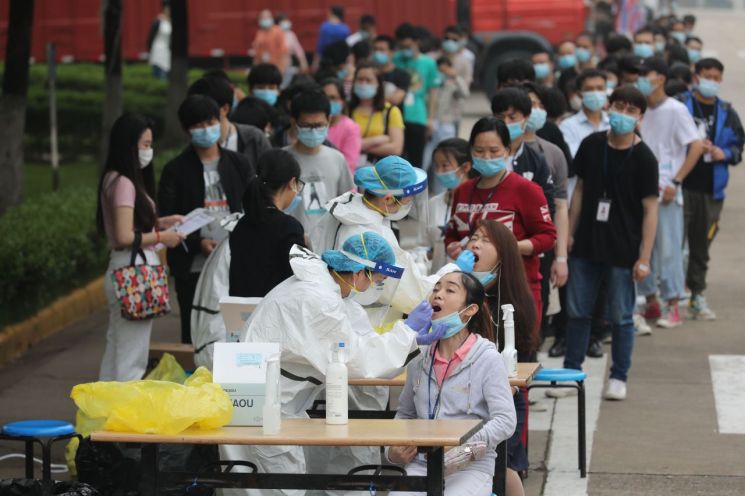
More than a year after the outbreak of Wuhan pneumonia of unknown cause, the global COVID-19 death toll has surpassed 1.5 million, and the spread of COVID-19 remains ongoing.
According to Chinese state-run Xinhua News Agency and Global Times on the 4th, the National Health Commission and the Ministry of Transport of China attended a joint prevention and control meeting of the State Council held the previous day, urging people to refrain from traveling as much as possible during the Lunar New Year holiday period (February 11?17) due to the possibility of a COVID-19 outbreak.
They emphasized that the periods from February 5 to 10 before the holiday and from February 17 to 20 after the holiday are times when travelers gather in large numbers, and urged people to avoid traveling during these times as much as possible.
Xinhua News Agency stressed the importance of personal hygiene for domestic travelers using airplanes, including wearing masks, using self check-in, washing hands and using hand sanitizer, and refraining from using onboard restrooms.
It also reported that passengers with a body temperature exceeding 37.3 ℃ when boarding airplanes or trains will be managed separately and may be restricted from boarding.
Xinhua News Agency further reported that health authorities plan to mobilize 2.95 million epidemic prevention personnel in the event of a COVID-19 cluster outbreak.
Xinhua News Agency stated that to prevent overseas importation, restrictions on international flights and continued blocking of overseas travelers entering China will be enforced.
In fact, Chinese health authorities have changed the nucleic acid testing requirement for boarding flights to China from once before boarding to twice. Not only nucleic acid tests but also serological tests have been made mandatory. Additionally, passengers must submit a negative test result to Chinese diplomatic authorities and obtain a green health QR code to be allowed to board the aircraft.
China is preparing for the Lunar New Year in February next year because the daily number of travelers during the Chunjeol holiday period usually exceeds 100 million. There are concerns that previous epidemic prevention efforts could be undone.
The Chinese leadership plans to declare the 'Xiaokang (a moderately prosperous society enjoying material comfort without worries about food, clothing, and shelter) era' in the first half of next year. This is only possible if the economy supports it. If COVID-19 spreads nationwide again starting from the Chunjeol holiday, this plan may have to be revised.
Also, with the 100th anniversary of the founding of the Chinese Communist Party approaching next year, the Chinese leadership is making every effort to revitalize the economy.
© The Asia Business Daily(www.asiae.co.kr). All rights reserved.

















