Initial Budget Increased by 102.8 Billion Won... Reflecting the Establishment of the National State Violence Trauma Healing Center and More
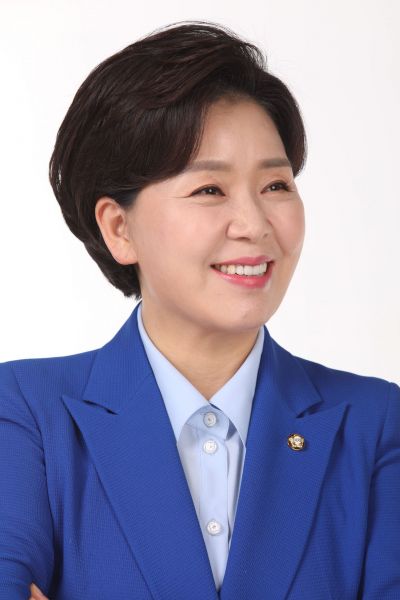
[Asia Economy Honam Reporting Headquarters Reporter Yoon Jamin] Yang Hyang-ja, Member of the National Assembly (Democratic Party of Korea·Gwangju Seo-gu Eul), announced on the 3rd that the 2021 national budget for Gwangju Metropolitan City has been confirmed at 2.8666 trillion KRW.
The original government budget proposal for Gwangju next year included a total project cost of 2.7638 trillion KRW, but an additional 102.8 billion KRW was increased through the National Assembly Budget and Accounts Special Committee.
This year, due to increased national budget support caused by flood damage and COVID-19, securing budgets related to local issues was considerably difficult compared to previous years.
As the only member of the Budget and Accounts Special Committee among Gwangju lawmakers, Assemblywoman Yang has worked with Gwangju City to select major projects and directly persuaded from the ministers of relevant ministries to the working-level officials, explaining the necessity of the projects.
As a result, significant projects such as the construction of the National Trauma Healing Center for State Violence (total project cost 7 billion KRW), the Traditional Living Music Hall (total project cost 40 billion KRW), the establishment of a win-win job foundation (total project cost 29 billion KRW), and the expansion of Gwangju Songjeong Station (50 billion KRW) were confirmed.
The most notable project is the construction of the ‘National Trauma Healing Center for State Violence.’
This project is a national-level specialized healing facility for victims and families of state violence such as torture, and is planned to be built on the site of the former Armed Forces Gwangju Hospital in Hwajeong-dong, Seo-gu, Gwangju.
Assemblywoman Yang said, “The construction of the trauma center has been a long-standing wish of Gwangju citizens, but for the past few years, the Ministry of the Interior and Safety and the Ministry of Economy and Finance, the relevant ministries, opposed the project citing the lack of a legal basis.” She added, “In September, I took the lead in proposing the enactment law for the establishment of the center and persistently persuaded the Deputy Prime Minister for Economy and the Minister of the Interior and Safety through policy inquiries at the National Assembly Budget Committee, eventually securing the design budget.”
The attraction of the National Trauma Healing Center for State Violence to Gwangju was a common pledge of the Democratic Party candidates in the Gwangju area during the 21st general election.
Along with this, the cultural living conditions of Gwangju citizens will also be greatly improved.
With the construction of the ‘Traditional Living Music Hall’ in Gwangju, the birthplace of Korean traditional music, various performances and citizen experience programs will be provided.
Originally, the project was promoted as a National Gugak Center, but since two National Gugak Centers are already operating in Honam, it was impossible to build an additional Gugak Center in Gwangju due to regional equity issues.
Assemblywoman Yang quickly set an alternative by changing the concept to a Traditional Living Music Hall instead of a National Gugak Center in cooperation with Gwangju City, and as a result, was able to secure national funding.
Many new AI-related projects for regional industrial revitalization were also approved.
First, the ‘Development of an AI Platform to Improve Pregnancy Success Rates’ is a project to support 230,000 infertile families nationwide who have difficulties with natural pregnancy. Once the platform development is completed, it is expected to enter the global infertility market, which amounts to 200 million people worldwide.
The ‘Development of a Big Data-based Smart Farm Platform Using AI Technology’ is a project that supports the development of an integrated management system and control technology for smart farms (indoor farms) using AI technology, as well as distribution.
The ‘Smart Cultural Ecology Experience Center Project’ supports the activation of local play culture and tourism by providing various cultural ecology experiences and learning opportunities through the integration of VR and AR.
These projects will contribute to the government’s Korean New Deal policy along with Gwangju City’s promotion of the AI industry.
In addition, Assemblywoman Yang increased budgets for projects such as ▲Establishment of an Eco-friendly Air Industry Development Foundation ▲Creation of Gwangju Green Startup Town ▲Construction of the 5·18 Democratization Movement Records Integration System ▲Expansion of the Gwangju Hanam-Jangseong Samgye Expressway ▲Creation of Campus Innovation Park ▲Establishment of the Korea Swimming Promotion Center ▲Road construction between Sangmu District and Cheomdan Industrial Complex ▲Construction of the Gwangju-Gangjin Expressway, fully demonstrating her capabilities as Gwangju’s only Budget Committee member and a senior member of the ruling party.
Assemblywoman Yang said, “I feel great fulfillment in being able to implement Gwangju’s long-standing unresolved projects and pledges,” and added, “I will not be complacent with budget acquisition and will ensure these projects proceed smoothly until the end.”
© The Asia Business Daily(www.asiae.co.kr). All rights reserved.

















