Job Committee to Hold Conference with 4 Major Groups and Domestic and Foreign Investment Institutions on the 2nd
"Private Sector Participation is Key to Success"... Emphasizing the Need for Safety Nets and Talent Development
"AI Technology Plays a Core Role" "A Competitive Data Platform is Necessary"
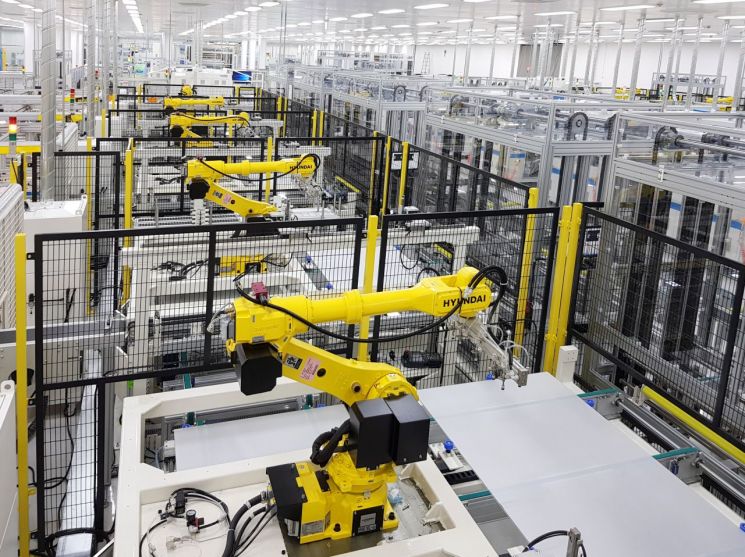
"The transition to a carbon-neutral economy can lead to explosive job creation in the construction and manufacturing sectors due to infrastructure investment." (Kim Yong-gi, Vice Chairman of the Presidential Committee on Jobs)
"If the Korean New Deal succeeds in driving innovative growth, manufacturing will grow at an average annual rate of 4.1%, and the economic growth rate could see an additional increase of around 0.6 percentage points." (Jang Jae-cheol, Managing Director at KB Securities)
The Presidential Committee on Jobs held the 'Korean New Deal and Jobs Conference' on the 2nd at the Westin Chosun Hotel in Seoul. The conference featured presentations and discussions with executives from the four major conglomerates?Samsung, Hyundai Motor, SK, LG?as well as domestic and international investment institutions such as Citigroup and KB Securities. It attracted attention as the four major groups and investors gathered in one place to share their views on the government-led Korean New Deal project.
First, Michele Delavina, Senior Research Fellow at Goldman Sachs, delivered a video presentation titled "Carbon Economy and Growth," stating, "The flow of international capital is completely changing recently," and added, "There is an expansion of infrastructure investment related to renewable energy and a net increase in jobs."
He predicted, "It is expected that $16 trillion will be invested in expanding renewable energy infrastructure over the next decade until 2030," and "This could create an additional 20 million jobs."
Alberto Gandolfi, Managing Director at Goldman Sachs, explained, "The European Green Deal announced to reduce carbon emissions is worth 7 trillion euros (approximately 9729 trillion KRW) by 2050, of which 3 trillion euros (3976 trillion KRW) is expected to be raised through private sector investment."
Johanna Chua, Managing Director at Citigroup, forecasted that artificial intelligence (AI) technology will play a key role in digital transformation over the next five years. She said, "According to Citigroup's 'AI Competitiveness' index, among 48 countries, the U.S. and China lead, and Korea ranks 12th." She pointed out anticipated issues during digital transformation such as polarization between job sectors and widening competitiveness gaps between companies, emphasizing the need for social safety nets, talent development, and retraining.
Marie Kim, Chief Economist at Citigroup, stressed, "The success of the Korean New Deal will depend on private sector participation." She argued that incentives such as tax credits and public-private partnership investment projects should be used to reduce the risks borne by the private sector and lessen the government's fiscal burden.
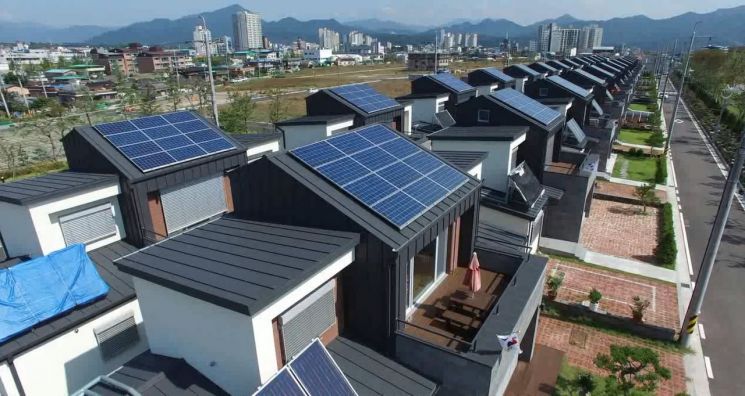
Kim Yong-gi, Vice Chairman of the Presidential Committee on Jobs, emphasized in his keynote speech, "In response to technological changes and the climate crisis, we are accelerating digital transformation and the transition to a carbon-neutral economy," adding, "Building safety nets and investing in people are important."
He identified five key keywords for industrial structural changes in the post-COVID-19 era: ▲ Shift of the service sector from offline to online ▲ Integration of manufacturing and service industries ▲ Strengthening of materials, parts, and equipment in manufacturing ▲ Digital and green transformation across all industries ▲ Securing competitiveness in IoT, semiconductors, secondary batteries, AI, renewables, and 5G, which lead the Fourth Industrial Revolution.
Vice Chairman Kim forecasted, "The transition to a carbon-neutral economy can lead to explosive job creation in construction and manufacturing sectors due to infrastructure investment," and "In the maintenance and management sector, renewable energy creates three times more jobs than fossil fuel businesses."
There was also an opinion that to prevent deterioration of the employment environment due to job automation, the government and companies must create synergy effects through role-sharing.
Lee Cheol-yong, Senior Research Fellow at LG Economic Research Institute, proposed, "To expand the job pie, it is necessary to build a competitive data platform," and suggested, "The government should provide public data that can be analyzed and processed for business application, and companies should accelerate the development of commercialization solutions through collaboration."
Jang Jae-cheol, Managing Director at KB Securities, said, "If the Korean New Deal succeeds in innovative growth, manufacturing will grow at an average annual rate of 4.1%, and the economic growth rate could see an additional increase of around 0.6 percentage points."
Jang Se-myung, Vice President at Samsung Economic Research Institute, noted, "Since COVID-19, profits in the ICT industry have been generated more from infrastructure and content than devices," and suggested, "The government and private sector need to play roles in nurturing core AI and software talent."
Yoon Sung-eun, Managing Director at SK Telecom, stated, "We need to strengthen 'digital and content sovereignty' through fostering K-platforms and support the global expansion of K-content," adding, "Institutional measures and policy support for content production are necessary to enable fair competition with overseas operators."
He added, "We will attract a hub for Asian data centers through active public-private cooperation," and emphasized, "Digital New Deal requires ultra-cooperation among private operators in each sector under active government support."
Park Sung-kyu, Director at Hyundai Motor Group Global Management Research Institute, said, "The electrification transition of the automobile industry is both a crisis and an opportunity," noting, "Although sales of internal combustion engines, our main sector, are expected to decline, there is also an opportunity to establish a global leading position through discovering new industries."
Park reported that Hyundai Motor sold 58,000 electric vehicles from January to July this year, maintaining its position as the world's third-largest after Tesla and Renault-Nissan. He added, "Support such as government purchase subsidies and infrastructure development is needed to foster the early-stage electric vehicle market, along with retraining, industry transition, and expansion of social safety nets."
© The Asia Business Daily(www.asiae.co.kr). All rights reserved.


















