Designated as a COVID-19 Dedicated Hospital... Support Needed for Medical Institutions
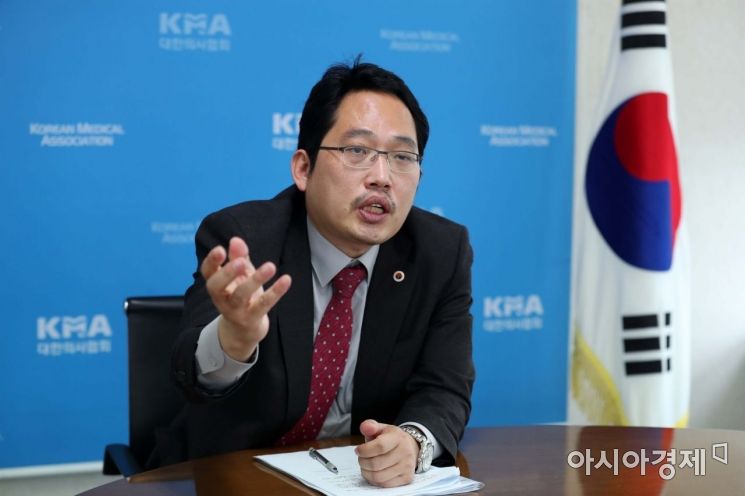
[Asia Economy Reporter Seo So-jeong] The Korean Medical Association recently recommended that the government temporarily raise social distancing to Level 3 as the number of confirmed cases of the novel coronavirus infection (COVID-19) approached 500.
On the 1st, the association proposed in a government recommendation statement, "Please consider temporarily raising social distancing to Level 3 as a strong short-term measure."
The association stated, "Social distancing is the most effective means to prevent the spread of COVID-19 infection, but the segmentation into levels such as 1.5, 2.5, and the exceptional pinpoint quarantine measures like 'Level 2+α' implemented from today have caused great confusion," adding, "From the public’s perspective, it is difficult to know exactly how to behave in daily life and to what extent activities are allowed."
The association noted, "December is the time of year with the most active social interactions, and the College Scholastic Ability Test will be held in two days," and added, "Considering the recent spread of infections, there is a possibility of many patients occurring in early to mid-December, so the epidemic must be blocked early through strong social distancing for 1 to 2 weeks."
They also urged a paradigm shift in COVID-19 management from 'quarantine' to 'treatment and infection control,' emphasizing that government measures and support should focus on medical institutions.
The association said, "Rather than reducing the number of confirmed cases, practical efforts are needed to reduce the mortality rate through thorough management of already infected patients," and stressed, "It is important to expand negative pressure intensive care unit beds capable of treating severe patients and to establish management systems for moderate, mild, and asymptomatic patients." They also mentioned the need to expand active testing functions at public health centers to detect and manage patients early.
Furthermore, they pointed out the necessity of designating and operating dedicated COVID-19 hospitals.
The association explained, "At the beginning of this year, dedicated hospitals were designated to provide only COVID-19-related treatment, but currently most institutions have been released from designation or, even if designated, are concurrently providing general medical care," expressing concern that "from the perspective of medical institutions and healthcare workers, managing COVID-19 patients alongside outpatient and inpatient treatment of general patients is a very heavy burden."
They emphasized the need to designate COVID-19 dedicated hospitals (cohort hospitals) that suspend all general medical care and exclusively treat COVID-19 patients, and to generously support these hospitals with personnel and resources.
In particular, they criticized the government’s strategy of securing intensive care beds mainly in some tertiary general hospitals and the rapid bed turnover strategy through central appropriateness evaluation of limited beds as mere theoretical discussions lacking understanding of the realities of intensive care treatment.
They also stressed the necessity of strengthening public-private cooperation.
The association said, "In matters such as social distancing, quarantine guidelines, support for medical institutions and protection of healthcare workers, and establishment of infectious disease response medical systems, genuine public-private cooperation through governance with expert organizations is urgently needed, rather than the government simply calling experts when needed or listening to opinions," adding, "Since the early stages of the COVID-19 crisis, the medical community has continuously demanded the establishment of a public-private cooperation system, but even now, nearly a year later, the government still unilaterally decides everything and then notifies others, repeating the same pattern."
They continued, "On September 4th, the Korean Medical Association, the Ministry of Health and Welfare, and the ruling party agreed to closely cooperate to overcome COVID-19, and the government and ruling party promised to prepare concrete measures to protect healthcare workers and support medical institutions," adding, "These promises must be fulfilled as soon as possible in this infectious disease crisis threatening the health rights of the public."
© The Asia Business Daily(www.asiae.co.kr). All rights reserved.

















