National Ganghwa Cultural Heritage Research Institute Discovers Construction Method by Cutting Wall Planes
Found Pumice Stone Between Earthen Forts "Traces of Thin Stones Laid on Earthen Forts and Rebuilt"
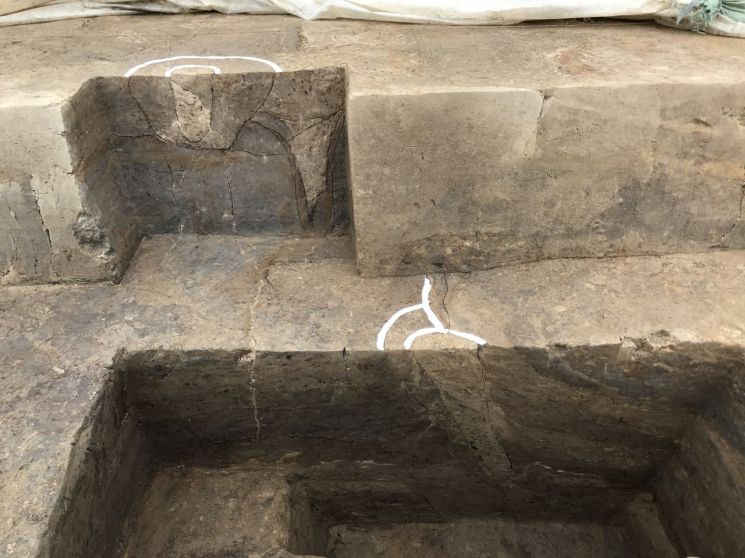
The National Ganghwa Cultural Heritage Research Institute recently announced on the 1st that evidence of construction methods and expansion of the fortress wall was discovered on the west wall of Pungnap Toseong (Historic Site No. 11).
Pungnap Toseong, located in Songpa-gu, Seoul, is a large-scale earthen fortress with a width of 40 to 50 meters, a height of 11 meters, and a circumference of over 4 kilometers. It is known as the site of the Baekje Hanseong capital city (18 BCE?475 CE). The institute investigated the construction method by cross-sectioning the fortress wall horizontally. As a result, wooden pillars installed to build up the fortress wall were found in each earthen mound (toru) that forms the body of Pungnap Toseong.
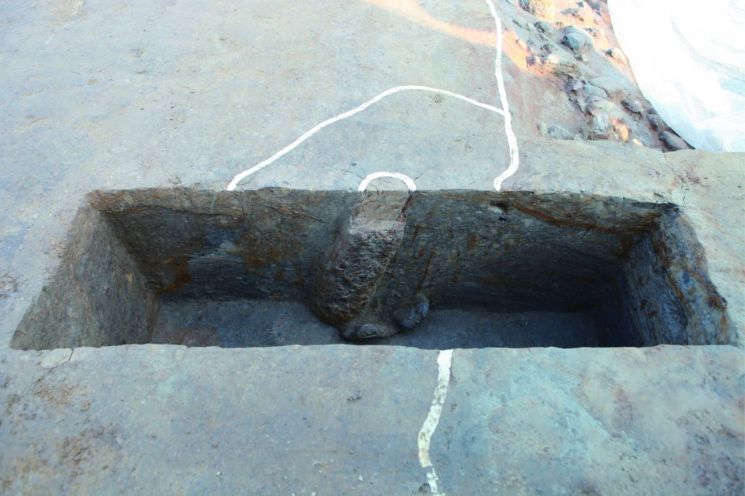
An official stated, "It appears that wooden pillars were inserted layer by layer from the bottom of the toru to pile up the earth." The wooden pillars are structures prepared to raise the earth higher. In the first toru, which corresponds to the central framework, six layers of wooden pillars measuring 60 to 70 cm in length were inserted at intervals of 88 to 162 cm. Similar wooden pillars were also found in the second and third toru. Between them, wooden pillars driven in the opposite direction of the fortress wall slope and stones supporting the pillars were also confirmed. The official said, "It is presumed to be a construction method or a type of facility for building the fortress wall."
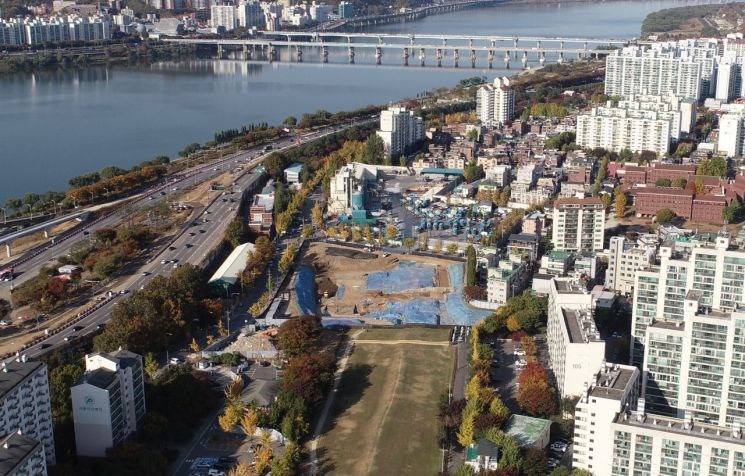 Wide view of the excavation site at the restoration area of the Seoseong Wall of Pungnap Toseong Fortress
Thinly laid stones called buseok (敷石) were also discovered between the toru. This is evidence that the fortress wall was expanded after its initial construction. The official explained, "Thin stones were laid on top of the first and second toru to reinforce the fortress wall, and then the third toru was built on top of that." Although there has been ongoing discussion about the expansion of Pungnap Toseong, interpretations of the expansion construction method have been divided. The official said, "The discovery of these wooden pillars has confirmed the construction method of Pungnap Toseong, which had been controversial," and added, "The definite evidence of expansion is expected to serve as important data for research on the construction methods of Pungnap Toseong."
© The Asia Business Daily(www.asiae.co.kr). All rights reserved.
![User Who Sold Erroneously Deposited Bitcoins to Repay Debt and Fund Entertainment... What Did the Supreme Court Decide in 2021? [Legal Issue Check]](https://cwcontent.asiae.co.kr/asiaresize/183/2026020910431234020_1770601391.png)

















