OPEC+ Holds Meeting on the 1st to Decide on Extension of Production Cuts
Challenges from the COVID-19 Pandemic and Opportunities from Vaccine Development Overlap
Disagreements Among Member Countries on Market Outlook and Issues with Agreement Implementation Also at Stake
[Asia Economy Reporter Naju-seok] Oil-producing countries have entered a period of deliberation over production cuts. While oil-producing countries such as Saudi Arabia are voicing that the planned reduction in production cuts, which would effectively increase output compared to current levels, should be postponed, Russia and the United Arab Emirates (UAE) argue that the scale of production cuts should be reduced as scheduled, resulting in no consensus yet.
On the 30th (local time), The Wall Street Journal (WSJ) reported that the Organization of the Petroleum Exporting Countries (OPEC) postponed the decision on whether to extend production cuts and plans to meet with oil-producing countries including Russia on the 1st to discuss the matter within the framework of OPEC+ (a coalition of OPEC member countries and non-OPEC producers).
For now, it is known that within OPEC, despite differences among member countries, there is a tentative consensus to extend the production cut period.
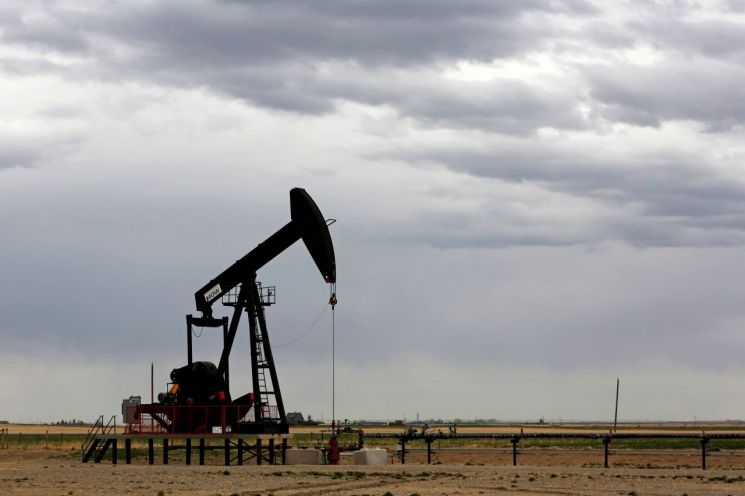
OPEC+ decided in April this year to reduce daily oil production by 9.7 million barrels due to decreased oil demand caused by the COVID-19 pandemic, which led to oversupply issues. Following a phased reduction plan, the production cut was scaled down to 7.7 million barrels per day in August. According to the schedule, the production cut is set to decrease to 5.8 million barrels per day in January next year. This effectively means that the volume of oil supplied to the market is gradually increasing.
Member countries have differing assessments of market conditions. Saudi Arabia argues that since the market situation remains unfavorable with a resurgence of COVID-19 in the US and Europe, the production cut of 7.7 million barrels per day should be maintained into early next year. On the other hand, countries like the UAE oppose continuing the cuts. Moreover, Russia, the leader among non-OPEC producers, is reportedly hoping to increase oil production rather than extend the production cut period.
Saudi Arabia's position is that due to the resurgence of COVID-19, the current level of production cuts should continue to balance oil supply and demand. Conversely, the UAE and others argue that given the development of COVID-19 vaccines, increased oil demand in China and Asia, and the recovery of oil prices, the scale of production cuts should begin to be gradually reduced.
Besides extending the production cut period, the implementation of the production cut agreement is also a contentious issue. According to internal OPEC assessments, Russia produced more than 430,000 barrels per day above its quota between May and September. OPEC member countries such as Saudi Arabia reportedly believe that Russia, Iraq, and Nigeria, which have not properly implemented the production cut agreement, should further reduce their oil production early next year. Whether Russia will accept these demands remains a key question.
As news that negotiations to extend production cuts are difficult became known, international oil prices declined. West Texas Intermediate crude in the US fell 1.6% to $44.8 per barrel.
© The Asia Business Daily(www.asiae.co.kr). All rights reserved.

















