WTO Reconstructs Issues Not Raised by Japan
Korea "Plans Appeal Against Legal Errors in WTO Panel"
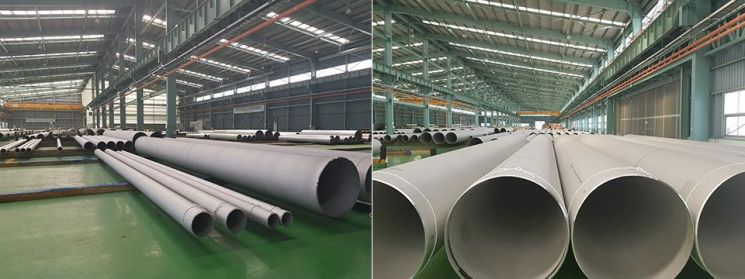
[Asia Economy Reporter Moon Chaeseok] In the dispute over the anti-dumping duties imposed by South Korea on Japanese stainless steel bars (SSB), the World Trade Organization (WTO) has ruled partially against South Korea. The government announced that it will appeal, citing "legal errors" in some of the WTO's findings. This is the first time the government has received a partially unfavorable ruling in a WTO trade dispute with Japan.
On the 1st, the Ministry of Trade, Industry and Energy stated, "The WTO panel ruled in favor of South Korea on a significant number of key issues raised in Japan's complaint (request for panel establishment)."
Previously, in 2018, Japan requested the establishment of a panel, claiming that South Korea's imposition of anti-dumping duties on Japanese SSB was unfair. SSB is used in automobile parts, precision industries, and construction materials.
The government has imposed anti-dumping duties on imported SSB for about 16 years since 2004. The import volume of Japanese products was 4.6 billion KRW annually as of last year. From 2017 to this year, a 15.39% tariff was applied to Japanese companies such as Sanyo, Daido, and Aichi.
Japan argued that its SSB is of high quality and specifications, fundamentally different from Korean SSB, and thus they are not in competition. Japan claimed that the Korea Trade Commission's cumulative assessment (which determines tariff imposition based on the average price among the three products: Japanese, Indian, and Korean SSB) was illegal.
The panel dismissed both claims that ▲there is a fundamental product difference between Japanese and Korean SSB and ▲the Korea Trade Commission unfairly attributed damage caused by factors other than Japanese SSB to Japanese products.
Regarding this, a Ministry of Trade, Industry and Energy official explained, "(The WTO) panel ruled in favor of South Korea on a significant number of key issues raised in the complaint."
The issue is that the panel deferred judgment on whether South Korea's cumulative evaluation of Japanese and Indian SSB prices was lawful, citing that it was not directly related to dispute resolution.
The panel ruled against South Korea, stating, "There is a problem in not considering that the non-cumulative price of Japanese SSB (the price of Japanese SSB without considering Korean and Indian prices) is higher than that of Korean SSB."
An official from the Ministry of Trade, Industry and Energy pointed out, "First, the fact that the non-cumulative price of Japanese SSB is higher than that of Korean SSB is not included in Japan's complaint submitted to the WTO panel."
He added, "Since the cumulative price of Japanese and Indian SSB (the average price of the two SSBs) is lower than that of domestic SSB, the bilateral cumulative evaluation method is lawful, so this is not an issue."
The Ministry of Trade, Industry and Energy pointed out that the panel committed multiple legal errors, including ▲overstepping its authority in reviewing issues beyond the complaint and ▲applying the price effect analysis requirements of the original investigation to the 'sunset review' anti-dumping measures without adjustment.
An official said, "We plan to file an appeal with the panel according to the WTO dispute settlement procedures. However, considering the current impossibility of forming the Appellate Body Division, we plan to seek a reasonable appeal process through sincere consultations with Japan."
He added, "Until a final ruling is made under the WTO dispute settlement procedures, the existing anti-dumping measures on Japanese SSB will be maintained."
© The Asia Business Daily(www.asiae.co.kr). All rights reserved.
![User Who Sold Erroneously Deposited Bitcoins to Repay Debt and Fund Entertainment... What Did the Supreme Court Decide in 2021? [Legal Issue Check]](https://cwcontent.asiae.co.kr/asiaresize/183/2026020910431234020_1770601391.png)















