Mosen Pakrizade, National Mourning Atmosphere in Iran
Critical Turning Point in Biden Administration's Iran Policy
Iran Forced to Choose Between Negotiation and Retaliation
Experts: "Iran May Possess Nuclear Warheads Within Years"
[Asia Economy Reporter Naju-seok] The assassination of Iranian nuclear scientist Mohsen Fakhrizadeh has triggered rapid changes in the global situation, especially in the Middle East. With the Biden administration set to take office in January next year, there are forecasts that how this terror incident is resolved could lead to a vicious cycle of retaliation, affecting the United States' participation in the Iran nuclear deal (JCPOA - Joint Comprehensive Plan of Action).
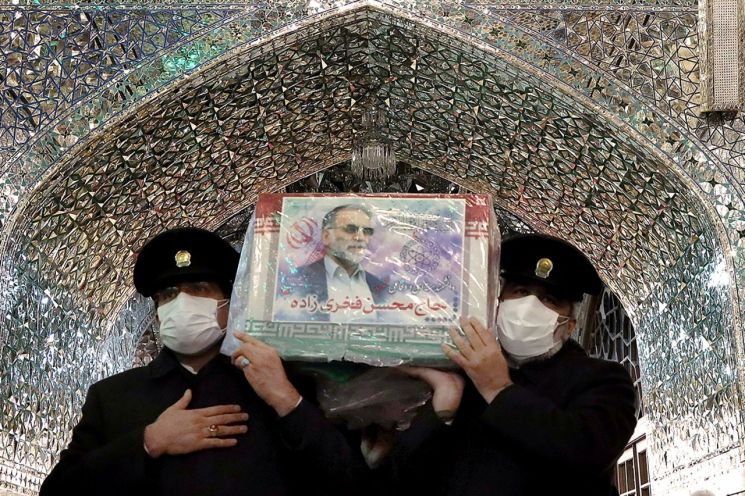
According to the British daily The Guardian on the 29th (local time), Iran is preparing for Fakhrizadeh's funeral. The Iranian government is receiving condolences by moving Fakhrizadeh's body, covered with the Iranian flag and flowers, to a major Iranian shrine.
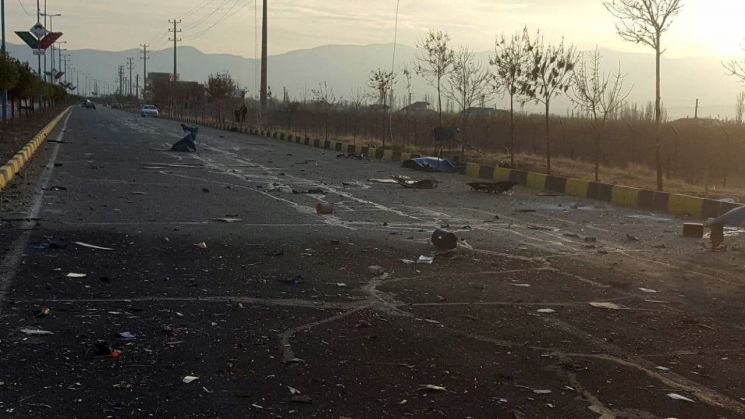
Fakhrizadeh was killed on the afternoon of the 27th at 2 p.m. on a highway near Tehran by a bomb and rifle attack. Although his bodyguards protected him at the time, all the bodyguards were killed. It is known that remotely controlled automatic rifles were used at the assassination site.
Although no group has claimed responsibility for the assassination, Iran is almost certain to suspect Israel. Fakhrizadeh was a figure who led Iran's nuclear development since the early 2000s and was considered Iran's top nuclear scientist. Israel currently views a military attack on Iran as imminent and has raised its military readiness.
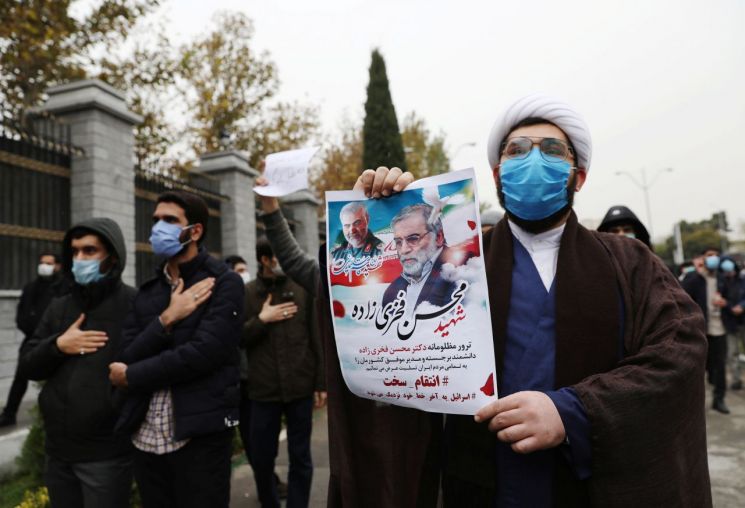
Within Iran, voices pledging retaliation against Israel are already strong. Not only the Iranian leadership but also Iranian media are demanding direct military retaliation against Israel. Additionally, militias supported by Iran are also expected to possibly launch retaliatory attacks against Israel.
The Iranian government stated, "Criminals do not regret without strong counteraction," signaling a strong response.
The Guardian and others have speculated that the timing of this attack was intended by Israel, with the support of U.S. President Donald Trump, to shake the Middle East strategy of President-elect Joe Biden. Israel has been concerned about the possibility of the U.S. participating in the JCPOA, as Biden has indicated during the election. Both the U.S. tolerating Iran's nuclear development and lifting sanctions are threats to Israel.
Former President Barack Obama, Trump's predecessor, lifted sanctions on Iran in 2015 through the JCPOA, guaranteeing Iran's peaceful nuclear development while restraining weapons development. President Trump withdrew from the JCPOA, stating that the agreement could not prevent Iran's threat, and increased sanctions on Iran.
Iran is forced to choose between retaliating, considering the worsening public opinion, or strategically exercising patience. If Iran retaliates, the possibility of sanctions easing or lifting with the Biden administration's inauguration will be significantly reduced. Conversely, if Iran chooses strategic patience, it will be difficult to suppress backlash from hardliners within Iran.
Moreover, there are strong voices demanding blood for blood in Iran. Besides Fakhrizadeh, Qassem Soleimani, commander of the Iranian Revolutionary Guard Corps Quds Force, was also assassinated by a U.S. military attack.
There are also opinions that even if the Biden administration pushes for rejoining the JCPOA, it will not be easy to cross the threshold. Since the U.S. reimposed sanctions on Iran, Iran has also strengthened its nuclear capabilities, so it remains questionable whether the agreement can revert to the 2015 terms.
According to the International Atomic Energy Agency (IAEA) in November this year, Iran currently possesses 2,443 kg of low-enriched uranium. This is 12 times the amount of uranium Iran was allowed to hold under the 2015 agreement. If this low-enriched uranium is further enriched to the 90% level required for weaponization, it is estimated that Iran could produce at least two nuclear weapons.
Among experts, there is an assessment that since President Trump's reimposition of sanctions on Iran in 2018, Iran's nuclear capabilities have significantly improved. Although predictions vary, it is expected that if Iran pursues nuclear development for at least one year to several years, it will reach a weaponizable level. Gary Samore, former White House Coordinator for Arms Control and Weapons of Mass Destruction, estimated that without external help, Iran would take 2 to 3 years to develop a nuclear warhead. David Albright, a researcher at the Washington-based Institute for Science and International Security, estimated that Iran could conduct a nuclear test within 9 months. He further estimated that basic nuclear weapon manufacturing would take one year, and it would take about two years to equip and launch it on ballistic missiles.
Albright believes that if Iran conducts a nuclear test, it will reach a tipping point. If Iran conducts a nuclear test, it will become impossible to monitor or control Iran's nuclear weapons.
Moreover, time is pressing. Iran's presidential election is scheduled for June next year. Current President Hassan Rouhani is considered a pragmatist and someone capable of dialogue with the U.S. However, with the deaths of Soleimani and now Fakhrizadeh, the next Iranian president is likely to be a hardliner. This increasingly makes it difficult to revive dialogue momentum.
© The Asia Business Daily(www.asiae.co.kr). All rights reserved.
!["The Woman Who Threw Herself into the Water Clutching a Stolen Dior Bag"...A Grotesque Success Story That Shakes the Korean Psyche [Slate]](https://cwcontent.asiae.co.kr/asiaresize/183/2026021902243444107_1771435474.jpg)


















