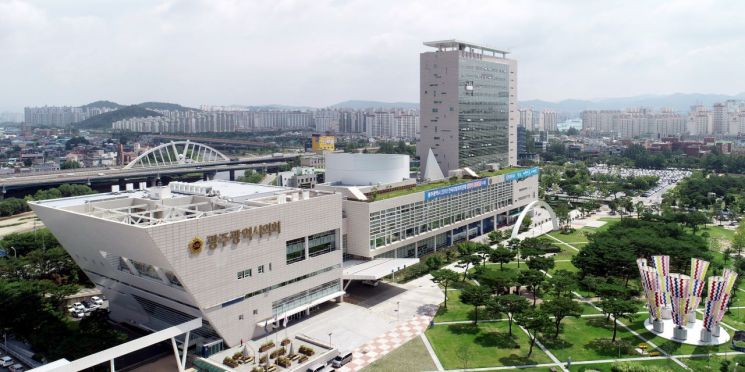
[Asia Economy Honam Reporting Headquarters Reporter Park Seon-gang] Gwangju Metropolitan City announced on the 30th that it will operate a ‘Special Management Period for Food Waste during Kimjang Season’ until the 18th of next month in response to the increase in food waste during the kimjang season.
First, the processing capacity of public food resource recovery facilities will be increased by 20% from the usual, handling up to 540 tons per day, and the delivery time will be extended by 2 hours.
In particular, for kimjang vegetables that are heavily soiled with soil or bulky, the use of volume-based waste bags will be temporarily allowed every Tuesday during the special management period. However, if general bags are used, it will be considered illegal dumping and a fine will be imposed.
Along with this, to minimize inconvenience to residents caused by collection delays, each autonomous district will operate a mobile processing team to inspect collection status and promote proper disposal methods.
Kimjang season food waste such as ▲ napa cabbage, radish, and salted seafood should have salt removed, ▲ bulky vegetables should be cut into smaller pieces as much as possible and disposed of in dedicated food waste containers, and ▲ green onion roots, onion skins, and garlic skins should be disposed of in volume-based waste bags.
Currently, Gwangju City is promoting a household volume-based waste system (RFID) that charges fees based on the amount discarded to reduce food waste generation, as well as a project to install reduction devices that can process waste on-site at disposal locations.
Also, every year in the first and second half, preventive inspections of aging equipment at public food resource recovery facilities are conducted, and a cooperative system with private facilities is maintained to prepare for emergencies, ensuring stable processing of food waste.
Park Jae-woo, head of the city’s Resource Circulation Division, said, “Before purchasing ingredients for kimjang, please check the necessary ingredients in advance to minimize unnecessary purchases, and actively cooperate in reducing food waste in daily life by using leftover vegetables for soup stock, etc.”
© The Asia Business Daily(www.asiae.co.kr). All rights reserved.
!["The Woman Who Threw Herself into the Water Clutching a Stolen Dior Bag"...A Grotesque Success Story That Shakes the Korean Psyche [Slate]](https://cwcontent.asiae.co.kr/asiaresize/183/2026021902243444107_1771435474.jpg)
















