Conflict Over Payment Targets and Funding Methods
Ruling Party Insists 2 Trillion Won Bond Issuance Is Inevitable
Opposition Says "Funding Should Be Secured by Cutting Korean New Deal Budget"
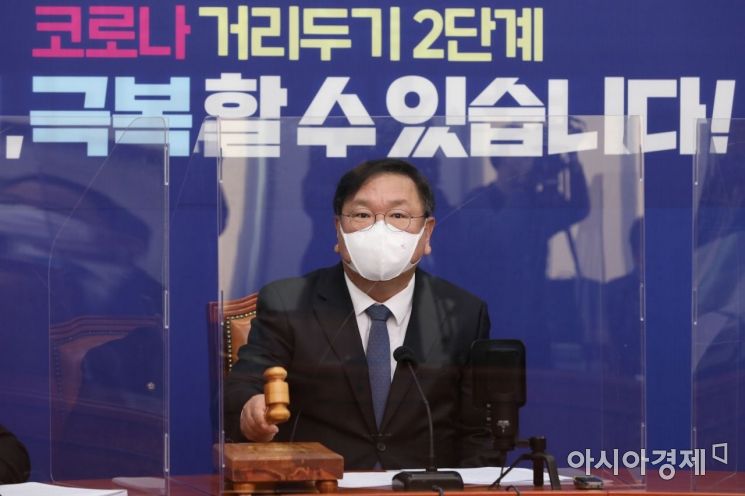 Kim Tae-nyeon, floor leader of the Democratic Party of Korea, is attending and presiding over the Supreme Council meeting held at the National Assembly on the 30th. Photo by Yoon Dong-joo doso7@
[Asia Economy Reporters Kim Hyemin and Jang Sehee] The ruling and opposition parties are still struggling with negotiations over the third round of disaster relief payments as of the 30th, just two days before the legal deadline for passing next year's budget. While there is consensus on the broad framework of "selective payments with a budget of around 3 trillion won," they have yet to narrow their differences on specific issues such as the target recipients and funding sources.
Park Hong-geun of the Democratic Party and Chu Kyung-ho of the People Power Party, who are the floor negotiators for the National Assembly's Special Committee on Budget and Accounts, continued their closed-door talks on the third disaster relief payments following the previous day. Although it is the last day of the legal budget review period under the National Assembly Act, the general consensus is that a dramatic agreement is unlikely.
The key issue is intertwined with the budget for the Korean New Deal. The third disaster relief payments were not originally included in the government’s budget proposal, but discussions intensified after the Democratic Party accepted the People Power Party’s proposal. Both parties agree that the lives of vulnerable groups such as self-employed individuals have become more difficult due to the escalation of social distancing measures, and they have agreed to include the third disaster relief payments in next year’s main budget.
The People Power Party has set the budget for the third disaster relief payments at 3.6 trillion won and is open to increasing the amount depending on negotiations. The Democratic Party has proposed a figure around 3.8 trillion won, similar to the amount allocated for self-employed and small business owners during the second round of disaster relief payments. Both parties thus have little disagreement over the payment scale.
There is also consensus on selective support focusing on COVID-19 vulnerable groups. However, while the Democratic Party insists on concentrating support on small business owners and self-employed individuals affected by social distancing, the People Power Party argues for expanding the support scope to include childcare support payments for elementary, middle, and high school students as well as daycare center fees. Meanwhile, Gyeonggi Province Governor Lee Jae-myung of the Democratic Party and the Justice Party still demand universal payments nationwide.
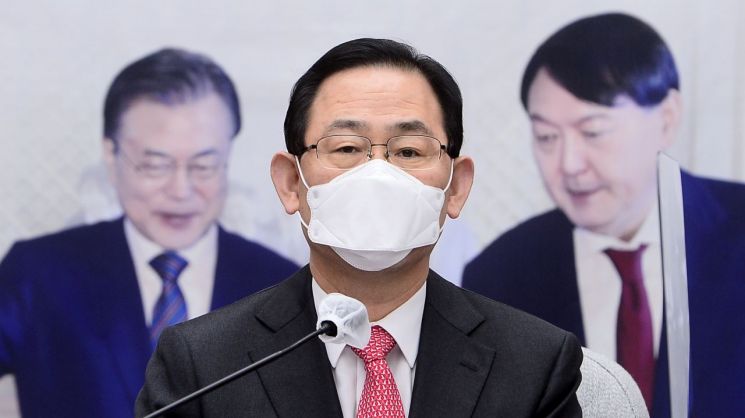
The biggest gap lies in how to secure funding for the third disaster relief payments. The Democratic Party insists that issuing government bonds is inevitable. Along with the third disaster relief payments, the Democratic Party is also demanding an additional 1.3 trillion won to secure 44 million doses of COVID-19 vaccines. The total budget is around 5 trillion won, of which about 3 trillion won would come from existing contingency funds, and the remaining 2 trillion won would be raised through bond issuance. They expect a total budget cut of 5 trillion won next year, and argue that if all of this is spent on disaster relief payments and COVID-19 vaccines, it will be difficult to increase funding for other projects. Park Hong-geun told reporters, "Considering increases in other projects, 2 trillion won in bond issuance is the minimum," suggesting the possibility of further expansion.
On the other hand, the People Power Party argues for securing funds by further cutting the Korean New Deal budget. They claim that even a 2% reduction in the government’s budget proposal (556.8 trillion won) would yield about 12 trillion won, and that there is plenty of wasteful spending that can be cut.
They also view the already included 90 trillion won in bond issuance for next year’s budget as a burden. Chu Kyung-ho said in an interview, "The Democratic Party is choosing the easiest method," adding, "Issuing 90 trillion won in bonds for this budget alone and still wanting to issue more without remorse is unreasonable. We must find as many budget cuts as possible."
Academics also point out the need to secure funds through expenditure restructuring rather than deficit bond issuance. Professor Kim Sang-bong of Hansung University’s Department of Economics noted, "Ultimately, fiscal soundness will inevitably deteriorate."
The Democratic Party is standing firm, saying the Korean New Deal budget cannot be cut. Kim Tae-nyeon, the Democratic Party floor leader, said at the party’s highest council meeting, "The whole world is boldly investing in the future to overcome the COVID crisis, and calls for cuts are outdated thinking," adding, "To lead the world in the digital and green new deal competition, we must invest more boldly. Demands to cut the Korean New Deal budget are like 21st-century isolationism."
The Democratic Party insists that to meet the legal deadline for budget approval, the scale of cuts must be finalized by today or at the latest December 1. Chu emphasized, "It entirely depends on the government and ruling party’s stance and decisions."
© The Asia Business Daily(www.asiae.co.kr). All rights reserved.
![Clutching a Stolen Dior Bag, Saying "I Hate Being Poor but Real"... The Grotesque Con of a "Human Knockoff" [Slate]](https://cwcontent.asiae.co.kr/asiaresize/183/2026021902243444107_1771435474.jpg)












