Ruling and Opposition Parties Stalled on Expanding Flexible Working Hours from 3 to 6 Months
One Month Before 52-Hour Workweek Implementation... "Scheduling Bill Subcommittee Meetings in Progress"
Opposition Demands Reform of Selective Working Hours System... Risk of Last Year's Situation Repeating
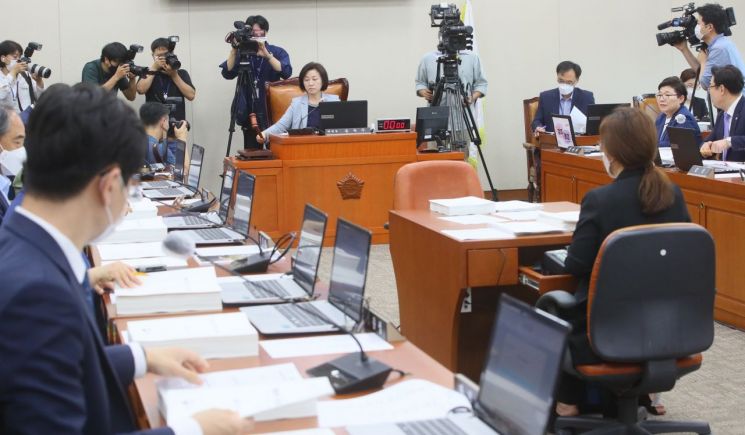
[Asia Economy Reporter Kim Bo-kyung] The expansion and reform of the flexible working hours system is considered the best way to smoothly implement the 52-hour workweek system in small and medium-sized enterprises (SMEs). It is expected that 80% of SMEs will experience some relief from difficulties if the flexible working hours system is reformed. However, in-depth legislative discussions between the ruling and opposition parties have yet to take place. The opposition party’s involvement in the discussion on reforming the selective working hours system has led to a stalemate similar to last year.
According to the government and the National Assembly on the 30th, with only one month left before the implementation of the 52-hour workweek system for workplaces with 50 to 299 employees, discussions on the reform bill for the flexible working hours system remain sluggish. The bill, which was primarily proposed by Representative Han Jeong-ae of the Democratic Party of Korea in July, includes the introduction of a flexible working hours system with a unit period of 3 to 6 months.
The flexible working hours system is a type of flexible work arrangement that adjusts working hours according to workload. If there is a written agreement between labor and management, the current system allows operation of flexible working hours for up to 3 months, but considering the difficulties companies face with the implementation of the 52-hour workweek, it was decided to extend this to 6 months. This was also agreed upon by the Economic, Social and Labor Council, a tripartite social dialogue body, in October last year. According to a recent survey by the Korea Federation of SMEs, 80% of respondents said that introducing a 6-month flexible working hours system would mostly (46%) or partially (34%) resolve difficulties.
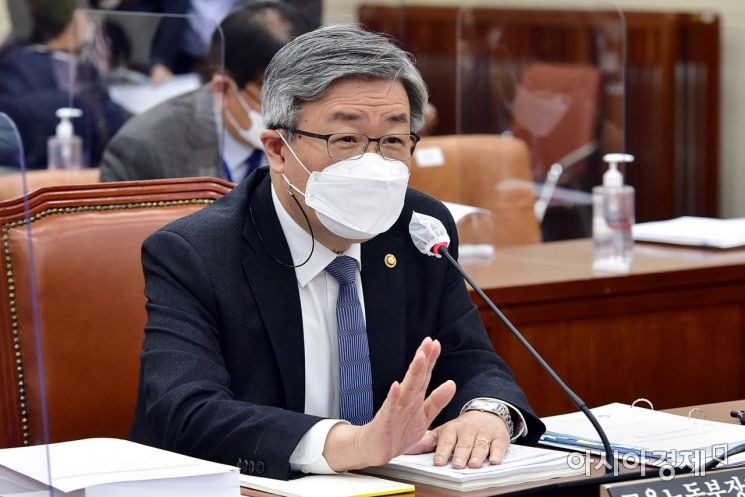
Lee Jae-gap, Minister of Employment and Labor, also said at a briefing held that day, "What the field is most urgently waiting for regarding the implementation of the 52-hour workweek system is the reform of the flexible working hours system, which is being pursued through supplementary legislation," adding, "Especially companies with clearly distinct peak and off-peak seasons or significant fluctuations in workload are eagerly awaiting this."
However, the ruling and opposition parties have not yet entered discussions on amending the flexible working hours law. A Ministry of Employment and Labor official said, "I understand that the schedule for the bill review subcommittee is currently being coordinated," and added, "However, both ruling and opposition parties are aware of the contents of the flexible working hours reform." It is reported that some opposition members are demanding reform not only of the flexible working hours system but also of the selective working hours system. They propose expanding the settlement period for the selective working hours system from one month to three months, accepting the business community’s claims.
As a result, there is a possibility that the processing of the flexible working hours reform bill may be delayed due to being caught up in the selective working hours system issue, similar to last year. At that time, the ruling party opposed the amendment of the selective working hours law, fearing that the purpose of the 52-hour workweek system would be undermined, and the reform of the flexible working hours system also failed in the 20th National Assembly.
The selective working hours system, unlike the flexible working hours system, allows concentrated work without time restrictions. Labor groups strongly oppose it because it lacks worker protection measures such as guaranteed rest time and wage compensation plans included in the flexible working hours amendment bill. "The selective working hours system has not been discussed at all in the tripartite dialogue, so it seems difficult for the ruling party to accept it," they said.
© The Asia Business Daily(www.asiae.co.kr). All rights reserved.
![Clutching a Stolen Dior Bag, Saying "I Hate Being Poor but Real"... The Grotesque Con of a "Human Knockoff" [Slate]](https://cwcontent.asiae.co.kr/asiaresize/183/2026021902243444107_1771435474.jpg)











